 +86-13981905144
 inquiry@chinaroadtrip.org
Routes, seasons and practical planning for foreign travellers
Written by China Road Trip | Updated 2026-10-29

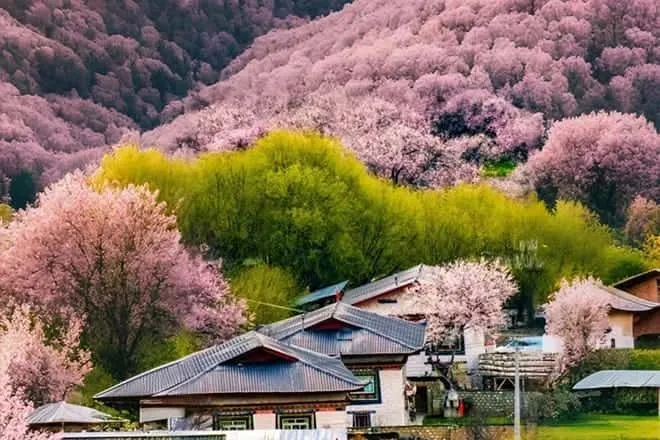
For many travellers, Tibet first brings to mind Lhasa's Potala Palace, Mount Everest and Ngari. Yet Nyingchi is another destination worth discovering. Located in southeastern Tibet, Nyingchi offers forested mountainsides, river valleys, snow-covered peaks and wild peach trees in bloom each spring. Its greener landscapes reveal a different side of Tibet. Whether you travel overland from Chengdu or Kunming towards Lhasa, or set out from Lhasa itself, Nyingchi can be included in a Tibet self-drive or motorcycle tour.
How to Plan a Nyingchi Self-Drive or Motorcycle Tour
Foreign visitors cannot travel independently in Tibet and must be accompanied by a guide on an approved itinerary. Riding or driving yourself does not mean travelling independently. Permits, routes and daily arrangements still need to be coordinated through a travel agency. Once you have the proper driving qualification and required paperwork, you can drive a car or ride a motorcycle yourself.
-
From Chengdu or Kunming to Lhasa via Nyingchi
Our G318 Chengdu–Lhasa and G214 Kunming–Lhasa tours both include time in the Nyingchi area. From Chengdu, our itinerary follows the Sichuan–Tibet corridor through Bomi and Lulang before continuing to Bayi, Nyingchi's main urban centre, and on to Lhasa. From Kunming, the Yunnan–Tibet route passes Shangri-La and Deqin, joins G318 at Mangkang, and then follows the same southern Sichuan–Tibet route. Both itineraries include Nyingchi before continuing to Lhasa.
 |
- Our classic itineraries provide two examples:
- The Chengdu–Lhasa tour runs 12 days and 11 nights, including arrival, travel along the route, sightseeing in Lhasa and departure day. The itinerary includes two nights in the Nyingchi region: the eighth night in Bomi and the ninth in the Basum Tso area, with the tenth day continuing to Lhasa.
- The Kunming–Lhasa tour also runs 12 days, with the same overall inclusions. On day eight, you travel via Lulang and stay overnight in Nyingchi. On day nine, you visit Basum Tso before continuing to Lhasa.
-
From Lhasa: return trips or loop itineraries
If you start from Lhasa, we can plan a return itinerary or, where practical, a loop, based on your available time, interests and choice of vehicle. Whether you want more lakes and forests, spring blossom viewing, or autumn and winter mountain scenery, we can suggest sightseeing stops and overnight stays to match those priorities. Our existing nine-day Nyingchi blossom self-drive tour, for example, includes arrival, sightseeing in Lhasa and departure day. You leave Lhasa on day three and return on day eight, with six days spent travelling east from Lhasa and back, covering Nyingchi, Bomi, Ranwu and Basum Tso. This is a self-drive itinerary. Daily stages for motorcycle tours are planned separately.
What to See and Do in Nyingchi
Bomi: Known for forests, snow-capped mountains and river valley scenery, Bomi lies on G318 and is a stop on our routes from Chengdu and Kunming. If you want to explore the peach blossom valleys for photography, plan extra time there.
 |
Lulang: Lulang combines forests, meadows and villages, making it a scenic place to stop for lunch or stay overnight. Stone-pot chicken is a local highlight.
 |
Namcha Barwa viewpoints: Sejila Pass offers views of Namcha Barwa when skies are clear. A visit to Pai Town and Suosong Village requires a detour from the main route; allow additional time for the detour, sightseeing and your onward journey to the overnight stop. If mountain photography is a priority, consider allowing more time in the area.
 |
Basum Tso: You can walk along the lakeshore and visit the island monastery and surrounding villages. It is a side trip off the main route, so allow time for the drive there and back plus sightseeing inside the scenic area.
 |
When to Visit Nyingchi for Driving or Riding
-
Spring: peach blossoms, snow peaks and the Peach Blossom Festival
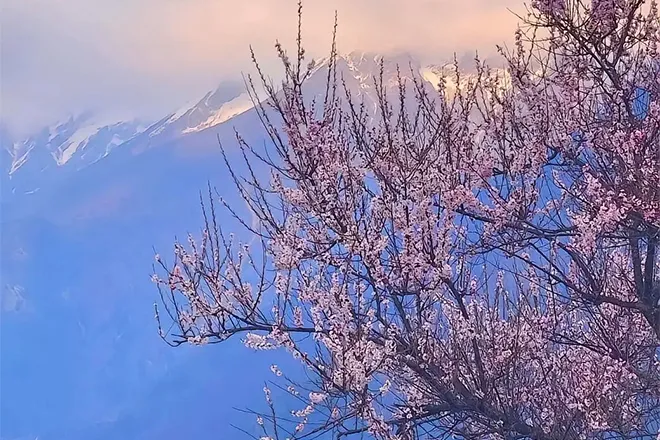
In spring, wild peach trees bloom across fields, villages and river valleys, with pink blossoms set against snow-covered peaks—one of Nyingchi's most striking seasonal scenes. The annual Nyingchi Peach Blossom Festival typically opens in late March or early April, drawing many visitors for blossom viewing and photography; exact dates are announced each year. Bloom dates vary from place to place, so check local bloom updates when planning how long to stay in Nyingchi. Accommodation in popular blossom-viewing areas is in high demand, so book early.
 |
-
Autumn: colourful forests and mountain views
Autumn foliage is often a highlight in October and November, although timing varies with elevation, location and weather. Road conditions are usually more stable than in the rainy season, and mountain views are clearer—a good time for a self-drive or motorcycle trip. When planning, allow more time for the stretch from Bomi and Lulang to Bayi.
 |
-
Summer: lush forests and the rainy season
Summer is usually the rainy season in Tibet. Forests are lush and the river valleys are vividly green. However, landslide and rockfall risks increase on some sections, so if you are driving or riding the full route, build some flexibility into your schedule and check conditions before departure and throughout the journey.
-
Winter: mountain scenery and road conditions
Winter can bring clear mountain views, fewer visitors and a quieter atmosphere. However, snow and ice may affect high passes and shaded roads. Plan around road conditions and accessibility, then choose between self-driving, motorcycle touring and a private tour with a driver.
What to Prepare Before Departure
Confirm your itinerary and dates. Decide where you will start, whether you will use a car or motorcycle, how many people are travelling, how many days you have, and whether you will continue to Lhasa. We will then discuss daily routes, accommodation and time in Nyingchi. Contact us early—peak blossom season and more complex routes need more lead time.
Arrange travel permits. You will need to provide your passport, visa or other relevant proof of lawful entry or stay as applicable, and personal details. We will review your information and coordinate the Tibet Travel Permit and any other permits required for your specific route; processing time depends on the route. After submitting your application materials in advance, you will still need to carry the required original documents with you according to the checklist.
 |
Confirm driving eligibility. A foreign driving licence alone does not allow you to drive in China. Requirements differ for car drivers and motorcycle riders, so we check your licence category and the application arrangements for your chosen vehicle. You will need your original, valid overseas driving licence, a translation that meets local requirements, and other documents; the full checklist is confirmed by the local office. You must complete the required temporary Chinese driving permit formalities in person. We help confirm the documents, translation requirements and arrangements.
 |
Choose your vehicle. Our self-drive vehicle options include the TANK 300, VOYAH Dreamer and DENZA D9. Motorcycles include CFMOTO 450 and 800 series, KOVE 525 and 625 series, and BMW F 750 GS and F 850 GS. Choose a car based on group size, luggage capacity and route; choose a motorcycle based on riding experience, bike weight, seat height and familiarity. Specific models, configurations, availability, pick-up and drop-off locations, and handover procedures are confirmed at booking.
 |
Check insurance and support. Check that your personal policy covers your planned activities, including motorcycle riding where applicable, medical treatment and emergency evacuation. Separately, ask what roadside assistance and support-vehicle services are included in the tour, along with the vehicle insurance limits, excess and deposit arrangements.
Prepare gear and personal items. Pack warm layers, waterproof clothing and sun protection appropriate to your route and season. For motorcycle trips, confirm who provides helmets, protective gear, gloves and riding boots. We will explain what is provided and what you need to bring before you book. Our motorcycle tours include a support vehicle, and main luggage is carried in it. Keep your documents, warm clothing and necessary medication with you during the day. Confirm at booking whether a familiarisation ride or basic practice session is included.
Vehicle handover and departure briefing. At pick-up, check the vehicle condition, familiarise yourself with the controls, go over the route, and confirm accommodation arrangements and emergency contacts.
Practical Notes
Road access for cars and motorcycles needs to be confirmed separately, especially for expressways, urban express roads and locally restricted sections.
Check scenic-area vehicle access and shuttle arrangements in advance. At places such as Basum Tso, you may need to park and transfer to a shuttle, depending on current operating rules. Allow time for transfers and queues.
Allow time to acclimatise and avoid demanding driving or riding days immediately after arriving at altitude. Discuss the pace and overnight elevations with us when planning your itinerary.
Weather and traffic conditions change. Rainy-season rockfall, winter ice and construction controls can all affect plans. Build flexibility into the itinerary and discuss contingency arrangements with us before departure. If you cannot continue driving or riding because of health, weather or vehicle issues, contact us promptly so we can assess alternative transport or itinerary adjustments.
Ask a Quick Question & Free Enquiry

If you have a WhatsApp, please feel free to scan our WhatsApp code.