 +86-13981905144
 inquiry@chinaroadtrip.org
Featival Dates and Route Tips for Tibet Road Trips
Written by China Road Trip | Updated 2026-11-5

Would you like to watch a horse race on the grasslands, enjoy Tibetan opera or experience the celebrations of Tibetan New Year? A local festival can be a memorable part of a self-drive or motorcycle tour in Tibet. Along the way, you can enjoy snow-capped mountains, gorges and lakes, with time set aside for local festivities.
Whether you are travelling from Chengdu or Kunming to Lhasa, or starting in Lhasa and heading towards Everest or Ngari, checking festival dates in advance can help you decide when to set off and where to spend an extra day or two. This guide introduces Tibetan festivals worth experiencing month by month and explains how to include them in your road trip.
All months below refer to the Gregorian calendar unless a Tibetan calendar date is explicitly stated. Check the official announcements for your year of travel for confirmed dates and event programmes.
January–March
— Experience Tibetan New Year in Lhasa
Tibetan New Year falls on the first day of the first month of the Tibetan calendar and usually comes in February or March; the exact date varies from year to year.
Before the festival, Lhasa’s markets selling festive food and New Year supplies, and the surrounding streets, begin to bustle. Around Barkhor Street and Chomsikang, you can see local people buying New Year supplies, learn about traditional foods such as khapse (fried dough), and soak up the atmosphere in the run-up to the festival. During the New Year period, depending on that year’s arrangements, you can also watch public folk performances and celebrations. If you would like to taste guthuk (a traditional New Year noodle soup) or learn about New Year customs in local homes, a visit to a local family should be arranged through your travel agency in advance.
 |
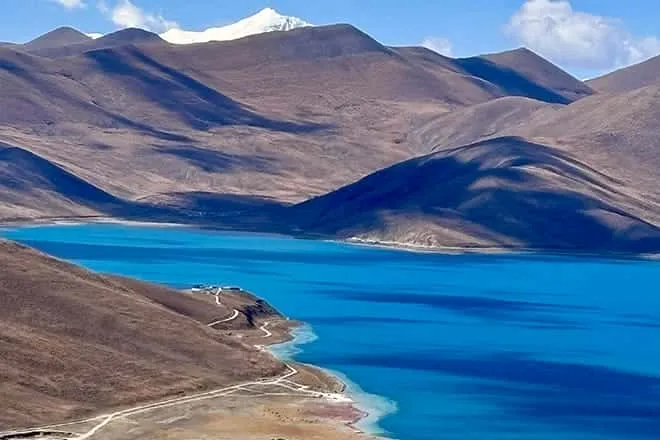
If you start a self-drive or motorcycle tour from Lhasa, you can first plan a festival stop and acclimatise, then, depending on road conditions, travel via Yamdrok Lake to Gyantse and Shigatse; whether to continue to Mount Everest depends on weather, accommodation and access conditions. If travelling all the way to Tibet from Chengdu or Kunming, you can also make Lhasa an important stop during the New Year period and work backwards to plan your arrival. Long-distance winter motorcycle trips require a separate assessment of ice, snow, low temperatures and riding conditions; allow enough time for the journey rather than rushing to reach a festival.
March–May
— Follow the Sichuan–Tibet or Yunnan–Tibet Route for Peach Blossoms, Then Continue to Lhasa
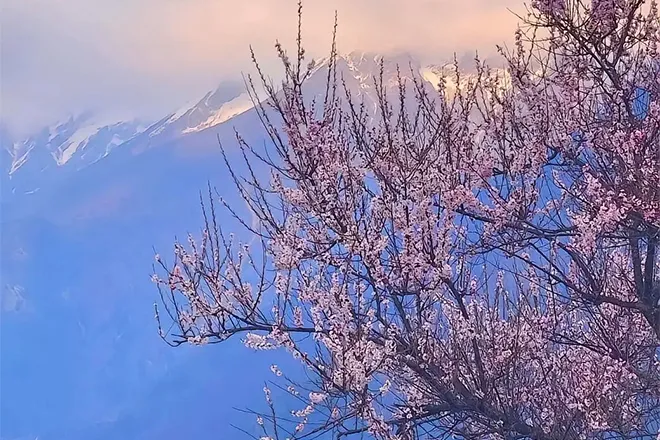
Nyingchi’s peach blossom season is a highlight of a spring road trip. The main blossom-viewing season is late March to April; flowering times vary with altitude and weather. The opening date and programme of the Peach Blossom Tourism and Culture Festival are announced separately by the local authorities.
During this period, peach blossoms around Bomi and Nyingchi, together with snow-capped mountains, river valleys and villages, are the main sights along the way. At planned stops along the route, visitors can explore on foot and take photographs; if dates coincide with the Peach Blossom Tourism and Culture Festival, you can also, depending on that year’s public arrangements, watch cultural performances, browse markets or try local food. The flowering period and festival activities do not completely overlap, so travellers who prefer natural scenery and those who hope to watch performances will plan with different priorities.
 |
From Chengdu, follow the G318 via Kangding, Litang and Batang to Markam; or from Kunming, travel via Dali, Lijiang, Shangri-La and Deqin to Markam. After the two routes meet, both continue via Ranwu to Bomi. Stop in Bomi according to the flowering conditions, then travel via Lulang to Nyingchi city centre, visit nearby viewing spots, and continue via Gongbo Gyamda to Lhasa. From Lhasa, you can also arrange this section in reverse. Adjust accommodation according to the viewing locations and driving distances, and avoid repeated backtracking to chase the blossom.
June–August
— Horse Racing in Western Sichuan, the Lhasa Shoton Festival and Horse Racing in Nagqu
In summer, look out for horse racing, Tibetan opera and park gatherings in western Sichuan and Tibet. They are held in different areas, so check the dates separately and choose according to your direction of travel.
 |
Travellers entering Tibet from Chengdu can look out for festivals in Kangding and Litang announced for July–August. The horse racing events in Litang feature races and equestrian displays as their main attractions. Additional folk performances and markets depend on the year’s programme. Music and cultural events in Kangding also need to be selected according to that year’s programme. Setting off from Chengdu along the G318, you can follow the direction Kangding–Litang–Batang–Markam and make one of these stops a festival stop before continuing into Tibet.
The Lhasa Shoton Festival is usually held around August; the exact date varies with the Tibetan calendar. Visitors can watch Tibetan opera, browse stalls selling traditional crafts and local specialities, taste Tibetan yoghurt, and experience the atmosphere of park gatherings and festive get-togethers. The thangka unveiling at Drepung Monastery is also an important sight, as a huge Buddha thangka is spread out on the hillside and large numbers of pilgrims come to pay their respects; if you wish to watch it, entry arrangements and transport should be confirmed in advance.
 |
Whether entering Tibet from Chengdu or Kunming, you can work backwards from the Shoton Festival to plan your arrival in Lhasa, allow time in the city for the festival, and then travel via Yamdrok Lake, Gyantse and Shigatse to Mount Everest, or continue on to Ngari. If starting in Lhasa, you can also experience the festival first and then set off on the rest of the route.
The Nagqu Chaqing Horse Racing Festival can usually be experienced in August; the exact dates and duration are confirmed each year. Besides horse racing, visitors may also see traditional equestrianism, folk sports, song and dance, or cultural markets and product displays; what you can watch is subject to that year’s official programme.
 |
It suits a journey linked to the Qinghai–Tibet route: you can travel along the Qinghai–Tibet route to Nagqu, watch the events and then continue south to Lhasa; or you can go north from Lhasa and make Nagqu a stop en route out of Tibet. If you plan a return trip between Lhasa and Nagqu, include this section in your itinerary before departure.
September–October
— Combine Shannan and Ngari Itineraries with Local Cultural Events
In autumn, look out for events such as the Yarlung Cultural Tourism Festival in Shannan and the Zhangzhung Cultural Tourism Festival in Ngari. The dates and frequency of such festivals are set by the organisers.
For the Yarlung Cultural Tourism Festival, look out for arrangements in late August to September; the dates are not fixed, for example 30 August to 5 September in 2024. The events mainly take place around Tsetang in Shannan, and depending on that year’s programme visitors can watch cultural performances, learn about local intangible cultural heritage or browse speciality product stalls and displays. If you are arranging a Lhasa–Shannan road trip, allow time for the festival in Tsetang, then combine it with stops such as Yumbulagang and Trandruk Monastery to plan the return journey or the next section.
 |
In 2025, the ninth Zhangzhung Cultural Tourism Festival took place from 26 to 30 September in Shiquanhe, Gar County. Check the year’s programme for cultural performances, traditional sports and displays of local products. If you already plan to travel via Shigatse, Saga and Mount Kailash to Ngari, you can, where the route allows, add Shiquanhe and nearby events to your stay. It is more suitable for travellers who already have a long Ngari itinerary, and should not simply be treated as a short detour within a Mount Everest trip.
November–December
— Experience Gongbo New Year in Nyingchi and the Butter Lamp Festival in Lhasa
Gongbo New Year falls on the first day of the tenth month of the Tibetan calendar and usually comes around November; the exact date varies from year to year, and in some years it falls in December. The main focus is that year’s arrangements in the Gongbo area of Nyingchi.
Through public folk celebrations, visitors can learn about clothing, song and dance, and New Year customs in the Gongbo area; specific performances, experiences or food events should be confirmed in advance. If you wish to enter local homes to experience the New Year, separate arrangements are required. When entering Tibet from Chengdu or Kunming, after passing through Bomi and Lulang you can make Nyingchi a festival stop before continuing to Lhasa; from Lhasa, you can also arrange a journey east towards Nyingchi.
 |
The Butter Lamp Festival falls on the twenty-fifth day of the tenth month of the Tibetan calendar, usually between November and December. Butter-lamp offerings are the most distinctive sight of this festival, and visitors can experience the atmosphere of night-time lights and religious commemorations. Specific entry areas, viewing times and photography requirements need to be confirmed in advance, and on-site instructions should be followed.
 |
If your travel dates coincide with the Butter Lamp Festival, you can stay an extra night in Lhasa, arrange the viewing during your city stay, and then continue with the rest of the route. Night-time temperatures in winter are low, and it is not advisable to continue with a long drive after watching the event; if you plan to travel towards Shigatse or Mount Everest, separately verify road and accommodation conditions along the way.
How to Fit Festivals into a Road Trip
Once a festival is included in a route, treat it as a fixed time anchor.
Confirm the dates and specific activities first. In addition to checking the dates for the year, the travel agency should also confirm whether foreign visitors can enter the venues you plan to visit, whether booking or tickets are required, and whether the activity can be incorporated into the fixed itinerary. Watching public events such as Tibetan opera and horse racing is different from entering local homes to experience New Year customs or attending specific religious ceremonies; the latter two need to be arranged separately in advance.
Work backwards from the festival date to your arrival time. If the Shoton Festival’s Tibetan opera performances are scheduled for certain days in mid-August, work backwards from those days: how many days it takes to reach Lhasa from east or north of Lhasa, how many days to allow for acclimatisation before the festival, and then decide the date of departure from Chengdu or Kunming.
Allow full viewing time at the festival location. The main events of horse racing, Tibetan opera and public celebrations are often concentrated in a particular half-day or period. Try to arrive at the festival host town early, and arrange accommodation according to the event times, avoiding squeezing long-distance driving and the main viewing into the same day.
Book accommodation early. During the Lhasa Shoton Festival and the Nagqu horse racing festival, accommodation in the host towns and surrounding areas can fill up quickly; securing a room in advance is more reliable than looking for one at short notice.
Allow enough time for driving and rest. Fatigue on a road trip accumulates, and festival days often also require early starts, walking and long periods of standing. If the previous day is an extremely long driving day, both the experience and safety will suffer.
Procedures for Foreign Self-Drive and Motorcycle Travellers
Foreign travellers planning a self-drive or motorcycle tour in Tibet need to consider four things: travel permits, driving authorisation, vehicle arrangements and a guide.
Route permits are confirmed by the travel agency. Entering Tibet usually requires a Tibet Travel Permit arranged through a travel agency qualified to receive foreign tourists. The permit is tied to the itinerary, and the approved dates, destinations and overnight stops cannot be changed at will en route. Depending on whether specific destinations are areas not open to foreign visitors, other permits or approvals may also be involved. Your travel agency can confirm the permits required for your route, coordinate applications and check that your driving permit covers the vehicle you plan to use.
 |
Driving qualifications need to be confirmed in advance. China does not recognise the International Driving Permit (IDP), and an overseas driving licence cannot directly replace the qualification required to drive in China. Those holding an overseas driving licence who need to drive temporarily should apply for a temporary Chinese driving permit as required; the exact permitted vehicle category and procedure should be confirmed with the vehicle management office.
 |
Different vehicle arrangements involve different procedures. A temporarily imported vehicle, a car rented in China and a motorcycle rented in China must be confirmed separately. A temporarily imported vehicle involves procedures such as vehicle import and temporary plates; the conditions for rental cars are relatively clear; the conditions for renting a motorcycle should be verified with the vehicle management office or rental operator actually handling the matter, and the procedure for rental cars cannot simply be applied.
Travelling with a guide is part of the travel arrangement. Foreign visitors’ self-drive and motorcycle tours in Tibet must be organised by a travel agency and accompanied by a guide as required; driving a vehicle does not mean that you can travel independently or change the route at short notice.
A practical order is: first decide your travel dates, the festivals you are interested in and the rough route, then give this information to a travel agency qualified to receive foreign tourists, so that it can determine which permits are needed, in what order to submit them, and how the vehicle and driving qualifications should match. For detailed rules on permits and driving licences, please refer to the dedicated permit guide on this site.
Driving, Riding and Participation Precautions During Festivals
Traffic and parking. There may be concentrated crowds, traffic or temporary traffic control around some event venues. When driving or riding to the site, confirm designated parking areas or traffic control information in advance, and do not park on main roads, fire access routes or pedestrian crossings; slow down when passing through villages, junctions and crowded areas.
Pedestrians and livestock. There are dense crowds around event venues, and children may suddenly cross the road; do not take photographs while driving. When encountering yaks, sheep or horses on the road, stop and give way, do not sound the horn to drive them away, and wait until they have passed; do not chase or disturb livestock.
Equipment security. When leaving the vehicle to watch events, carry luggage, riding gear and valuables with you or lock them in the vehicle; do not leave them in open vehicle compartments or panniers.
Photography and on-site viewing. Ask for consent before taking close-up photographs of people; at temple halls and religious ceremony sites, follow signs and staff instructions. Horse racing, Tibetan opera and similar events have designated viewing areas; do not cross the track, leave designated viewing areas to take photographs or enter cordoned-off areas, and follow on-site guidance.
If you already have a rough time window and route in mind, the simplest approach is to tell a travel agency qualified to receive foreign tourists your travel dates, the festivals you are interested in, your departure point and destination, and whether you will bring your own vehicle or rent locally, so that it can check that year’s event dates, entry conditions for foreign visitors, accommodation availability and permit requirements and application timelines.
Ask a Quick Question & Free Enquiry

If you have a WhatsApp, please feel free to scan our WhatsApp code.