 +86-13981905144
 inquiry@chinaroadtrip.org
Essentials for Foreign Tourists Traveling to Tibet
Written by China Road Trip | Updated: 2026-01-29

Under the call of the "Roof of the World," countless foreign friends dream of Tibet in their heart.
Yet, this yearning is often accompanied by numerous concerns: Are the procedures cumbersome? What should I do if I suffer from altitude sickness? Should I travel by train or plane?
This guide is specially tailored for first-time foreign visitors to Tibet, covering everything from document processing to itinerary planning, and from coping with altitude sickness to dressing tips, etc. With the most practical information and thoughtful advice, we aim to clear away obstacles on your journey, ensuring a worry-free and profound experience of Tibet's breathtaking beauty and sacredness of the snowy plateau.
What are the required documents for visiting Tibet?
For foreign visitors, visiting the magical land of Tibet requires preparing several essential documents in advance. Basically, you need five documents while visiting Tibet:
Chinese Visa, Tibet Travel Permit (TTP), Alien’s Travel Permit, Military District Letter and Border Pass.
Let’s break down each one clearly to ensure your journey starts successfully.
• Chinese visa
Apart from countries that have mutual visa exemption agreements with China, foreign tourists wishing to travel to Tibet must possess a valid Chinese visa (usually an L-type visa) issued by the Chinese embassy.
Chinese visas can be applied for at the Chinese embassy or consulate in the applicant's home country/region. Applicants are required to provide a valid passport, a completed visa application form, photos, a travel itinerary, proof of round-trip air ticket reservations, and hotel reservation confirmations, among other documents, and pay the visa application fee.
For foreigners working in China, they need to provide a work visa and a work certificate with the company's seal; for foreign students studying in China, they need to provide a study visa and a certificate of enrollment or student ID card with the school's seal; for foreigners residing in China, they need to provide proof of residence.
 |
• Tibet Travel Permit
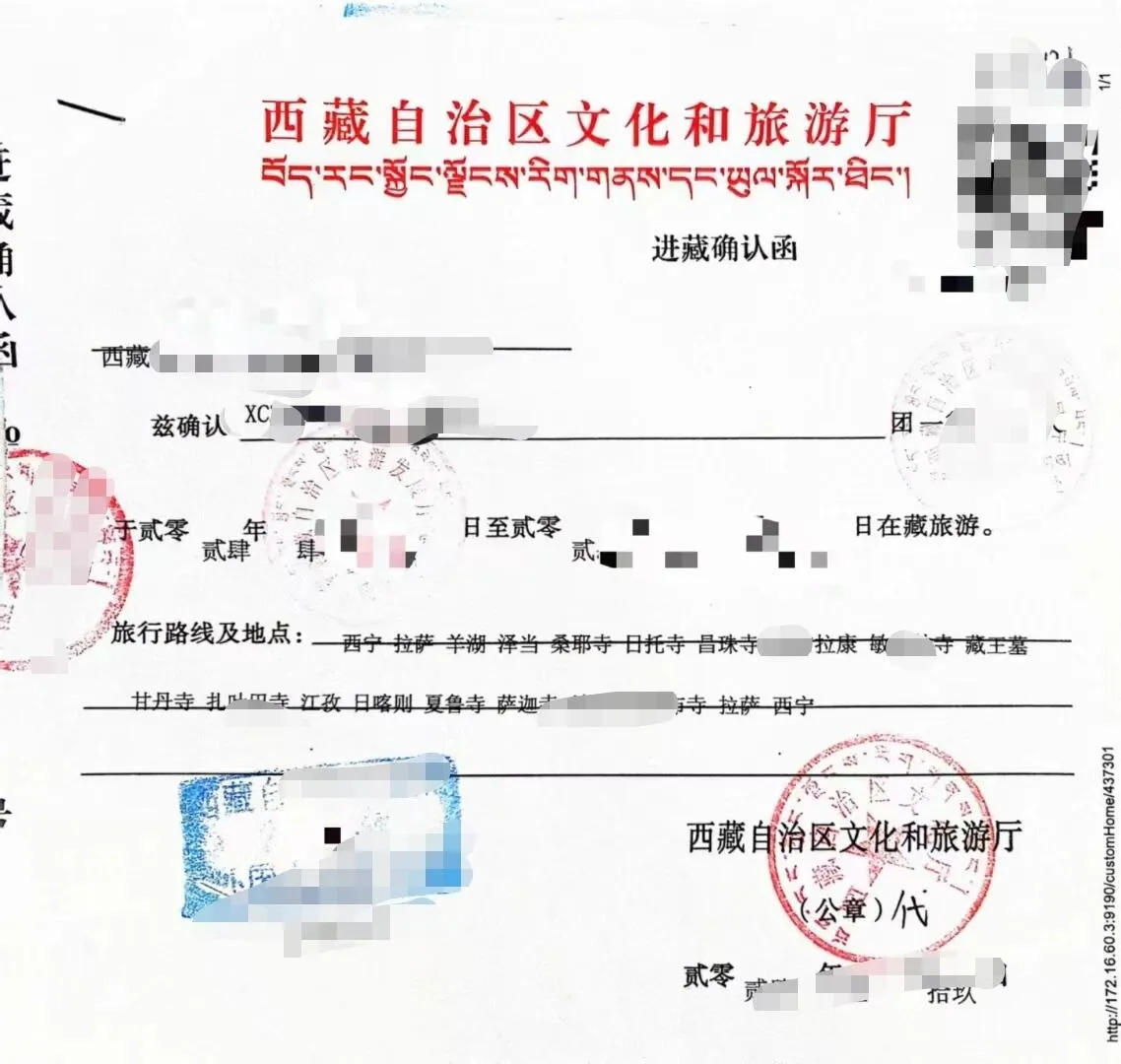
The Tibet Travel Permit is a necessary document for traveling to Tibet. Without it, you will not be able to board trains or flights heading to Tibet.
The Tibet Travel Permit cannot be applied for directly by individuals; instead, it must be applied for through a qualified Tibet travel agency. The application process generally takes 7 to 14 working days. To ensure a smooth trip to Tibet, it is recommended that you book your Tibet travel at least three weeks in advance.
Application process for the Tibet Travel Permit:
1) Select a travel agency with proper qualifications.
2) Finalize your specific itinerary, including dates, routes, and transportation arrangements.
3) Submit the required documents, such as your visa, to the travel agency.
4) The travel agency will submit the materials to government authorities to apply for the Tibet Travel Permit.
5) Once processed, the travel agency will mail the permit to you.
Want to know more about the Tibet Travel Permit? Please click:
How to Apply for a Tibet Travel Permit
 |
• Aliens' Travel Permit
1) Applicable Scenarios
For traveling to "semi-open areas" such as Nyingchi (Basum Tso), Samye Monastery, and the Mount Everest Base Camp, an additional permit is required on top of the Tibet Travel Permit.
Difference from the Border Pass: The Border Pass is for border geographical areas, while the travel permit is for "restricted-access attractions." In some regions (such as Mount Everest), both permits are required simultaneously.
2) Application Process
Agency Channels: The travel agency handling your Tibet Travel Permit can apply for this additional permit on your behalf, eliminating the need for you to visit government departments personally.
Required Documents: Original Tibet Travel Permit, a copy of your passport, itinerary, and two 2-inch passport-sized photos.
Processing Time: 1-3 business days.
Note: The Yarlung Tsangpo Grand Canyon, Nanyi Ditch, and Motuo County are completely restricted areas and cannot be accessed even with a travel permit.
• Military District Letter
If you intend to visit certain specific attractions such as Lake Manasarovar, Mount Kailash (Gang Rinpoche), Bomi, Ranwu, as well as areas in Shannan, you will also need to apply for a military region permit. Additionally, if you are traveling to Tibet by land from Sichuan, Yunnan, Xinjiang, or Qinghai, you are required to apply for this military region permit as well.
• Border Pass
1) Applicable Areas
Border counties and attractions in Tibet: Mount Everest Base Camp, Ngari region, Motuo (partially open sections), Chayu, and the border sections of Shannan, etc.
Note: For non-open border areas such as Ngari, Bomi, and Ranwu, in addition to a Border Pass, a Military Area Entry Permit arranged by a travel agency is required, with an additional processing time of approximately 15 days.
2) Application Requirements
Application Method: Must be processed through a travel agency (foreign tourists cannot apply independently at their place of residence or local police stations in Tibet).
Required Documents: A copy of the Tibet Travel Permit, original and copy of the passport, two 2-inch photos, and an itinerary (clearly indicating border attractions).
Processing Time: 1-3 business days for regular border areas (such as Mount Everest); for areas requiring a Military Area Entry Permit, apply at least 20 business days in advance.
Validity Period: Up to 3 months, consistent with the duration of the itinerary.
3) Common Misconceptions
Misconception 1: Holding a Tibet Travel Permit allows for independent travel. → Incorrect. Travelers must join a tour group and be accompanied by a guide throughout the trip.
Misconception 2: Self-driving to Tibet does not require registration. → Incorrect. Foreign tourists must have their vehicles registered by a travel agency and cannot self-drive or rent a car independently.
Misconception 3: A Border Pass can be obtained upon arrival. → Incorrect. It must be applied for simultaneously with the Tibet Travel Permit, and there are no on-site application channels upon arrival.
Which mode of transport is better?
 |
 |
Foreign tourists can choose from three ways to travel from the Chinese mainland to Tibet:
• By air: You'll need to transfer in a city in the Chinese mainland or in Kathmandu, Nepal. It is recommended that you fly directly to Chengdu, as it is the closest city to Lhasa and offers more direct flights to Lhasa.
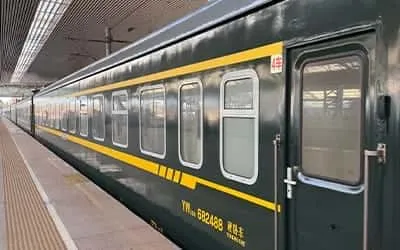
• By train: If you wish to take a train from a city in the Chinese mainland to Tibet, it is advisable to start from Xining, which takes only 21 hours and covers a distance of 1,965 kilometers. Along the way, you can enjoy the most picturesque views of the Qinghai-Tibet Railway.
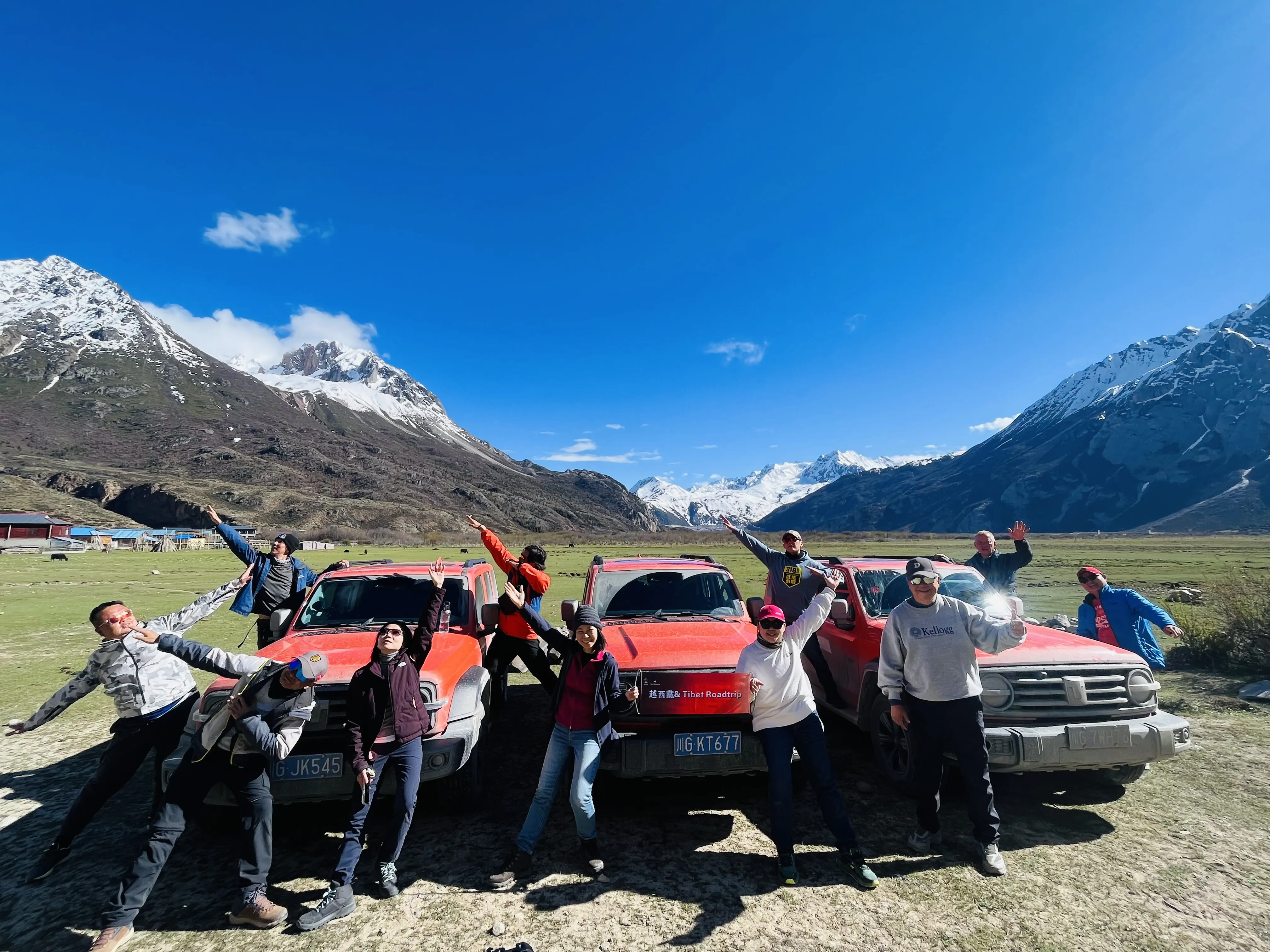
• By self-driving: You can fly directly to Chengdu, obtain a temporary driver's license there, and then travel along the Sichuan-Tibet Highway (G318 National Road), passing through western Sichuan to Tibet. This route allows you to gradually acclimate to the high altitude as you travel from the plains to the plateau. Additionally, there are other options such as the Qinghai-Tibet Highway, Yunnan-Tibet Highway, and Xinjiang-Tibet Highway.
What items should I take to Tibet?
◊ Upper Garment/Outerwear: A three-in-one jacket with a removable inner lining. You can wear just the outer layer during the day and add the inner lining for warmth at night. Bring a thick down jacket to cope with low temperatures in the morning and evening, especially in high-altitude areas like Mount Everest Base Camp, where a thick down jacket is definitely necessary.
♦ Warm Innerwear: Several long-sleeved T-shirts or thin hoodies for easy wearing and removal. You can wear them alone during the day when it's warm.
◊ Outer Pants: One pair of fleece-lined hardshell pants, which are designed for outdoor activities in harsh weather; here, I'll keep it as "fleece-lined hardshell pants" for clarity and one pair of casual pants are sufficient. Wear the casual pants during the day and the fleece-lined ones in the morning and evening.
♦ Underwear: Choose pure cotton options. If possible, I recommend disposable pure cotton underwear (choose high-quality ones) to avoid the need for daily washing.
◊ Shoes: One pair of comfortable and non-slip sneakers plus one pair of lightweight hiking shoes will be enough. If you plan to hike at Mount Everest Base Camp, bringing a pair of high-top outdoor shoes would be more suitable.
♦ Accessories: Don't forget to bring a wide-brimmed hat, a sun-protective face mask, UV400 sunglasses, and a scarf! They provide sun protection and warmth, and can also add style to your outfits!
 |
What travel options are available?
Group Tour: Most tourists opt to join a shared group tour in Tibet, which is a more cost-effective option.
Recommended Itineraries:
7-day Lhasa-Kathmandu, 5-day Lhasa-Namtso, 8-day Ningchi-Lhasa-Shigatse
Customized Tour: This means tailoring a unique travel experience specifically for you based on your needs and preferences.
Recommended Itineraries:
8-day Pabangka Hike, Nyingma Sacred Sites Journey, 14-day Chengdu-EBC
Self-Drive Tour: You can embark on a self-drive journey to Tibet starting from Chengdu, or you can choose to rent a car and start driving in Tibet after arriving there.
Recommended Itineraries:
14-day Ali North Self-drive, 12-day Chengdu-Tibet Self-drive, 12-day Yunnan-Tibet Self-drive
♥ No shopping stops and no hidden costs throughout the entire trip!
Recommended curated travel routes
Tight Schedule: A1 Line 4-Day Tour within Lhasa City (Potala Palace + Jokhang Temple + Barkhor Street)
During the next four days of your trip, you could fully immerse yourself in the unique atmosphere of Tibet's Buddhist landscape. On your journey, you' re not only searching for destinations, but also yourselves.
 |
Short Getaway: A4 Line 5-Day Trip to Yamdrokt Lake, where the blue hue of Yamdrokt leaves you speechless.
You will not only cross the 4,998-meter-high Kamba La Pass, admire the breathtaking view of Yamdrok Lake paired with Mount Nojin Kangsang at Lurila View Point, but also enjoy an exclusive lakeside picnic. Then, you are going to visit Ritro Monastery on the solitary island in the lake and experience the millennial Zen aura of "the world's loneliest temple." This route perfectly mixes Lhasa's profound cultural heritage with the extremely natural beauty of Yamdrok Lake, offering the double shock for both the eyes and the soul.
 |
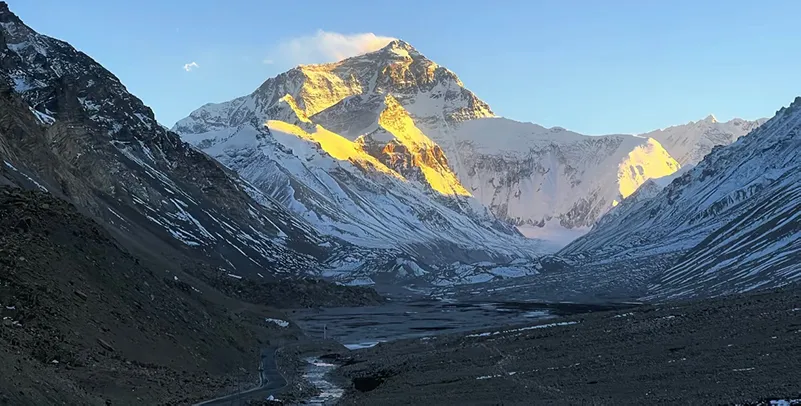
Annual Leave Adventure: B1 Line 8-Day Journey to Mount Everest, check in at the Base Camp at 5,200m elevation to witness the golden sunset over the mountains.
After cross the 5,210-meter-high Gyawu La Pass, you would see the five 8,000-meter peaks. Finally, you arrive at the 5,200-meter-high Everest Base Camp to gaze at the starry sky and await the wonderful phenomenon of the "Golden Mountain Sunset." This is a journey that engraves the measure of life forever at the top of the world.
 |
Ultimate Explorer's Edition: G Line 15-Day Expedition to Ngari, where you'll encounter one lake after another and get up close with wildlife!
This 15-day itinerary route blends Tibet’s most profound pilgrimage and natural wonders. After venturing further west into the Ngari region, you’ll start the sacred three-day Mt. Kailash kora which is a pilgrimage that blends physical endurance and spiritual reflection. Upon completing the kora, you’ll turn to Lake Manasarovar. This itinerary especially suits those time-constrained travelers seeking to embark on Tibet’s core spiritual pilgrimage. It will offer a harmonious blend of cultural immersion, natural beauty, and profound personal reflection.
 |
How should I deal with altitude sickness?
• Altitude Sickness: Upon first entering Tibet, some individuals may experience mild altitude sickness symptoms such as headaches and tinnitus. Generally, these symptoms can be adapted to within one day of arrival in Tibet without the need for additional medical assistance. If severe altitude sickness symptoms occur, such as vomiting or diarrhea, please promptly inform your tour guide and take necessary medical measures.
• Alleviating Altitude Sickness: Upon arriving in Tibet, it is recommended to rest in your hotel initially to relieve travel fatigue and allow your body to adapt to the high-altitude environment. Afterward, you can gradually start engaging in activities. Be sure to maintain a light diet, drink plenty of water, and get sufficient rest. Take quick showers to avoid oxygen deprivation, and dry your hair immediately after washing to prevent catching a cold.
 |
What are the payment methods like in Tibet?
When shopping or dining in Tibet, most areas accept RMB cash and mobile payments (such as Alipay and WeChat Pay).
♥ It is not advisable to carry large amounts of cash, and coins are not accepted locally.
Recommended Local Cuisine
Tibetan specialties include butter tea, Tibetan noodles, and tsampa (roasted barley flour). In Lhasa, there are also restaurants offering various cuisines, such as Chinese stir-fries, Western fast food, and Indian-Nepalese style eateries.
Useful Tips
• Transportation and Accommodation
Transportation to Tibet: From overseas → Transfer via Chengdu/Chongqing/Xining → Lhasa; or fly directly from Kathmandu to Lhasa (original Tibet Travel Permit required).
Accommodation: Choose foreign-affiliated hotels designated by the travel agency, some of which offer oxygen supply services.
• Culture and Safety
Respect Religious Beliefs: Do not wear short skirts/shorts inside temples, refrain from touching Buddha statues and ritual objects, and circumambulate in a clockwise direction.
Stay with the tour guide throughout the trip and do not leave the group without permission; photography of military facilities and checkpoints is prohibited.
• Pre-Trip Preparations
Confirm the itinerary and vehicle registration with the travel agency in advance.
Bring high-energy snacks (chocolate, beef jerky), common medications (cold medicine, pain relievers), and a power bank.
♥ A journey to Tibet is a profound dialogue between the soul and nature. We hope this guide provides practical information to make your trip smoother and more worry-free. For any inquiries, feel free to contact us!
Ask a Quick Question & Free Enquiry

If you have a WhatsApp, please feel free to scan our WhatsApp code.