 +86-13981905144
 inquiry@chinaroadtrip.org
Z322's 34-Hour Odyssey Across the Qinghai-Tibet Plateau, Fares Starting from 600+
Written by China Road Trip | Updated: 2026-03-16

When an airplane whisks you away from the 500-meter-high Chengdu Plain to 3,650-meter-high Lhasa within two hours, your body can feel like a deflated balloon suddenly deprived of air—headaches, nausea, and sleepless nights are the common "initial altitude sickness experiences" for most air travelers arriving in Tibet.
But the wise choose another path: taking the train to Lhasa.
This is more than just transportation—it’s a 34-hour, thousand-yuan moving IMAX blockbuster. While others fret over flight cancellations due to strong winds at the airport, you'll be lying comfortably in your berth on the Z322 train, watching Tibetan antelopes dash by outside the window. While others are rushed to the hospital for oxygen immediately after landing, you'll just wake up refreshed from a nap amidst the train's diffuse oxygen supply, stepping out of Lhasa Station full of energy.
Why is the Z322 train (Chengdu-Lhasa) considered the most classic choice for traveling to Tibet? This guide will dissect the survival strategies and visual feast behind those 34 hours.
Pre-trip Preparation
Document Preparation
Core documents:Apart from countries that have mutual visa exemption agreements with China, foreign tourists wishing to travel to Tibet must possess a valid Chinese visa (usually an L-type visa) issued by the Chinese embassy.
Essential documents:The Tibet Travel Permit is a necessary document for traveling to Tibet. Without it, you will not be able to board trains or flights heading to Tibet.
The Tibet Travel Permit cannot be applied for directly by individuals; instead, it must be applied for through a qualified Tibet travel agency. The application process generally takes 7 to 14 working days. To ensure a smooth trip to Tibet, it is recommended that you book your Tibet travel at least three weeks in advance.
Want to know more about the Tibet Travel Permit? Please click:
How to Apply for a Tibet Travel Permit?
 |
Supplementary documents:If you intend to visit certain specific attractions such as Lake Manasarovar, Mount Kailash (Gang Rinpoche), Bomi, Ranwu, as well as areas in Shannan, you will also need to apply for a military region permit. Additionally, if you are traveling to Tibet by land from Sichuan, Yunnan, Xinjiang, or Qinghai, you are required to apply for this military region permit as well.
Notes: All identification documents must be carried with you at all times. It is advisable to make two backup copies (both electronic and paper versions) to prevent loss. When purchasing tickets, ensure that the name matches exactly with that on your passport, without any spelling errors; otherwise, you will not be allowed to board the transportation.
Ticket-buying Guide
For foreign tourists eager to experience the Qinghai-Tibet Railway, taking the Z322 train from Chengdu to Lhasa represents the most classic route. However, the information on this small train ticket is entirely in Chinese, and the ticket-purchasing process differs from that for domestic Chinese tourists. Don’t worry! We will help you easily secure a train ticket from Chengdu to Lhasa.
1. Ticket purchasing channels
Self-booking vs. Booking through a travel agency
There are two primary ways for foreign tourists to purchase train tickets to Tibet, with cost-effectiveness and success rate being key considerations!
Self-booking through official channels (Suitable for tourists familiar with online operations, flexible with time and seeking cost-effectiveness)
Channel: Use the official China Railway platform at 12306.cn (which has an English version interface) or the official App "Railway 12306".
Operation: Register an account using your passport to inquire about train schedules, select seats, and make payments online up to 15 days in advance (although some information indicates a 15-day advance sale period, it is advisable to follow the latest regulations).
Payment: Prepare Alipay, WeChat Pay, or a UnionPay card for online payment.
Pros and Cons: This is the most direct method of purchasing tickets, without any agency fees, and the ticket price is the face value, offering the highest cost-effectiveness. However, during peak travel seasons, ticket availability is extremely limited, often selling out immediately upon release. Foreign tourists may also encounter minor issues with payment or identity verification.
Booking through a travel agency (Suitable for tourists traveling during peak seasons, who prefer convenience, and seek stability)
Channel: Contact a local travel agency in Tibet or your group travel agency.
Operation: Provide passport photos and information for processing the Tibet Travel Permit, and the travel agency will handle the booking on your behalf.
Pros and Cons: This is the most reliable method of purchasing tickets during peak seasons. Travel agencies usually have stable ticket quotas, especially for highly sought-after soft sleeper tickets, with a high success rate in securing them. Although a service fee ranging from 200 to 1,000 RMB may be charged, it saves you the hassle of trying to book tickets in the middle of the night and ensures a smooth connection between your train ticket and Tibet Travel Permit.
 |
Ticket Type Selection
Hard Sleeper vs. Soft Sleeper
The trains from Chengdu to Lhasa mainly offer hard seats, hard sleepers, and soft sleepers. Given the lengthy journey of approximately 36 hours, we strongly recommend opting for a sleeper berth. For tourists seeking cost-effectiveness, the key choices lie between hard sleepers and soft sleepers.
Reference for Train Ticket Prices from Chengdu to Lhasa
|
Seat/Berth Type |
Fare (Approx.) |
Suitable For |
Cost-Effectiveness Analysis |
|
Hard Seat |
¥302.5 |
Backpackers with extremely limited budgets or those seeking a challenge |
Not recommended; the 36-hour journey is too arduous and unfavorable for acclimating to the high altitude. |
|
Hard Sleeper |
¥627.5 - ¥663.5 |
The king of cost-effectiveness, suitable for solo travelers or tourists on a limited budget |
Moderately priced, allowing you to lie down and rest. Although there are six berths without a door for sound insulation, it offers a great opportunity to experience local life and meet fellow travelers. |
|
Soft Sleeper |
¥997.5 - ¥1034.5 |
The top choice for comfort, suitable for families, couples, or tourists seeking private space |
Higher priced, but the 4-person compartment has a door that can be closed, providing a quieter and cleaner environment. Each berth has a charging port, and it is easier to secure a lower berth. |
 |
Differences in Ticket Purchasing Between Peak and Off-Peak Seasons
Cost-Effectiveness Strategies
Tourism in Tibet experiences distinct peak and off-peak seasons, with significantly different levels of difficulty and cost-effectiveness in purchasing train tickets. For your convenience, we have compiled the following table for your reference:
|
Comparison Dimension |
Peak Season |
Low Season |
|
Time Frame |
June - September, especially July and August, as well as National Day Golden Week |
November - March of the following year |
|
Difficulty in Purchasing Tickets |
Extremely difficult! Scalpers are prevalent, soft sleepers sell out immediately upon release, and hard sleepers are snapped up in an instant. |
Easy. Ample ticket availability; you can easily purchase your preferred berth (e.g., lower berth). |
|
Ticket Price |
The face value remains unchanged, but the service fee charged by travel agencies for ticket purchasing increases significantly. |
The face value remains unchanged, but there's no need to pay high service fees; you can even buy tickets easily on your own, resulting in the lowest overall cost. |
|
Ticket Purchasing Strategy |
Book through a travel agency 30-60 days in advance, or even plan up to half a year ahead. Don't be fixated on a specific day; having backup plans is crucial. |
Simply purchase tickets on 12306 20 days in advance, saving money and effort. |
|
Cost-Effectiveness |
Low (spending more money and exerting more effort) |
Extremely high (spending less money, experiencing less hassle, and enjoying the scenery at a leisurely pace) |
Special Tips:
Tibet Travel Permit is a Prerequisite: Whether purchasing tickets yourself or through a travel agency, you must first obtain a Tibet Travel Permit. Without it, you will not be allowed to board the train even if you have purchased a ticket. It is recommended to handle both the permit and train tickets through a travel agency to ensure seamless coordination.
Entry Gate Procedures: The self-service turnstiles at Chengdu Railway Station typically only recognize Chinese ID cards. As a foreign tourist, please present your original passport and Tibet Travel Permit to go through the manual verification channel for entry.
Luggage Packing Checklist
The train journey from Chengdu to Lhasa takes 36 hours, with the altitude rising steadily from 500 meters to 5,000 meters. Therefore, thorough preparation is essential to ensure a comfortable and worry-free trip.
|
For high-altitude protection, the ultraviolet rays are extremely strong on the plateau, and sitting by the window on the train can easily lead to sunburn. It is recommended to prepare the "sun protection trio"—sunglasses, sunscreen (SPF 50+), and a sun hat. Staying warm is equally important; temperatures drop sharply when passing through the Tanggula Pass, making it cold both inside and outside the train. It's best to bring a thin down jacket or fleece jacket for easy layering.
Tibet is a high-altitude region, and altitude sickness is inevitable for some travelers. To cope with altitude sickness, you can prepare some common medications such as cold remedies, gastrointestinal medicines, and pain relievers (ibuprofen is effective for relieving headaches caused by altitude sickness). The train makes many turns on the plateau, and some people may feel nauseous; it is advisable to bring motion sickness patches or medication. Portable oxygen cylinders are also available for purchase on the train, costing about 25 to 35 yuan each, but bringing one or two for backup will provide peace of mind.
Disposable slippers can significantly enhance comfort during a long journey. The lights in hard sleeper compartments are not fully turned off, and earplugs can be a lifesaver when someone snores, while an eye mask can help you get a good night's sleep. A thermos is essential; drinking plenty of hot water helps alleviate altitude sickness, and hot water is available on the train. Regarding food, the boxed meals from the dining car cost about 30 to 40 yuan each, are generally mediocre in taste, and are relatively expensive.
♥ It is recommended to bring your own instant noodles, self-heating rice, biscuits, chocolate, and other convenient foods.
♦ Most importantly! A power bank is a must-have—each soft sleeper berth has a power outlet, but there are few outlets in hard sleeper compartments. If you bring multiple devices, a multi-plug adapter can avoid the awkwardness of competing for outlets. Many sections of the Qinghai-Tibet Railway have no signal, so you can download movies, podcasts, and music onto your phone or tablet in advance.
The snow-capped mountains, Tibetan antelopes, and Tsonag Lake outside the window are all worth recording, so don't forget to bring your camera~
How to Board Your Train Properly?
Step 1: Verify the "Three Key elements on the Ticket"
Departure Station: Confirm whether the departure station in the top-left corner of your ticket is "Chengdu West" or "Chengdu East". (Currently, most trains to Tibet depart from Chengdu West Station, but always refer to your ticket to avoid the critical mistake of going to the wrong station.)
Date and Time: Check the departure time, which is usually at 20:XX in the evening. For trains departing after midnight, it's easy to confuse the date, so be sure to set an alarm
Step 2: Allow Sufficient Time for Station Entry
By Subway: To reach Chengdu West Station, you can take Metro Line 4 or Line 9 directly.
By Ground Transportation: Traffic congestion is common during Chengdu's evening rush hour. It is advisable to leave your accommodation at least 3 hours in advance to allow ample time for waiting and boarding.
Step 3: Choose the Right Entrance
Passport and Tibet Travel Permit: Foreign tourists cannot enter the station solely with an ID card; they must possess their original passport and Tibet Travel Permit.
Entrance Channel Selection: As the self-service turnstiles at Chengdu Railway Station typically only recognize Chinese ID cards, foreign tourists are required to proceed through the manual verification channel for inspection.
Step 4: Locate the Waiting Area
After entering the station, check the large screen or open the "Railway 12306" app to find the "Waiting Area" and "Check-in Gate" for your train.
Note: Chengdu West Station is relatively large, and for trains to Tibet, you usually need to arrive at the check-in gate at least 40 minutes in advance.
 |
Step 5: Final Confirmation – Platform and Carriage
Check the Platform Screen: Upon descending to the platform, first look at the overhead display to confirm the train number and destination are correct.
Follow the Carriage Number Markings: Look for the colored markings on the platform floor that correspond to your carriage number (usually follow the "colored marking" indicated on your ticket, such as a "yellow marking").
Last Glance Before Boarding: Before stepping onto the train, take a final look at the electronic display at the carriage door to confirm the train number is correct.
The 34-hour Train Journey
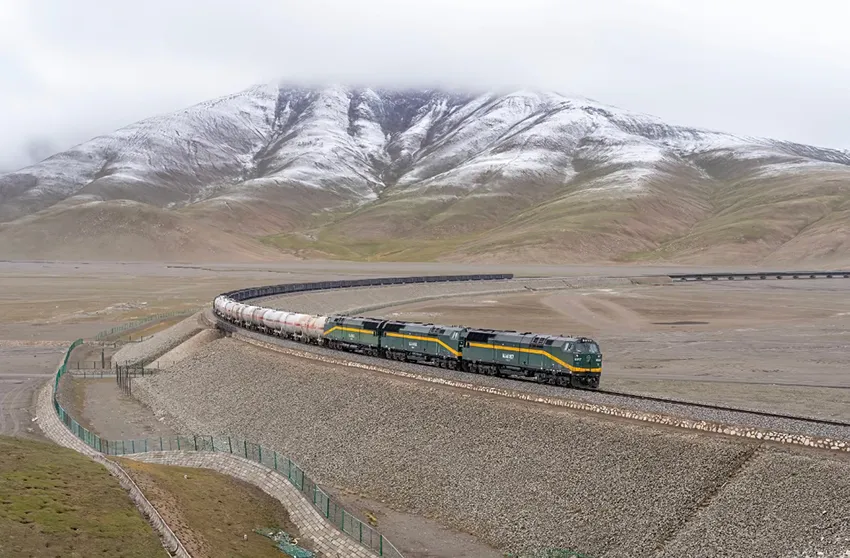
The train journey from Chengdu to Lhasa takes approximately 34 hours, representing not just a mode of transportation but also a visual feast traversing China's geographical tiers. From the humid warmth of the Sichuan Basin to the biting cold of the Qinghai-Tibet Plateau, the scenery outside the window transforms like a series of paintings every few hours.
Food and Drinks
There is a dining car on the train, offering boxed meals priced at around 30-40 yuan each. The prices are relatively high, and the flavors lean towards Chinese cuisine, mainly consisting of rice and stir-fried dishes.
Hot water is available at both ends of each carriage, making instant noodles and self-heating rice popular choices among passengers. It is advisable to bring along some snacks, chocolates, and fruits to replenish energy and provide sustenance when appetite is lacking.
 |
Sleep
The hard sleeper compartments are open six-person berths without doors, and the lights remain partially on at night. It is recommended to bring an eye mask and earplugs.
The soft sleeper compartments, on the other hand, are four-person berths with doors that can be closed, offering greater privacy and quietness.
Regardless of the type of berth, the train may experience slight swaying during nighttime travel, but passengers can still sleep normally.
Oxygen Supply
The train provides diffuse oxygen supply throughout the journey, with the oxygen concentration inside the carriages automatically adjusting as altitude increases to ensure basic breathing comfort. For individuals who experience noticeable reactions, each carriage is equipped with emergency oxygen outlets, and train attendants are available to offer assistance.
Carrying one or two portable oxygen bottles as a backup can provide greater peace of mind, and they are also available for purchase on the train.
 |
Toilets
There are 1-2 restrooms at each end of every carriage, primarily featuring squat toilets, with a few trains equipped with Western-style sit-down toilets as well. During peak times (such as after waking up in the morning), queues may form, so it is advisable to use the facilities during off-peak hours.
It is recommended to bring your own toilet paper, as although train attendants clean the restrooms regularly, carrying wet wipes can be more convenient for long journeys.
Passing Cities and Scenery
Route Overview:
Chengdu West Station → Guangyuan Station → Lanzhou Station → Xining Station → Delingha Station → Golmud Station → Tanggula Pass (no stop) → Nagqu Station → Dangxiong Station (no stop) → Lhasa Station
• Chengdu → Ya'an: As you depart, the view outside the window is filled with farmland and villages in the Sichuan Basin.
• Crossing Erlang Mountain and arriving in Kangding late at night: The mountain contours are obscured by darkness, but you can sense the train continuously climbing uphill.
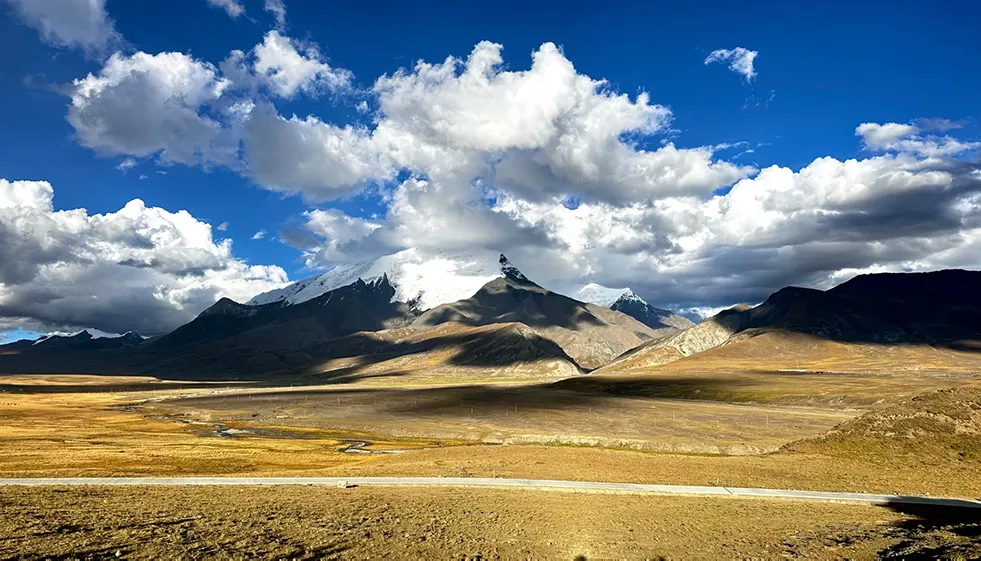
• Arriving in Nagqu (elevation 4,500 meters+) early in the morning: The vast expanse of the northern Tibetan grasslands stretches out, dotted with herds of yaks.
• Co'na Lake: The train runs close to the lakeshore for nearly half an hour, with the crystal-blue waters offering one of the most picturesque scenes of the entire journey.
• Dangxiong → Lhasa: As you enter the Lhasa River Valley, the Potala Palace can be faintly seen in the distance before reaching your final destination.
 |
Best Times for Photography:
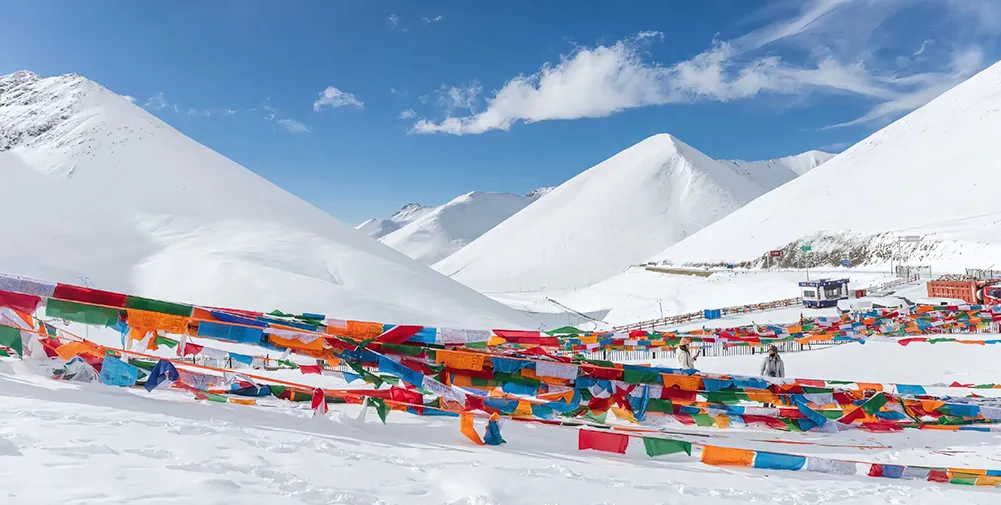
Early Morning (6:00-8:00 AM): Around the time of crossing the Tanggula Pass, the morning light bathes the snow-capped mountains and Hoh Xil grassland in a soft glow, making it ideal for capturing wildlife.
Late Morning (10:00-11:30 AM): During the segment passing by Co'na Lake, the calm lake surface mirrors the snow-capped peaks, creating stunning reflections.
Afternoon (2:00-4:00 PM): When traversing the Nyenchen Tanglha mountain range, the snow-capped peaks sparkle brilliantly under the sunlight.
Evening (6:00-7:00 PM): At sunset in the Lhasa River Valley, the warm light is perfect for capturing cultural and human scenes.
Wi-Fi on the Train
Most sections of the Qinghai-Tibet Railway traverse uninhabited areas, where mobile phone signals are intermittent, especially in tunnels and mountainous regions. There is no public Wi-Fi on the train, so it's advisable to download movies, podcasts, and e-books in advance—offline entertainment is crucial.
Ask a Quick Question & Free Enquiry

If you have a WhatsApp, please feel free to scan our WhatsApp code.