 +86-13981905144
 inquiry@chinaroadtrip.org
Tibet Travel Permit, Transportation, Self-Drive Tips
Written by China Road Trip | Updated: 2026-03-26

In recent years, Tibet, with its unparalleled natural beauty and profound cultural heritage, has become an ideal travel destination in the hearts of many American tourists. Known as the "Roof of the World," this land is rich in Tibetan Buddhist culture and unique folk customs, attracting countless travelers from around the globe, especially from the United States.
Understanding the various concerns and needs of American tourists during their travels, we have specially prepared a detailed travel guide that takes every aspect into consideration. Additionally, we offer comprehensive service support, including professional tour guide accompaniment, safe transportation arrangements, and comfortable accommodation options. This ensures that your journey to Tibet is worry-free, allowing you to fully immerse yourself in the awe and inspiration brought by this mysterious plateau.
Essential Documents Application Guide
American tourists entering Tibet need a total of five documents. Among them, two important documents must be obtained in advance in the United States:
Passport
Please ensure that your passport remains valid for at least six months beyond your planned date of entry into China and has sufficient blank visa pages.
Chinese Visa
Before departure, you need to visit the Chinese embassy or consulate in your jurisdiction in the United States to apply for a tourist visa (L visa). You could proceed with the subsequent procedures for entering Tibet only after obtaining a valid Chinese visa.
 |
 |
The following three documents must be obtained through local travel agencies in Tibet. Personal applications for these types of documents are not accepted. You must entrust a Tibet travel agency qualified to receive foreign tourists to handle the entire application process on your behalf after confirming your itinerary.
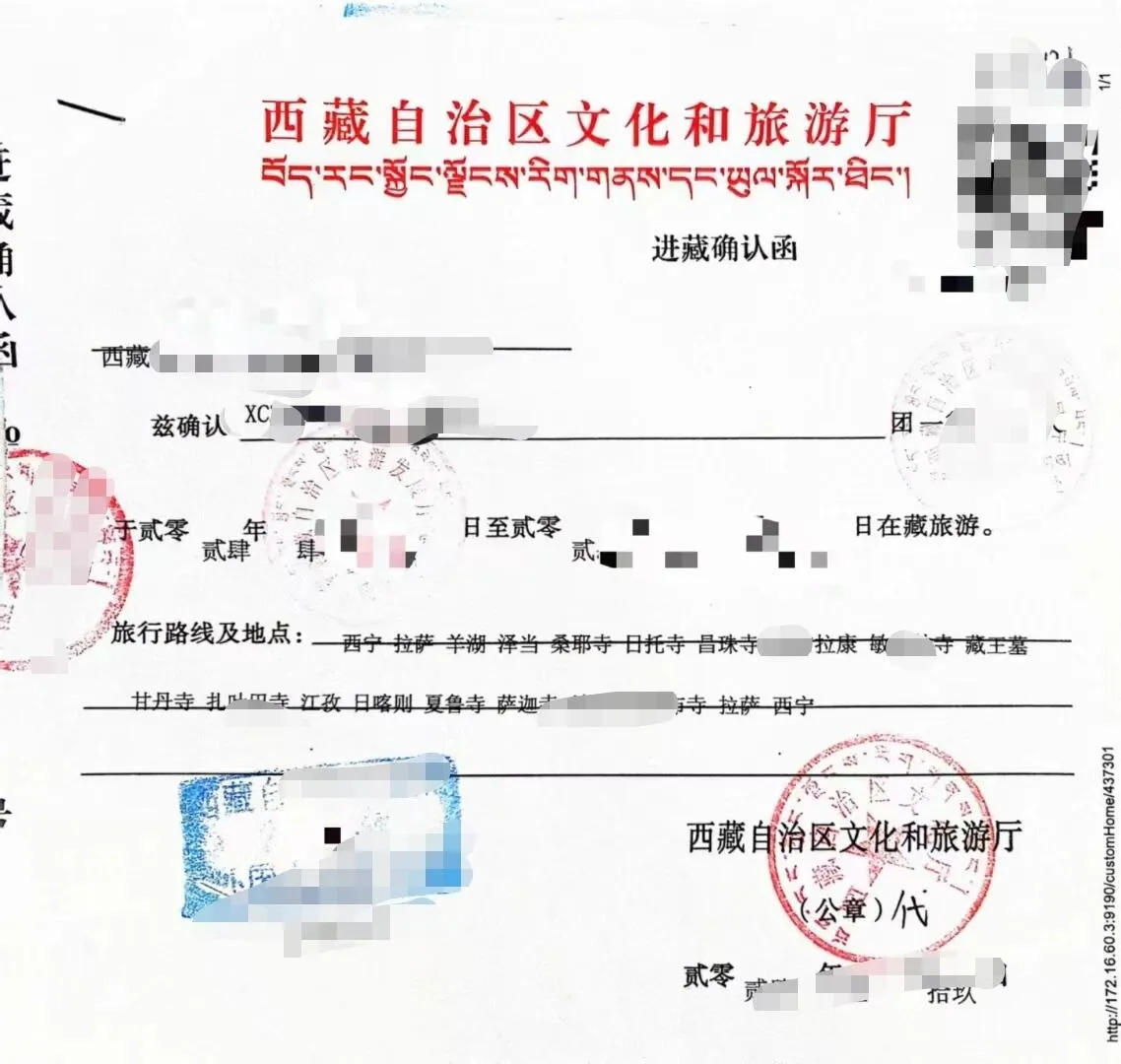
Tibet Travel Permit
To ensure a smooth entry into Tibet for every foreign tourist, the Tibet Travel Permit is indispensable. Whether you choose to travel by air or train, you must present the original copy of this permit when purchasing tickets and boarding the plane/train. Without the Tibet Travel Permit, you will not be allowed to enter the Tibet Autonomous Region.
 |
Military District Letter
If your travel itinerary involves border areas in Tibet, such as parts of Ngari Prefecture, Shannan City, or Qamdo City, you will need to obtain this permit. The travel agency will handle the application for this permit simultaneously when applying for your Tibet Travel Permit, so you don't need to apply for it separately.
Aliens’ Travel Permit
When you plan to visit Mount Everest Base Camp, certain areas in Ngari, and other non-open tourist regions, in addition to the Tibet Travel Permit, you will also need this specific permit. Similarly, the travel agency will uniformly apply for it on your behalf based on your specific itinerary.
You only need to handle your passport and Chinese visa, and leave all the other documents to China Road Trip for comprehensive application assistance. Moreover, you must join a tour group after entering Tibet.
China Road Trip has provided detailed explanations and instructions on the application process for each document to facilitate your document processing: Travel Guide for Foreigners
Tibet Entry Transportation Options
American tourists have three main options for traveling to Tibet:
1. Taking a flight for a quick arrival, offering a bird's-eye view of the continuous snow-capped mountains from the clouds;
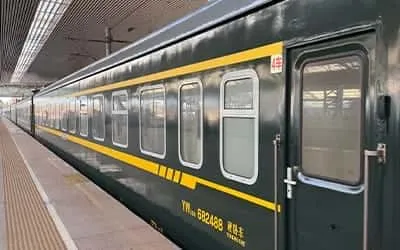
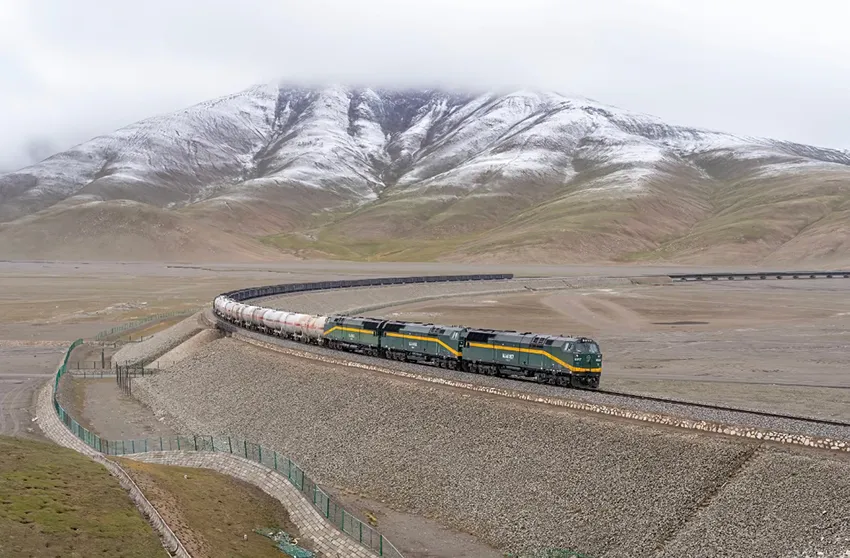
2. Taking on a train, gradually ascending along the Qinghai-Tibet Railway, allowing for gradual acclimatization to the high altitude while enjoying the vast landscapes of Hoh Xil and the Tanggula Mountains;
3. Traveling by land via car, traversing the Sichuan-Tibet or Yunnan-Tibet routes, winding through the winding mountain roads and experiencing the precipitousness of the Hengduan Mountains and the pristine scenery along the way.
Based on different entry points, the routes to Tibet can be further divided into two scenarios: departing from mainland China or departing from Nepal. The following provides explanations for each scenario.
Enter Tibet via Mainland China
USA - Beijing/Shanghai/Guangzhou/Chengdu - Lhasa by Air
1. Beijing - Lhasa by Air
Flights from Beijing to Lhasa generally depart from Beijing Capital International Airport (PEK). You can take daily direct flights operated by Air China or Tibet Airlines. Typically, there are 2 to 3 flights per day, mainly departing around 8:10 a.m. and 2:55 p.m., with a one-way flight duration of approximately 4.5 hours. The reference fare for economy class ranges from 480to600 (subject to seasonal fluctuations). It is advisable to book your tickets in advance and prepare your Tibet Travel Permit to embark on this high-altitude journey through the clouds.
 |
2. Shanghai - Lhasa by Air
Departing from Shanghai Hongqiao (SHA) may require an earlier wake-up call, as there are typically two direct flight options operated by Tibet Airlines each day. The morning flight, MU2335, departs from Terminal 1 of Pudong Airport at 06:45 and arrives at 14:40; the afternoon flight, TV9882, takes off from Terminal 2 of Hongqiao Airport at 16:45 and lands at 23:25. The flight duration is approximately 5.5 hours, and the one-way fare generally fluctuates between 550and700.
 |
3. Guangzhou - Lhasa by Air
Flying from Guangzhou Baiyun (CAN) to Lhasa, there's generally only one direct flight (which may make a stopover en route) operated by China Southern Airlines each day. It mostly takes off at around 8 a.m. in the morning, with a flight duration of nearly 6 hours. The fare typically ranges from 520to680. You could take the opportunity to catch some sleep on the plane to alleviate the fatigue caused by the rising altitude.
 |
4. Chengdu - Lhasa by Air
It would be much more convenient to depart from Chengdu Tianfu or Shuangliu airports, which serve as key transit hubs for trips to Tibet. Flights depart as frequently as buses, with numerous options available from early morning to afternoon. The flight duration is only about 2.5 hours, and fares typically range from 250to400, making it not only cost-effective but also extremely flexible.
 |
USA - Beijing/Shanghai/Guangzhou/Chengdu - Lhasa by Train
1. Beijing - Lhasa by Train
Taking the Z21 train from Beijing West Railway Station, which departs at around 8 p.m. every evening, you'll traverse the Hoh Xil No Man's Land and arrive after a long journey of approximately 40 hours. The fare for a hard sleeper ranges from roughly US100 to US160 for a soft sleeper. This route is a classic choice for experiencing the ceremonial sense of traveling to Tibet.
2. Shanghai - Lhasa by Train
If you want to feast your eyes on breathtaking scenery, opt for the Z164 train departing from Shanghai Station at 8 p.m. in the evening. The entire journey takes nearly 48 hours, and although the ticket price ranges from about US120 to US190, it passes by Tanggula Pass during the daytime, offering stunning reflections of snow-capped mountains and lakes that are a true boon for photographers. You'll definitely want to have plenty of memory card space ready for this trip!
3. Guangzhou - Lhasa by Train
Friends departing from Guangzhou Station should be mentally prepared: the Z264 train leaves at 10 a.m. in the morning and traverses half of China on the rails, taking a whopping 54 hours to complete the journey. The ticket price ranges from approximately US130 to US210. This route comes highly recommended for foreign tourists who want to completely disconnect from the internet and experience a slower pace of life, as the changing geographical landscapes along the way are truly fascinating.
4. Chengdu - Lhasa by Train
The train schedules from Chengdu West Station are quite unique these days, with departures generally occurring every other day (usually leaving around 9 p.m. in the evening). The journey takes only about 36 hours to reach the destination, and the ticket prices are the most budget-friendly, ranging from US90 to US160.
 |
Enter Tibet via Kathmandu, Nepal
USA - Kathmandu - Lhasa by Air
If you're planning to enter Tibet from Nepal, this is an adventure route brimming with exotic charm. The flight from Kathmandu (KTM) to Lhasa takes less than 1.5 hours, typically departing in the late morning around 11 a.m. Operated by Himalaya Airlines or Air China (with flight schedules adjusted seasonally), the ticket price ranges from approximately US350 to US500. The most incredible part is that you can gaze down upon Mount Everest through the aircraft window.
By Land via Gyirong Port
If you prefer a slow-paced journey, opt for entering Tibet via the Gyirong Port by land. You'll first need to endure a bumpy 7 to 9-hour off-road vehicle ride (costing around US20 to US40) from Kathmandu to the border. After clearing customs, you'll enter Gyirong Town in Tibet. Although the mountain roads are rugged and the altitude soars along the way, the visual impact of transitioning directly from subtropical forests to desert-like snow-capped mountains is an experience that no flight can offer.
 |
As a seasoned travel agency with years of in-depth experience in high-end inbound tourism to Tibet, I'd like to give some honest advice to friends from the United States who are planning to visit: While there are numerous ways to enter Tibet, from the perspectives of efficiency and overall experience, I strongly recommend the following two "golden options":
Air Travel: The "Chengdu Gateway" Strategy If you’re flying from the States, Chengdu is your absolute best bet. It’s the logistics hub for Tibet travel—flights are as frequent as city buses, and it’s the most reliable spot to receive your physical Tibet Travel Permit before boarding.
Rail Travel: The "Beijing Express" (Z21) For the full "Trans-Himalayan" experience, we recommend the Z21 from Beijing. While it’s a 40-hour commitment, it’s the most iconic route for international travelers. You’ll cross the heart of the Tibetan Plateau during daylight on the second day, offering the best chance to spot wildlife in the Hoh Xil nature reserve right from your cabin window.
Essential Items
Sun Protection
SPF50+ sunscreen, sunglasses, wide-brimmed hat (especially important under intense UV rays!)
Warm Clothing
Fleece jacket, down vest, windproof and waterproof jacket, insulated softshell pants, waterproof hiking boots.
For the base layer, wear a sweat-wicking and breathable long-sleeved T-shirt to prevent catching a cold from sweat that doesn't dry easily, which could potentially trigger altitude sickness.
Medications
Glucose powder, ibuprofen, cold medicine, gastrointestinal medicine
Others
Thermos, disposable bed sheets, power bank, adapter plug.
Tips: China uses a voltage of 220V, while electrical appliances in the United States typically operate at 110V. Therefore, it's essential to check if your charger supports dual voltage and bring an adapter plug that converts from the US standard to the Chinese standard.
 |
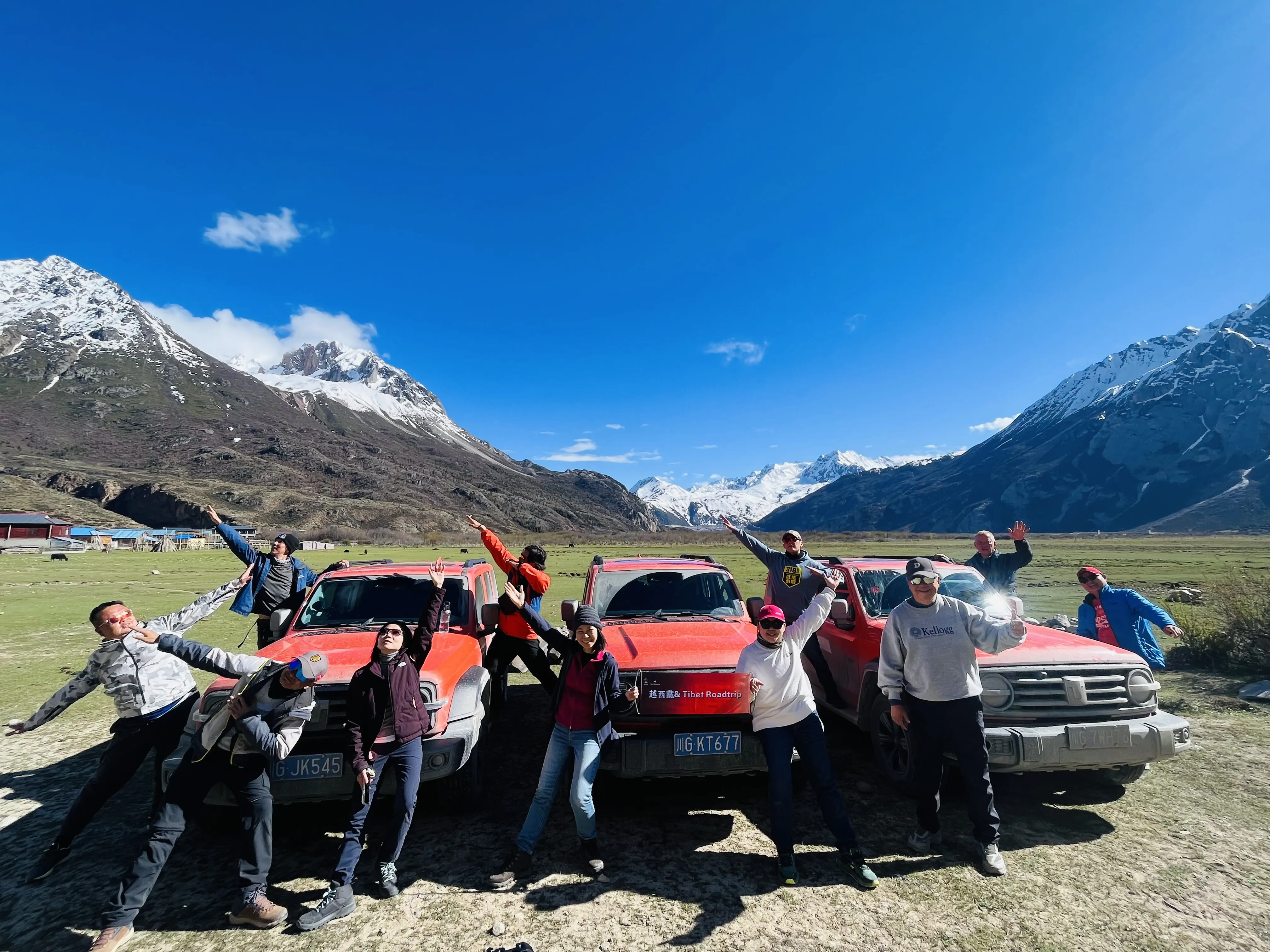
Tibet Self-Driving & Motorcycle Tour Guide for Americans
Documents
In addition to the standard required documents (such as the Tibet Travel Permit and Military Permit), American tourists wishing to self-drive in Tibet also need to obtain a Temporary Chinese Driver's License:
Neither U.S. driver's licenses nor international driver's licenses are recognized in Tibet. Upon arrival, foreign tourists must be accompanied by a tour guide to the local Vehicle Administration Office to obtain a temporary driver's license, usually after passing a traffic rules test (China Road Trip will provide translation assistance).
 |
Vehicle Selection & Rental
Our agency offers a variety of vehicle options for foreign self-driving tourists, all of which are equipped with official tourism operation licenses to ensure legal compliance.
• Tank 300: A 5-seater automatic transmission model available in 2.0T gasoline, 2.4T diesel, and 2.0T plug-in hybrid versions.
• Buick GL8: A 5-seater automatic transmission model with either a 2.0T mild hybrid or 1.5T plug-in hybrid powertrain, suitable for families or groups of up to 5 people, offering comfort and stability.
• Voyah Dreamer: A 7-seater automatic transmission model available in 1.5T plug-in hybrid or pure electric versions, ideal for medium-sized groups of up to 7 people, featuring spaciousness, modernity, and eco-friendliness.
• DENZA D9: A 7-seater automatic transmission model with a 1.5T plug-in hybrid powertrain, suitable for families or groups of up to 7 people, offering luxurious space and efficient hybrid performance.
• Mercedes-Benz V260: A 7-seater automatic transmission model with a 2.0T mild hybrid powertrain, catering to travelers seeking premium comfort and quality for groups of up to 7 people.
 |
 |
We provide a full range of CFMOTO models (450, 525, 625, 800) and BMW GS series (F750 GS, F850 GS, R1250 GS), all featuring 2-seater automatic transmissions with gasoline engines. These models cover a range of needs from beginner to professional levels, suitable for long-distance riding on the plateau.
 |
 |
♥ If you wish to bring your own motorcycle into the country, our agency can assist with customs procedures and deposit payments for motorcycle entry.
Driving Conditions & Safety
Driving conditions in Tibet are complex, so thorough preparation is essential.
1. In terms of roads, while the main highways are paved, there are sections with high-altitude permafrost subsidence, continuous curves (such as the Nujiang 72 Turns), roads adjacent to water or cliffs, and hidden ice on shaded mountain slopes. Drivers should slow down in advance, gently apply the brakes, and maintain a greater following distance.
2. Altitude sickness is the primary challenge. It is advisable to acclimatize in Lhasa for 2 to 3 days after arrival, avoiding strenuous exercise, bathing, and alcohol consumption. Carry oxygen canisters and medications like Gaoyuan'an (altitude sickness relief pills). If symptoms become severe, descend immediately to lower altitudes.
3. For vehicle preparation, it is recommended to choose an SUV or off-road motorcycle. Conduct a comprehensive inspection of brakes and tires before departure, and carry emergency tools such as tire chains, air pumps, and tow ropes. Although fuel consumption is lower at high altitudes, be mindful of the distance between gas stations along the route and refuel in a timely manner.
We provide experienced Tibetan drivers and bilingual (Chinese-English) tour guides to accompany you throughout the journey. They are not only well-versed in plateau road conditions and driving safety but also offer cultural explanations and emergency support along the way. By choosing us, you can focus solely on enjoying the breathtaking scenery and the thrill of riding, while we take care of everything else.
Recommended Route
An 8-Day In-Depth Exploration Tour of Mount Everest
This is a classic choice for a short yet in-depth tour of Tibet. You will embark on your journey from the holy city of Lhasa, delving deeply into core cultural landmarks such as the Potala Palace, Jokhang Temple, Drepung Monastery, and Sera Monastery. Then, you will head west towards Mount Everest, passing through classic natural wonders of southern Tibet like Yamdroktso Lake and Karuola Glacier along the way. At the Gyawula Pass, you can marvel at the breathtaking sight of five snow-capped peaks each exceeding 8,000 meters in elevation. Upon reaching Mount Everest Base Camp, you will witness the unique "Golden Sunset over the World's Summit" and the dazzling starry sky of the high plateau. On the return journey, you will visit Tashilhunpo Monastery, the heart of the Tsang region. This trip seamlessly blends Tibetan culture with breathtaking natural scenery, offering a compact yet profound travel experience.
 |
A 17-Day Sacred Pilgrimage Tour to Mount Kailash
As a classic long-distance route that offers an in-depth exploration of Tibet, this itinerary connects the breathtaking scenery of Mount Everest Base Camp with the pristine wilderness and spiritual sites of the Ali Plateau. The first half of the journey replicates the highlights of the 8-day Mount Everest route, before venturing deeper into the purest wilderness and holiest places of faith in Tibet. Along the way, you will encounter the "Mirror of the Sky," Peiku Tso, and the sacred lake, Manasarovar. You will spend three days completing the pilgrimage circumambulation of Mount Kailash, witnessing the stunning sunrise over the sacred mountain at the 5,630-meter-high Drolma La Pass. Additionally, you will explore the ruins of the ancient Guge Kingdom, Tholing Monastery, and other precious relics of ancient civilization, before finally traversing the Jilong Valley to experience the mild charm of the southern Tibetan canyon. Throughout this journey, you will behold sacred mountains, holy lakes, high-altitude wilderness, and ancient civilizations, embarking on a soul-stirring pilgrimage through the sacred land of Tibet.
 |
A 17-Day Self-Drive Tour on G318 Sichuan-Tibet Highway
The 17-day self-drive tour along the G318 Sichuan-Tibet Highway is the ultimate self-driving feast that traverses Sichuan and Tibet, heading towards the rooftop of the world. Starting from Chengdu, the "Land of Abundance", and heading westward, it passes through a series of breathtaking natural landscapes including snow-capped mountains, glaciers, lakes, canyons, and grasslands, ultimately arriving at the Everest Base Camp. This journey completes a stunning traverse from the mysterious lands of western Sichuan to the roof of the world. Combining the thrill of self-driving adventure, a visual feast of nature, and in-depth cultural exploration of Tibetan regions, it stands as a must-take classic route for self-driving enthusiasts.
 |
A 12-Day Self-Drive Circular Tour of Yunnan
This is a top-notch self-drive option for an immersive experience of the diverse landscapes and ethnic cultures in northwest Yunnan. Starting from Kunming, the "Spring City," you'll embark on a self-drive journey through the border regions of Yunnan, Sichuan, and Tibet, connecting classic attractions such as Yuanmou Earth Forest, Lugu Lake, Lijiang Ancient Town, the First Bend of the Jinsha River, Haba Snow Mountain, and Meili Snow Mountain. Along the way, you'll traverse the rugged and secretive Nu River Gorge, encounter the geothermal wonders of Tengchong Hot Springs, and leisurely enjoy the romantic ambiance of "wind, flowers, snow, and moon" along the Dali Erhai Ecological Corridor. Your route will take you through various ethnic settlements, including those of the Yi, Mosuo, Tibetan, and Bai peoples. Combining the freedom and spontaneity of self-driving with rich ethnic cultural experiences, you'll be treated to an unprecedented and awe-inspiring journey.
 |
Best Time to Travel
1. The Shoulder Seasons: May-June & September-October
For most American tourists, this is the absolute top choice.
Climate & Comfort: Temperatures are mild (approximately 50°F - 68°F), making it the most comfortable period for human senses.
Everest Visibility: This is the best time to see Mount Everest in its "true form." The climate is gentle, and the skies are exceptionally clear, allowing for sharp reflections of the golden mountain in water.
Outdoor Activities: May marks the Everest climbing season, offering opportunities to encounter professional international climbing teams; October is the golden month for trekking and photography.
2. The Lush Summer: July-August
Although this is Tibet's rainy season, it holds unique attractions.
Reduced Altitude Sickness Risk: Vegetation is at its lushest, and the oxygen content in the air is the highest of the year, making it more friendly for tourists concerned about altitude sickness.
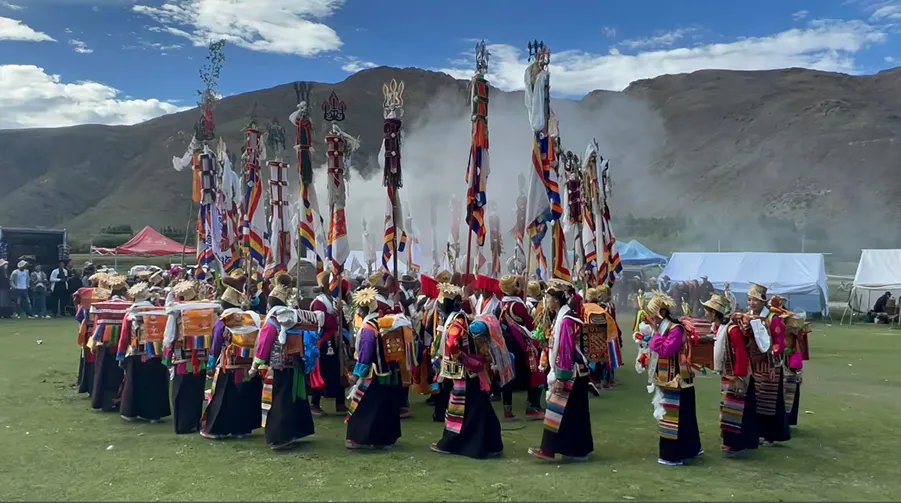
Cultural Festivals: The renowned Shoton Festival usually takes place in August, allowing visitors to watch the display of giant thangkas, Tibetan operas, and horse racing, providing an in-depth experience of local culture.
 |
Tips: Rainfall mostly occurs at night, with cloudy skies during the day. While snow-capped mountains may be obscured, the grasslands and lakes (such as Namtso) on the plateau display their most vibrant colors.
3. The Quiet Winter: November-April of the following year
Suitable for veteran travelers seeking a crowd-free and cost-effective experience.
Pristine Landscapes: Even in Lhasa, winter often brings sunny days. The blue ice landscapes and snow-covered temples are incredibly striking.
Strong Religious Atmosphere: Winter is the season for Tibetan pilgrimages, with more locals circumambulating the Barkhor Street than tourists, offering a chance to witness the most authentic religious life.
Special Offers: In 2026, the Tibetan authorities will continue the "Winter Tourism in Tibet" policy, with free admission to attractions like the Potala Palace and significant price reductions at high-end hotels, presenting an excellent opportunity.
Frequently Asked Questions
1. How can Americans travel independently to Tibet?
Americans cannot travel independently to Tibet. All foreign nationals must travel with a licensed Tibet travel agency, which handles all permits, transportation, accommodation, and provides a guided tour throughout the trip.
2. Can Americans with a US passport travel independently to Tibet?
No. A US passport does not permit independent travel. All foreign passport holders must follow a pre-approved itinerary with a licensed guide from a registered agency.
3. Can Americans holding a Chinese Q2 Family Visit Visa apply for a Tibet Travel Permit?
Yes, but the application must be submitted through a licensed Tibet travel agency. Additional documentation such as proof of relationship may be required, and approval timelines vary.
4. What should Americans pay attention to when traveling to Tibet?
Key considerations: permits must be obtained 30-45 days in advance; the original permit is required for air travel, a copy for train travel; itineraries are fixed and cannot be changed; certain attractions are closed to foreigners; altitude sickness requires acclimatization; travel insurance covering high-altitude emergencies is strongly recommended.
5. Can Americans rent cars and drive by themselves in Tibet?
No. Self-driving is only permitted when accompanied by a licensed agency that arranges all permits and a temporary Chinese driver’s license. The vehicle must be a registered tourist vehicle with a “Tibet AL” plate. Independent car rental without agency supervision is not allowed.
Ask a Quick Question & Free Enquiry

If you have a WhatsApp, please feel free to scan our WhatsApp code.