 +86-13981905144
 inquiry@chinaroadtrip.org
How Alpine experience translates to sustained altitude, remote routes and motorcycle touring in Tibet
Written by China Road Trip | Updated 2026-9-2

From the Dolomites to the Tibetan Plateau
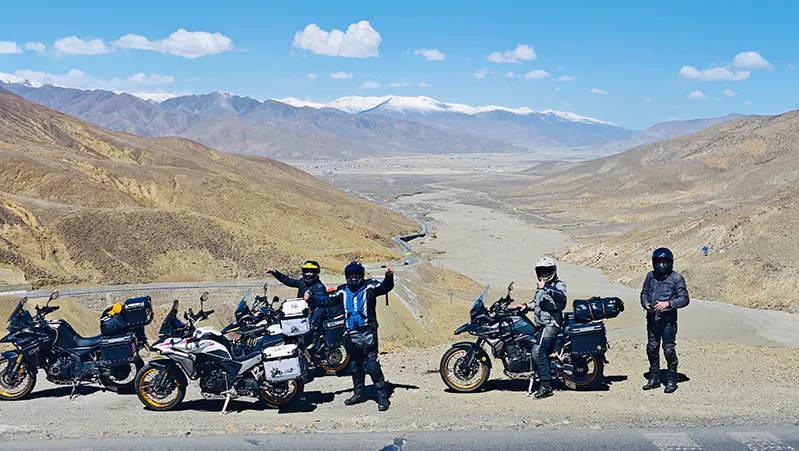
If you have ridden the hairpin bends of the Dolomites or crossed high Alpine passes, Tibet may initially seem like a larger and more remote version of a familiar mountain journey. In reality, however, it places very different demands on both rider and motorcycle. In the Alps, altitude is usually concentrated around individual mountain passes. On the Tibetan Plateau, you may continue riding, eating and sleeping at high altitude for several consecutive days.
This prolonged exposure is the most important difference between Alpine riding and motorcycle touring in Tibet. It affects almost every part of the journey: how quickly you gain altitude, how far you ride each day, which motorcycle and equipment you choose, how well you sleep and recover, and how much of the route must be arranged before departure.
Why Alpine Experience Helps — but Is Not Enough
Riders familiar with the Dolomites and the Alps already bring valuable mountain-riding experience to Tibet:
- • Confident handling through consecutive hairpin bends
- • Effective braking and downshifting on steep mountain roads
- • Experience riding on wet, uneven or loose surfaces
- • Sound judgment when mountain weather changes quickly
- • A practical understanding of layering and staying warm
 |
These skills transfer well to Tibetan roads. However, Alpine experience alone does not prepare a rider for every aspect of a journey across the Tibetan Plateau. Italian riders must also adapt to:
- • Sustained exposure to high altitude rather than a brief mountain-pass crossing
- • Fatigue that accumulates over several days in a low-oxygen environment
- • Sleeping and recovering at elevations higher than many Alpine road passes
- • Longer distances between fuel stops, food, accommodation and other services
- • Limited access to repairs and assistance on remote sections
- • A prearranged itinerary that foreign riders cannot freely change from day to day
 |
The difference is therefore not simply one of scale or road difficulty. Alpine experience provides a strong technical foundation, but riding in Tibet also requires careful acclimatization, realistic daily distances and more advance planning.
Alpine Passes vs. Sustained Altitude in Tibet
The defining difference is not simply the highest elevation reached, but how long the rider remains at altitude.
In the Alps, riders typically climb over a high mountain pass and descend to a lower town later the same day. Their exposure to the highest elevation is often relatively brief, and they may spend the night considerably lower. Tibet follows a very different pattern. Lhasa itself sits at approximately 3,650 metres—higher than most Alpine road passes—and many journeys continue upward from there.
 |
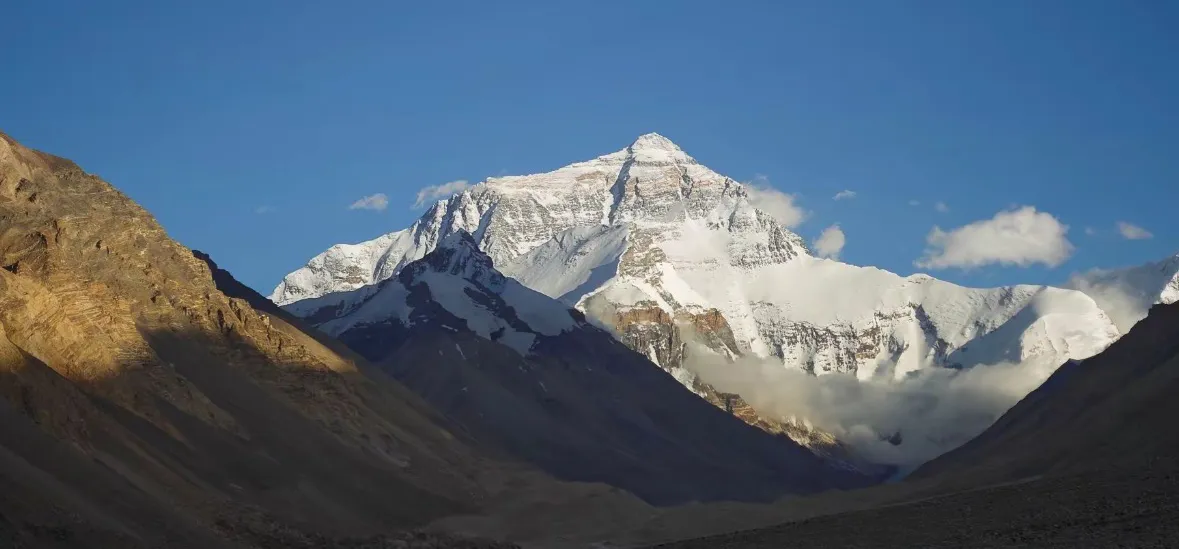
On the route from Lhasa to Everest Base Camp, riders may spend several consecutive days travelling, eating and sleeping at high altitude. Everest Base Camp is located at around 5,200 metres, while towns and overnight stops along the route also remain at significant elevations. Descending to a low-altitude base for recovery is rarely part of the daily routine.
No amount of cornering skill can determine how quickly the body adapts to reduced oxygen levels. Even fit and highly experienced riders need time to acclimatize, making the pace of the itinerary just as important as the route itself.
When planning a Tibet motorcycle tour, we set daily stages according to altitude gain, overnight elevation and realistic riding distance. Acclimatization time, road access and emergency options are considered before the permits, accommodation and final itinerary are confirmed.
Three Practical Ways to Ride in Tibet from Italy
There is no single correct way to reach Tibet. The most suitable option depends on your available time, budget and how much of the journey you want to complete on your own motorcycle.
- Fly to China and use a locally arranged motorcycle
The most practical option for riders with limited holiday time. It avoids the cost and complexity of transporting a motorcycle across multiple borders while still allowing riders to experience routes such as the G318, G214 or Lhasa-Everest Base Camp journey.
 |
- Ride overland from Italy on your own motorcycle
This option suits experienced overlanders with enough time to cross Europe and Central Asia before entering China. The Chinese border crossing, temporary motorcycle import, entry and exit points, and route through China must all be arranged in advance.
- Ship your motorcycle to Asia and begin from a designated starting point
This provides a middle ground for riders who want to use their own motorcycle but do not have time to cross the entire Eurasian landmass. The shipping destination, customs procedures and onward route must be coordinated with the planned entry into China.
Each approach involves different costs, time commitments and documentation. We can compare the options based on your travel dates, preferred route, motorcycle details and intended Chinese entry and exit points before you decide which journey is most practical.
Which Tibet Route Best Matches Your Alpine Experience?
Rather than choosing a route by reputation alone, it is more useful to match the journey to your previous mountain-riding experience, available time and ability to adapt to sustained altitude.
- For a first high-altitude motorcycle journey: G214 Yunnan-Tibet Highway
 |
Starting from Kunming and continuing through Dali, Lijiang, Shangri-La and Deqin, the G214 offers major changes in landscape, climate and elevation before joining the G318 at Markam. Compared with flying directly into Lhasa, it can provide a more progressive approach to the Tibetan Plateau.
However, the elevation gain is not consistently gradual, and the route still includes high passes and demanding mountain sections. Acclimatization days and overnight elevations must therefore be planned carefully.
- For a classic long-distance mountain journey: G318 Sichuan-Tibet Highway
 |
The G318 combines repeated mountain passes, deep river valleys, long sequences of bends and extended riding at altitude. Of the three options, it may feel most familiar to riders accustomed to Alpine touring—but on a much larger scale and over far more consecutive days.
The greater distances, cumulative fatigue and rapidly changing conditions require more stamina and more conservative weather judgment than a typical ride through the Alps.
- For sustained altitude and an Everest objective: Lhasa to Everest Base Camp
 |
This route is suited to riders whose main goal is to experience the high Tibetan Plateau and reach the northern side of Mount Everest. The road is largely paved, so extreme technical riding is not usually the primary challenge. Instead, riders must manage prolonged altitude exposure, cold mornings, strong winds and slower physical recovery.
Because Lhasa already sits at approximately 3,650 metres, riders arriving by air should allow time to acclimatize before beginning the motorcycle journey toward Shigatse and Everest Base Camp.
We recommend routes according to previous mountain-riding experience, available days, preferred daily distance and altitude tolerance—not simply motorcycle type or engine size. Daily stages, acclimatization stops, permits and support arrangements can then be planned around the selected route.
Is Your Italian Motorcycle Suitable for Tibet?
Many Italian riders prefer to bring a motorcycle they already know well, whether it is a Ducati Multistrada, Moto Guzzi Stelvio or Aprilia Tuareg, alongside other popular adventure models such as the BMW GS and Honda Africa Twin. Brand and engine size, however, are less important than how manageable and serviceable the motorcycle remains over long days at altitude.
 |
Important factors include:
- • Handling when fully loaded with luggage and cold-weather equipment
- • Low-speed control on gravel, rutted surfaces, roadworks or temporary detours
- • Real-world fuel range rather than the manufacturer’s ideal figure
- • Tyre suitability for predominantly paved roads with occasional rough sections
- • Compatibility with the fuel grades available in remote areas
- • Access to suitable spare parts and basic repairs far from an authorised dealer
- • Cold-start reliability and performance at high altitude
- • Whether the rider can safely lift the loaded motorcycle after a low-speed fall
Large adventure motorcycles may feel comfortable and stable on paved Alpine roads, but their weight becomes more noticeable during slow manoeuvres, roadside stops and rough sections—especially when the rider is already fatigued by altitude. A lighter mid-sized motorcycle may therefore be more practical than a more powerful touring model.
Before confirming an overland journey, our team can review the motorcycle’s model, dimensions, registration documents and intended border crossing. Riders who prefer not to transport their own motorcycles can instead use a locally arranged bike selected according to their height, riding experience and planned Tibet route.
What Italian Riders Must Arrange for Motorcycle Travel in China and Tibet
The paperwork is manageable when it is divided into three separate layers: permission for the rider to drive in China, permission for the motorcycle to enter and operate in China, and permission to travel through Tibet. These are connected, but they are not the same procedure.
- For the rider: a Chinese temporary driving permit
 |
An Italian driving licence cannot be used on its own in China, and an International Driving Permit does not replace a Chinese driving permit. The temporary permit must also include the correct motorcycle category.
We can check the Italian licence in advance, arrange the required Chinese translation and prepare the application materials. Because the rider must attend the procedure in person, our local team can accompany them after arrival rather than applying on their behalf beforehand.
- For the motorcycle: temporary entry and registration
An Italian-registered motorcycle cannot simply arrive at the Chinese border and enter without prior arrangements. The process normally involves temporary import procedures, Chinese insurance, vehicle inspection and temporary Chinese registration and number plates. The approved entry point, exit point, route and travel period must also be determined in advance.
Before the rider reaches the border, we coordinate the document review, border arrangements, insurance and inspection appointment. Our team then assists with the procedures that must be completed at the border or after entry into China.
- For Tibet: permits and an organised itinerary
 |
Legal entry into China does not automatically allow a foreign rider to travel independently in Tibet. A Tibet Travel Permit, confirmed itinerary and accompanying guide must be arranged through a qualified tour operator. Routes involving Everest Base Camp or certain border areas may require additional travel documents.
Once the itinerary, passport and Chinese visa details are confirmed, our Lhasa-based team can apply for the required Tibet permits and coordinate them with the riding route, accommodation, guide and daily stages.
Daily Distance Feels Different at 4,000 Metres
For an experienced rider in Italy, 300-400 kilometres may be a normal full day of touring. On the Tibetan Plateau, however, the same distance on a map can represent a much longer and more demanding day in the saddle.
Mileage alone does not reflect the full workload. Altitude gain, the number of mountain passes, weather, temporary roadworks, photography stops, checkpoints, fuel availability and cumulative fatigue all affect the pace. A rider who feels strong in the morning may also tire more quickly after several hours in a low-oxygen environment.
For this reason, we set daily stages according to altitude gain, road conditions, fuel stops and available accommodation rather than applying a fixed European-style mileage target. The aim is to reach the overnight stop with enough time to rest and recover—not simply to cover the greatest possible distance.
Fuel, Maintenance and Support Far from Major Cities
In the Alps, towns, fuel stations, workshops and medical services are generally more frequent and easier to reach. Some sections of Tibet are considerably more remote, and the next suitable fuel stop, repair facility or overnight town may be much farther away.
Before departure, riders should consider:
- • The motorcycle’s realistic loaded fuel range
- • The location and opening hours of planned fuel stops
- • Essential tools, puncture-repair equipment and spare parts
- • Offline maps and backup navigation
- • Communication options in areas with limited mobile coverage
- • The availability of medical assistance and emergency evacuation routes
On remote itineraries, a support vehicle can carry luggage, oxygen, emergency supplies, spare parts and basic repair equipment. This keeps the motorcycles lighter and provides additional support when weather, fatigue or mechanical problems interrupt the planned riding day.
Best Season: Alpine Expectations vs. Tibet Reality
Seasonal expectations developed in the Alps do not transfer directly to the Tibetan Plateau. In Italy, riders often plan around the opening and closing of individual mountain passes. In Tibet, route conditions are shaped by a broader combination of altitude, regional weather, rainfall, snow, wind and road maintenance.
- • May–June: Generally one of the more favourable periods for motorcycle touring, with relatively stable conditions on many routes. High passes can still be cold, and occasional snow remains possible.
- • July–August: The warmest period, but also the main rainy season along routes through Sichuan, Yunnan and eastern Tibet. Motorcycle travel remains possible, although heavy rain may cause roadworks, landslides, falling rocks or temporary delays.
- • September–October: Often offers clearer views and relatively good riding conditions. Temperatures begin to fall, particularly during early mornings, evenings and high-pass crossings.
 |
- • Winter: Not every route is automatically closed, but cold, ice, snow and shorter daylight hours make motorcycle travel substantially more demanding. Only selected itineraries may be practical, depending on current road conditions, permit arrangements and the level of professional support available.
Because conditions vary by route and year, we review the expected weather, road situation and permit requirements before confirming the departure date and daily stages.
Sample Motorcycle Journeys for Italian Riders
The journey can be planned very differently depending on whether the rider wants to cross Eurasia on their own motorcycle or fly to China and begin closer to Tibet.
- For the full overland experience
Italy → Balkans → Türkiye → Central Asia → Xinjiang, China → Tibet
This option is suited to riders who want the journey to Tibet to form part of a much longer Eurasian expedition. Before reaching China, the Chinese entry point, exit point, temporary motorcycle import, driving permit and approved domestic route must already be coordinated.
Continuing from Tibet to Nepal may be added only when the relevant border crossing is open and both the rider and motorcycle are approved to cross. It should never be treated as an automatic extension decided after reaching Lhasa.
- For riders flying to China
Chengdu → Kangding → Litang → Markam → Ranwu Lake → Nyingchi → Lhasa → Shigatse → Everest Base Camp
This journey follows the classic G318 Sichuan-Tibet Highway before continuing from Lhasa toward Everest. It avoids the time and complexity of crossing Eurasia while still offering long-distance mountain riding, repeated high passes and several consecutive days on the Tibetan Plateau.
Each option involves different altitude patterns, motorcycle arrangements and documentation. We can plan the journey stage by stage, connecting daily riding distances, acclimatization, permits, border procedures and vehicle support into one workable itinerary.
FAQs for Italian Motorcycle Riders
- Does riding in the Dolomites prepare me for Tibet?
It provides a strong technical foundation for cornering, braking and judging mountain-road conditions. However, it does not prepare the body for several consecutive days at high altitude. Acclimatization must be planned separately.
- Can I bring my Italian-registered motorcycle into China?
Yes, but the arrangements must be completed before reaching the Chinese border. These include temporary import procedures, Chinese insurance, vehicle inspection, temporary registration and an approved entry point, exit point and route.
- Is my Italian or EU driving licence valid in China?
Not on its own. Italian riders need a Chinese temporary driving permit covering the correct motorcycle category. The application is based partly on the Italian licence and its required Chinese translation.
- Is an International Driving Permit accepted in China?
An IDP does not replace the required Chinese driving permit. Riders must complete the Chinese temporary-driving-permit procedure in person after the application materials have been prepared.
- Can I ride a Ducati or Moto Guzzi in Tibet?
Yes, provided the motorcycle can be legally imported and is suitable for the planned route. Loaded weight, fuel range, tyre choice, low-speed handling and access to spare parts matter more than the brand itself.
- How many acclimatization days do I need?
There is no single number suitable for every rider. It depends on the starting elevation, speed of ascent, overnight elevations and individual response to altitude. Acclimatization time should be built into the itinerary, with flexibility to slow down if necessary.
- Should I use my own motorcycle or a locally arranged one?
Both options are possible. Bringing your own motorcycle suits riders planning a longer overland journey, while a locally arranged bike is generally more practical for those with limited holiday time or who want to avoid international vehicle-import procedures.
- Can I continue from Tibet to Nepal?
This depends on the current status of the China-Nepal border crossing, road access and approval for both the rider and motorcycle. As of September 2026, the Gyirong-Rasuwagadhi crossing remains inaccessible following severe mudslides and flooding, and no reliable reopening date has been confirmed. A Tibet-to-Nepal motorcycle journey should therefore be treated as conditional and verified before the itinerary is finalised.
Conclusion
Experience in the Dolomites and the Alps provides Italian riders with a strong technical foundation, but Tibet introduces a different challenge: sustained altitude, cumulative fatigue, remote distances and travel arrangements that must be confirmed in advance.
Preparing for a Tibet motorcycle tour is therefore about more than choosing the right bike. It means coordinating acclimatization, realistic daily stages, riding documents, Tibet permits and—when bringing your own motorcycle—border and temporary-import procedures as one complete journey.
Ask a Quick Question & Free Enquiry

If you have a WhatsApp, please feel free to scan our WhatsApp code.