 +86-13981905144
 inquiry@chinaroadtrip.org
Licences, Tibet permits, motorcycles, routes, altitude and riding a French bike overland through China
Written by China Road Trip | Updated 2026-9-2

For many French motorcyclists, Tibet is the kind of journey that stays on the wish list for years: high passes, the G318 and G214 highways, Everest Base Camp and long days across the Tibetan Plateau. The attraction is obvious, but planning the trip raises questions that do not normally arise on a motorcycle tour within Europe.
Can a French licence be used in China? Is an International Driving Permit enough? Can you arrange a motorcycle after arrival? Are foreign riders allowed to travel independently in Tibet? What happens if you want to enter China with your own French-registered bike? And how difficult are the altitude, roads and weather in practice?
This guide answers those questions in the order most riders ask them. Its main focus is a French rider coming to China specifically for a Tibet motorcycle tour. It also explains the additional preparation required when Tibet is one part of a longer overland journey across China.
Can French Citizens Ride a Motorcycle in China and Tibet?
Yes. French citizens can legally ride motorcycles in mainland China and take part in an organised motorcycle journey through Tibet. However, a French motorcycle licence does not give direct permission to ride on Chinese roads, and entering Tibet involves separate travel rules.
 |
A legal Tibet motorcycle trip normally depends on three things:
- 1.The rider has the appropriate Chinese-issued driving permission for a motorcycle.
- 2.The motorcycle has valid registration and insurance in China, or approved temporary entry documents if it is foreign-registered.
- 3.The Tibet journey has the required permits, approved itinerary and licensed travel arrangements.
These requirements are separate. A rider may have a Chinese driving permit but still be unable to enter Tibet without a Tibet Travel Permit. A French motorcycle may be approved to enter China but still require additional arrangements before travelling through Tibet.
If you are unsure which requirements apply to your trip, send us your planned route, dates and motorcycle choice. We can identify the rider, vehicle and Tibet arrangements that need to be prepared before you make non-refundable bookings.
Can You Use Your French Motorcycle Licence or IDP in China?
A French motorcycle licence cannot be used by itself to ride legally in mainland China. An International Driving Permit issued in France is also not a substitute for Chinese driving permission. Carrying the French licence and IDP together still does not authorise direct riding.
The French licence is nevertheless essential because it proves that the rider already holds a motorcycle qualification. It is normally submitted with an accepted Chinese translation when applying for a temporary Chinese driving permit. The rider usually needs to attend the local Vehicle Management Office in person after arriving in China.
 |
Commonly requested materials include:
- √ A valid French passport and evidence of legal entry or stay in China.
- √ The original French motorcycle licence.
- √ An accepted or certified Chinese translation of the licence.
- √ Identification photographs and the local application form.
- √ A vision or physical check where required by the processing office.
French motorcycle categories such as A1, A2 and A also matter. The category on the French licence must cover the planned motorcycle, and the Chinese permit must include the corresponding motorcycle category. Confirm this before reserving a large adventure bike. Our team can prepare the translation and appointment, but the final official process cannot normally be completed remotely while the rider is still in France.
Can You Arrange a Motorcycle in China?
Yes, and this is usually the simplest choice for a French rider whose main objective is Tibet. Using a motorcycle arranged in China avoids the customs, temporary import, inspection and registration procedures required for a French-registered bike. It also allows the rider to fly directly to the city (Lhasa,Chongqing,Kunming,Urumqi) where the driving-permit process and tour begin.
This should still be arranged before departure rather than treated like an ordinary walk-in rental. Not every rental company accepts foreign riders or temporary Chinese permits, and Tibet use may be restricted. Ask the operator to confirm:
- The exact motorcycle model, engine capacity and permitted route.
- Chinese registration, insurance and what the policy actually covers.
- Tyre condition, maintenance history and pre-departure inspection.
- Luggage equipment, deposit, fuel policy and responsibility for damage.
- Breakdown assistance, spare parts, recovery and replacement arrangements.
 |
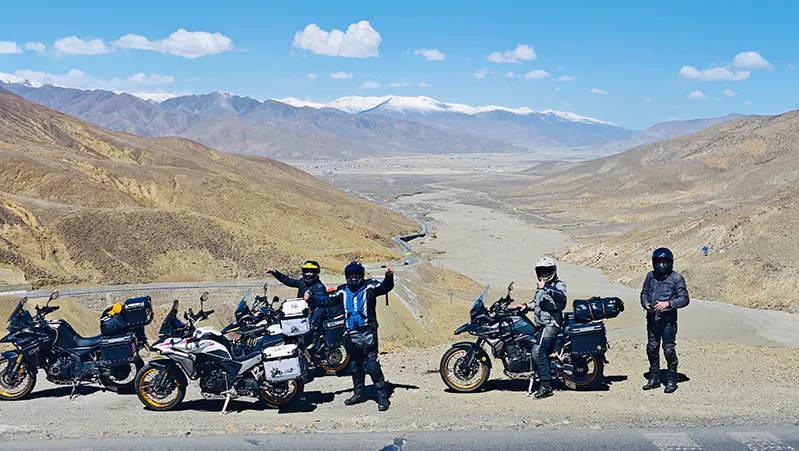
A 400-800cc motorcycle offers a useful balance of power, fuel range and manageable weight for many riders. A smaller bike can be easier at low speed or on broken surfaces, while an 800cc-plus adventure motorcycle is best for someone already comfortable managing its weight. Reliability and rider confidence matter more than choosing the largest engine available.
China Road Trip can arrange suitable motorcycles for different routes and rider experience levels, together with the required guide and support services. Tell us which motorcycles you normally ride in France and we can recommend a realistic option for Tibet.
Can French Riders Travel Independently in Tibet?
No. Foreign visitors cannot independently enter and travel through the Tibet Autonomous Region, whether they are sightseeing, driving a car or riding a motorcycle. A qualified travel agency must arrange the trip and apply for the Tibet Travel Permit using the traveller’s passport and China entry information.
 |
The Tibet arrangements normally include:
- A Tibet Travel Permit for entry into the Tibet Autonomous Region.
- An approved itinerary covering the places and dates of the journey.
- A licensed guide accompanying the trip as required.
- Additional permits for destinations such as Everest Base Camp, Mount Kailash or some border areas.
The TTP is not a motorcycle licence, and the Chinese driving permit is not a Tibet permit. Both must be prepared for a motorcycle trip. Riders should also understand that the route cannot be changed as casually as a weekend ride in France. Weather may require practical adjustments, but major itinerary or destination changes need to remain compatible with the approved arrangements.
Our team can coordinate the Tibet permits, guide and approved itinerary together with the motorcycle and driving-permit arrangements, so the rider does not have to manage each process separately.
Do French Riders Need a Visa for China?
As of September 2026, eligible French ordinary-passport holders may enter China visa-free for up to 30 days for qualifying short visits under the arrangement currently scheduled through 31 December 2026. Riders should verify the latest policy before booking because visa-free arrangements can be extended, changed or allowed to expire.
Thirty days can be sufficient for a focused motorcycle trip such as Lhasa-Everest, G318 or G214 when the driving-permit appointment and domestic travel are planned efficiently. It may not be enough for a long overland crossing that includes border procedures, a multi-province route, acclimatisation and contingency days. If the planned stay is longer or does not meet the visa-free conditions, obtain the appropriate visa before departure.
Visa-free entry into mainland China does not remove the Tibet Travel Permit requirement. Every French visitor entering Tibet still needs the organised travel arrangements described above.
Which Tibet Motorcycle Route Is Right for Me?
 |
Lhasa to Everest Base Camp: best for limited time
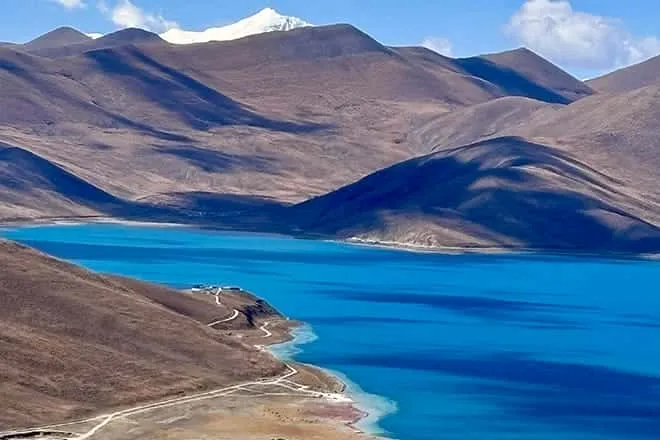
Lhasa - Yamdrok Lake - Gyantse - Shigatse - Everest Base Camp. This route suits riders who want the essential Tibet and Everest experience without spending several weeks riding across China. It works particularly well with a motorcycle arranged locally. Allow approximately 7-10 days and include acclimatisation time in Lhasa before riding higher.
 |
G318 Chengdu to Lhasa: the classic long ride
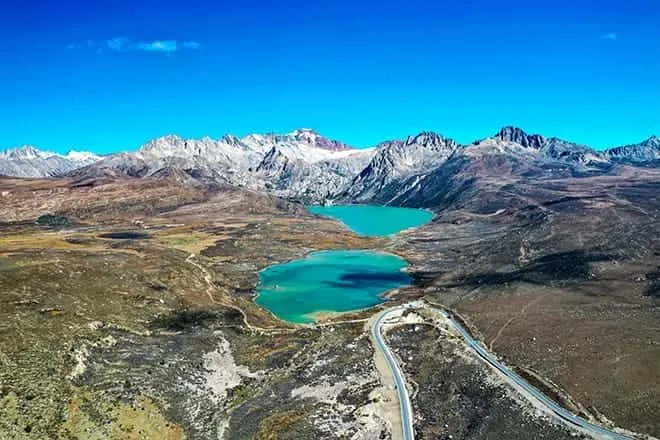
Chengdu - Kangding - Xinduqiao - Litang - Markam - Nyingchi - Lhasa. G318 is the route many adventure riders picture when they think of Tibet. It combines mountain passes, grassland, canyons and long riding days. Around 12-17 days is more realistic than rushing it, especially for a first high-altitude motorcycle trip.
 |
G214 Kunming to Lhasa: a more gradual approach
Kunming - Dali - Lijiang - Shangri-La - Deqin - Yanjing - Markam - Lhasa. G214 begins lower in Yunnan and joins G318 at Markam. Its staged climb can make acclimatisation more gradual, while still offering major mountain scenery. Allow approximately 12-16 days.
Tibet to Nepal: check the border status before planning
The classic overland route runs from Lhasa through Shigatse and Everest to Gyirong before continuing into Nepal. However, the Gyirong border crossing is currently closed following mudslide damage, and its reopening date remains uncertain. Riders should therefore not treat Nepal as a guaranteed exit when planning their journey.
We can check the latest border conditions and help arrange an alternative route if the crossing remains closed. If it reopens, the Chinese exit procedures, Nepal entry requirements and motorcycle documents must still be arranged in advance as part of one coordinated cross-border itinerary.
All routes can be adjusted according to the rider's available time, experience, preferred daily distance and altitude tolerance. We can design a private or group motorcycle itinerary with a suitable route and a practical backup plan.
When Is the Best Time to Ride in Tibet?
- May to June: generally comfortable temperatures, although high passes can still receive snow.
- July to August: warmer but wetter, with possible poor visibility, rockfall and temporary road disruption.
- September to October: often clearer views and excellent mountain photography, with colder mornings and nights.
- November to March: colder temperatures, snow and ice increase the risk and require more careful route selection, equipment and daily monitoring.
Late spring and early autumn are usually the easiest choices, but stable conditions are never guaranteed on the plateau. A sunny valley can lead to wind, rain or snow on the next pass. Confirm permit availability, road reports and motorcycle availability before departure, and include one or two buffer days on longer routes.
 |
Winter riding is not automatically excluded. Experienced riders who specifically want a winter Tibet motorcycle experience may still travel when permits, roads and weather allow. China Road Trip can assess the seasonal route, arrange an experienced guide and support vehicle, monitor conditions and keep the itinerary flexible. Some roads or destinations may become temporarily unavailable, so safety and the guide’s local judgement must take priority over a fixed daily plan.
How Difficult Are the Roads and Altitude?
- Road conditions
The main G318 and G214 routes are largely paved, but that does not make them effortless. Riders may encounter construction, damaged surfaces, loose gravel, water, livestock, slow vehicles and sudden weather. Distances that look easy on a map can take a full day because of passes, traffic, photography stops and document checks.
 |
Avoid unnecessary night riding, maintain extra braking distance on wet or dusty surfaces and refuel earlier than you would in a well-served part of Europe. Keep the passport, driving permit, Tibet documents and motorcycle papers accessible. A support vehicle can carry luggage, tools, oxygen and a spare rider, and becomes particularly valuable for groups or remote itineraries.
For riders concerned about altitude, winter conditions or demanding sections, we can build shorter riding days into the route and arrange a support vehicle instead of simply removing the experience from the itinerary.
- Altitude
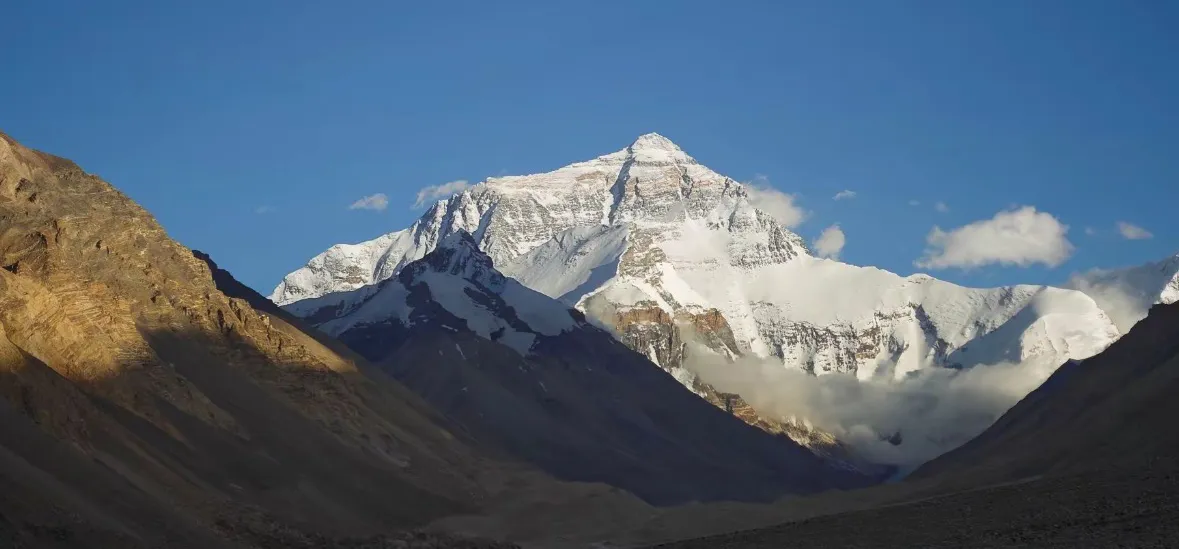
Altitude is often a bigger challenge than the road surface. Lhasa is around 3,650 metres and Everest Base Camp is about 5,200 metres. Headache, fatigue, poor sleep and reduced concentration can affect riding safety. Fitness and motorcycle experience do not make a rider immune to altitude illness.
 |
Plan shorter days at the beginning, ascend gradually where possible and avoid pushing through worsening symptoms. Rest, hydrate, tell the guide how you feel and follow professional medical advice. If symptoms become significant, stop ascending. A slower itinerary is safer and usually more enjoyable than trying to complete every kilometre on a fixed schedule.
What Equipment Should You Bring from France?
Even in summer, a Tibet motorcycle tour can involve strong sun, rain, cold wind and near-freezing temperatures within the same day. Bring riding gear that works as a layered system rather than one heavy item.
- - Waterproof protective jacket and trousers.
- - Thermal base and mid layers that can be added or removed quickly.
- - Cold-weather gloves, protective boots and a well-fitting helmet.
- - Sun protection, sunglasses and lip protection for high UV exposure.
- - Offline maps, charging cables, a power bank and secure phone mounting.
- - Personal medication and a compact first-aid kit.
For a locally arranged motorcycle, confirm whether tyre-repair equipment, tools, luggage, rain covers and spares are supplied. For your own bike, carry tools and parts that match the motorcycle, but coordinate any restricted or difficult-to-import items before reaching the Chinese border.
Do You Need a Guide, Support Vehicle or Special Apps?
- Guide and support vehicle
A licensed guide is part of the required Tibet travel arrangements for foreign visitors. The guide is not there to teach an experienced French rider how to operate a motorcycle; the role is to coordinate the approved itinerary, permits, checkpoints, local communication and changes caused by weather or road conditions.
A support vehicle is not equally important on every route, but riders should understand what is included before booking. It can carry luggage, spare parts, tools, water and oxygen, provide a place for a tired or unwell rider to rest, and assist when a motorcycle cannot continue. It is especially useful for groups, Everest itineraries, remote sections and riders making their first journey at extreme altitude.
- Navigation, communication and payments
Do not assume that every map, messaging or payment service used in France will work in the same way in China. Download offline maps before departure and ask the operator which local navigation and communication apps the group will use. Keep the guide’s phone number, hotel addresses and daily meeting points available offline.
Mobile payment is common in China, but foreign-card setup and acceptance can vary. Carry more than one payment method and ask in advance how fuel, deposits, tolls, repairs and personal expenses will be handled. A local SIM or suitable roaming arrangement also makes daily coordination much easier, although reception can still be weak on remote plateau sections.
How Long Does a Tibet Motorcycle Trip Take and What Affects the Cost?
A short Lhasa-Everest journey generally needs 7-10 days. G318 or G214 usually needs around two weeks, plus time for arrival, the temporary driving-permit procedure and possible weather delays. A China-Tibet-Nepal journey can require three to five weeks within China, while a complete expedition from France may take several months.
The cost depends on more than the number of riding days. Important factors include the motorcycle model, deposit, guide, support vehicle, accommodation, fuel, Tibet permits, driving-permit assistance, insurance, group size and route. For an imported motorcycle, customs coordination, temporary registration, Chinese insurance, border work and possible shipping add substantially to the budget.
When comparing quotations, ask what is included and what happens after a breakdown, illness or itinerary change. A lower headline price may exclude the support that matters most in a remote high-altitude environment.
Send us your preferred route, motorcycle choice, group size and travel dates for an itemised proposal showing the included permits, vehicle, guide, support and accommodation arrangements.
What If You Want to Ride Your Own French Motorcycle Overland Through China and Tibet?
This is possible, but it requires much more preparation than flying into China and using a motorcycle arranged locally. A French-registered motorcycle cannot normally arrive at the border and enter without advance coordination. The entry port, exit port, route, travel dates, rider documents and motorcycle file should be reviewed several months beforehand.
- Documents for the rider and motorcycle
- Passport, China entry permission, French motorcycle licence and accepted Chinese translation.
- French registration certificate (carte grise) and proof of ownership.
- Written authorisation if the registered owner is another person or company.
- Motorcycle photographs, VIN, engine number, dimensions and technical specifications.
- Proposed Chinese entry and exit ports, travel dates and detailed route.
- What must be arranged in China
The motorcycle generally needs temporary import formalities, customs clearance, Chinese insurance, a vehicle inspection, temporary Chinese registration and a temporary number plate. The rider separately completes the Chinese motorcycle-permit process. A Carnet de Passages may help in other countries but does not replace these Chinese requirements, and European insurance does not replace insurance valid in China.
A conceptual route may run from France through Türkiye and Central Asia into western China, then continue across China and Tibet before leaving for Nepal through Gyirong. The exact route depends on visas, security conditions, border openings and the ports able to process the vehicle. Treat it as an approved journey rather than a route that can be changed freely after entry.
Tibet remains a separate part of the plan. Successful vehicle entry into China does not remove the need for the TTP, approved Tibet itinerary, guide and additional destination permits. If Nepal is the exit, the Tibet journey and cross-border vehicle movement should be coordinated together from the beginning.
 |
Our overland team can review the proposed entry and exit ports before departure and coordinate the China vehicle-entry process with the Tibet section, reducing the risk of reaching the border with an itinerary or document set that cannot be used.
How Far in Advance Should You Prepare?
- If you will use a motorcycle arranged in China
- 1.Choose the route and operator two to four months before departure.
- 2.Submit passport and licence information and prepare the translation four to eight weeks before departure.
- 3.Confirm the temporary driving-permit appointment, Tibet permit process, motorcycle and domestic travel before flying.
- If you will bring your French motorcycle
- 1.Begin at least four to six months ahead, and earlier for a complex cross-continent route.
- 2.Confirm the Chinese entry port, exit port and route before finalising third-country visas and bookings.
- 3.Submit the complete motorcycle file and reconfirm borders, insurance and the meeting arrangements before arrival.
How We Help French Motorcycle Travellers
China Road Trip can help French riders choose a suitable Tibet route, arrange a motorcycle in China, prepare the licence translation and temporary driving-permit procedure, apply for Tibet permits and organise the guide and support services. For riders bringing their own bike, we can also evaluate the proposed China crossing, review the motorcycle documents and coordinate border, customs, insurance and temporary registration arrangements.
To assess your journey, send us your proposed dates, number of riders, licence category, riding experience, preferred Tibet route and whether you want a motorcycle arranged in China or will bring your own. For a French-registered motorcycle, also include the carte grise, ownership information, model, engine size, intended entry country and exit country.
Conclusion
A French rider can legally experience Tibet by motorcycle, but the trip must be prepared around Chinese driving permission, a legally documented motorcycle and Tibet’s travel requirements. For most riders, using a motorcycle arranged in China is the simplest route to G318, G214 or Everest. Bringing a French bike is possible when Tibet forms part of a longer overland expedition, but it requires months of advance vehicle and border planning. Once those arrangements are in place, Tibet can become the high-altitude motorcycle journey many riders have imagined for years.
Ask a Quick Question & Free Enquiry

If you have a WhatsApp, please feel free to scan our WhatsApp code.