 +86-13981905144
 inquiry@chinaroadtrip.org
Motorcycles in Tibetan daily life and riding culture
Written by China Road Trip | Updated 2026-10-16

Look through photos of Tibet's pastoral areas, and you'll often spot motorcycles parked beside houses, traveling along village roads, or making their way across rough tracks toward grazing areas. After seeing enough of these scenes, you might start to wonder: does everyone in Tibet ride a motorcycle?
 |
Not everyone, of course. But in some of Tibet's pastoral communities, motorcycles have become useful for herding livestock, running errands, and visiting relatives. For others, riding is also a personal passion, tied to memories, friendships, and a love of motorcycles. So how did these machines become part of everyday life on the plateau?
You ride for the views. Where are they riding?
For visitors, motorcycle riding in Tibet is often about the scenery. For some local herders, however, a motorcycle is part of the working day. According to a 2024 China News Service report, herders in Duoma Township, Amdo County, Nagqu, used motorcycles to tend their livestock in snowy conditions. This shows how motorcycles can serve as practical tools for herding, even in harsh weather.
The riders you see aren't necessarily traveling. They might be working.
From horseback to motorcycles: how travel has changed
In parts of the Tibetan Plateau, neighboring households may be several kilometers apart, while villages can be much farther from one another. A trip to town, a visit to relatives, or a journey to distant grazing areas can therefore involve considerable travel. For some families, motorcycles offer a practical way to cover these distances and make everyday journeys easier.
 |
- — While motorcycles have become part of everyday transportation in some pastoral areas, horseback riding remains a popular way for visitors to experience Tibet’s landscapes. Here, tourists enjoy a horseback ride across an open grassland.
A 2014 Xinhua report described how transportation was changing in Tibet's pastoral areas. Nyima, a young Tibetan man from Baixiong Township in Nierong County, Nagqu, explained that horses were no longer the main means of transportation in his community. Motorcycles, cars, and other motor vehicles had become increasingly common as roads improved and household incomes rose.
Evidence of this shift can be found in reports dating back to 2011. The Beijing News reported that one village in Riwoqe County, Chamdo, had 120 motorcycles and 74 trucks and tractors among its 118 households. Although these figures describe just one village at a particular point in time, they illustrate how motorized transportation had become part of rural life in that community. Better road connections made these vehicles increasingly practical for everyday travel.
More than transportation: a passion for motorcycles
For some riders, motorcycles mean much more than transportation. A 2016 story by Road Store, published on Jiemian News, explored motorcycle enthusiasm through personal stories from Tibetan communities. Young enthusiasts shared motorcycle magazines, learned about repairs and maintenance, and personalized their bikes with decorations such as colorful tassels and traditional Tibetan scarves.
 |
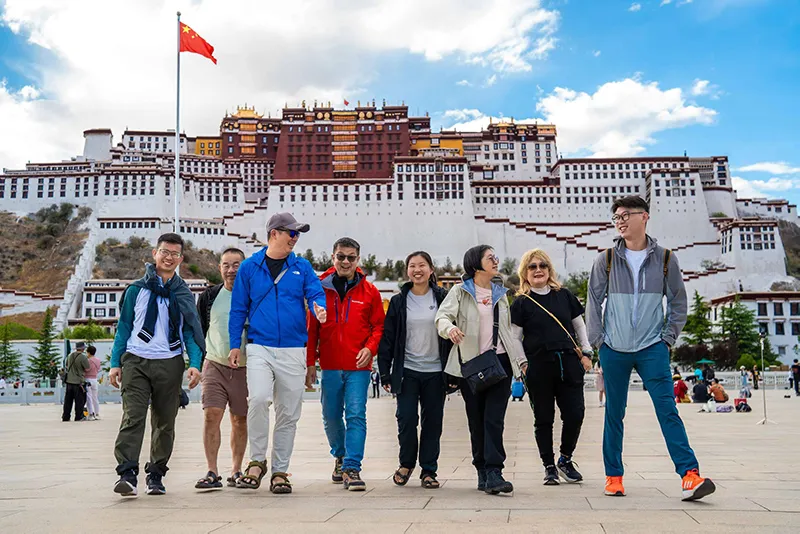
- — Motorcycle enthusiasts travel thousands of miles to experience the thrill of riding through Tibet. In this photo, international riders hosted by our travel agency pose with their motorcycles in front of the iconic Potala Palace in Lhasa, marking a memorable moment of their Tibet motorcycle journey.
These stories offer a glimpse into the enthusiasm surrounding motorcycles, particularly among some younger riders. They are personal recollections rather than a picture of every Tibetan community, but they reveal something easily overlooked: motorcycles can be part of a person's identity, friendships, and memories. A shared passion for motorcycles can also create common ground between visiting riders and local enthusiasts.
Same landscape, different journeys
The landscapes that visitors travel thousands of miles to see are part of everyday life for the people who live here. A mountain pass that feels like an adventure to a visiting rider may be a familiar route for someone traveling to town. A stretch of grassland that makes a perfect photo stop may also be part of a local family's grazing area.
For local residents, these roads are familiar routes connecting their homes, communities, and daily activities. For a first-time visitor, every turn may reveal something new. Learning about the people who live along these roads can make a motorcycle journey through Tibet more meaningful than simply admiring the scenery.
Beyond the ride: connecting with local life
Beyond Tibet's snow-capped mountains and lakes are villages, small towns, and the people who call them home. Along the way, you may notice motorcycles parked near pastoral camps or encounter local riders taking a break by the roadside. Sometimes, a shared interest in motorcycles can become the beginning of a conversation.
On our guided Tibet motorcycle tours, a bilingual riding guide helps with communication, route coordination, and arrangements along the way. A support vehicle carries the main luggage and provides assistance according to the tour arrangements. This allows riders to focus on the journey while having opportunities to discover more about the landscapes and communities they pass through.
 |
In Tibet, a motorcycle can mean different things to different people. For some, it is part of a day's work. For others, it represents freedom, friendship, or a lifelong passion for riding. Understanding these different experiences can bring a new perspective to your own journey across the plateau.
Interested in exploring Tibet by motorcycle? Tell us about your riding experience, preferred travel dates, and the places you'd like to visit. We'll help you plan a Tibet motorcycle tour that matches your interests, experience, and preferred riding pace.
Ask a Quick Question & Free Enquiry

If you have a WhatsApp, please feel free to scan our WhatsApp code.