 +86-13981905144
 inquiry@chinaroadtrip.org
Your own vehicle, new landscapes and local support across China
Written by China Road Trip | Updated 2026-10-20

Have you ever imagined setting off from Europe in your own car or on your motorcycle, crossing countries and borders, and eventually arriving in China?
No baggage carousel or airport rental counter. The vehicle that takes you to work every day and joins you on weekend trips is the same one that brings you here. This time, though, the journey takes you far beyond your usual roads.
Every control feels familiar. Your luggage is packed, and the things you need are within easy reach. But beyond that familiar space, the signs, landscapes and daily routines are changing.
Imagine continuing from Central Asia into China, then traveling through Xinjiang, Tibet and Yunnan before heading into Laos. This illustrative route requires advance planning, with border crossings, permits and road conditions confirmed for your travel dates.
Leaving home: the familiar vehicle, a much longer road
If you're setting out from Europe, the first stretch looks like any other long drive or ride. You pull out of your street, merge onto a road you've traveled a hundred times, and for the first few hours nothing feels unusual. The car hums at the speed you always drive; the motorcycle settles into the rhythm you know.
Somewhere along the way, the road stops being routine. The languages on the signs change. The currencies in your wallet change. You cross borders that take minutes, then borders that take longer. As the journey continues, familiar routines give way to new ones. Your vehicle gathers dust as you pass through places whose names are still unfamiliar.
China is the part you've been looking forward to. Not because it's the end, necessarily—but because it's the stretch you've read about, zoomed in on, and wondered about the most.
When you arrange the China section with us, our team meets you at your entry crossing and accompanies you throughout the planned journey to your exit crossing. This includes coordinating border procedures and the required guide accompaniment in Tibet. You drive your own car or ride your own motorcycle, with local support along the way.
Driving or riding your own vehicle doesn't mean making the journey alone. When you arrange the China section with us, our team meets you at your entry border crossing and accompanies you throughout your planned journey to the exit crossing. We help coordinate the border procedures and arrangements along the way, including the required guide accompaniment for the Tibet section. You stay behind the wheel of your own car, with local support throughout the journey. For the detailed steps, see our guide to bringing your own vehicle into China.
 |
Xinjiang: the first road after the border
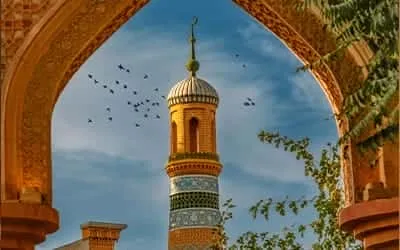
Picture this: you enter China at Irkeshtam, clear the formalities, and head toward Kashgar. The road is still asphalt. The vehicle is still the same one. But the signs and place names outside have changed.
A short way down the road, a sign appears ahead. It carries a place name you've looked at many times while planning, zoomed in on in your maps app more than once. Now it's right there on the sign, with an arrow pointing toward it. The navigation app gives the next instruction, and the name you've studied on the map finally becomes part of the road ahead.
In Kashgar, you stop for a meal. You park outside a busy restaurant; if you're riding, you remove your helmet and gloves before heading in. You sit down, and the menu arrives. You can't read most of it. You hold up your phone to show the owner a translation, then point at a photo to confirm. The owner nods.
While you wait, you look out the window. Your vehicle is parked right outside. Among a row of unfamiliar vehicles, you spot it instantly. You're sitting in an unfamiliar restaurant, with your own vehicle just outside the window—there's something quietly wonderful about that.
The dish arrives, not quite what you expected. You take your first bite. That first taste becomes part of your memory of the place.
Back on the road, the chatter of the restaurant stays behind. The route ahead leads deeper into Xinjiang.
From Xinjiang toward Tibet: the landscape changes
 |
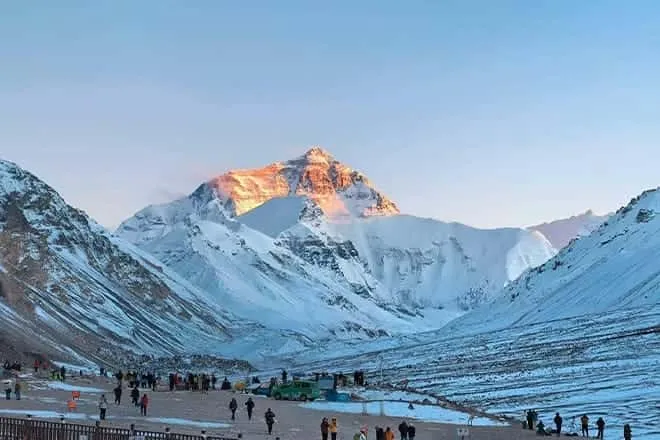
From Kashgar, the planned route continues toward Yecheng and then onto the Xinjiang–Tibet Highway, heading into western Tibet. Road conditions and daily distances on this section need to be confirmed before departure; the journey begins to follow a different rhythm.
Long climbs and higher elevations make the day's travel feel different from the motorway stretches earlier in the trip. For riders, altitude, weather and road surface deserve particular attention on this section.
This part of the journey also depends on arrangements made long before arrival. Entry into Tibet requires advance travel arrangements and permits for foreign visitors, with any additional approvals determined by the specific route.
A stop at Lake Manasarovar
One stop on this stretch stays with you: Lake Manasarovar.
 |
At an arranged viewpoint near the lake, you park and step away from your vehicle. With the engine off, you notice the sound of the wind. The lake stretches out before you, with mountains beyond. After hours of watching the road, you pause to take in the view.
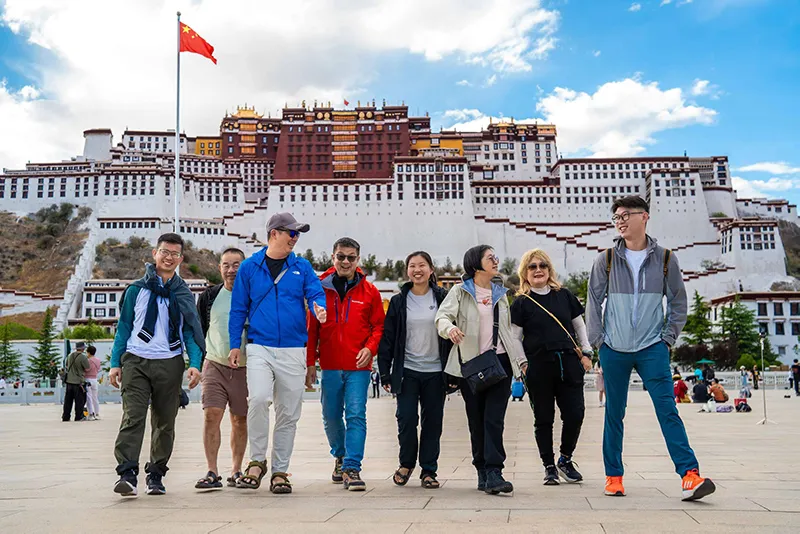
Back on the road, the route continues through Saga and Shigatse toward Lhasa.
From Tibet into Yunnan: mountains and gorges
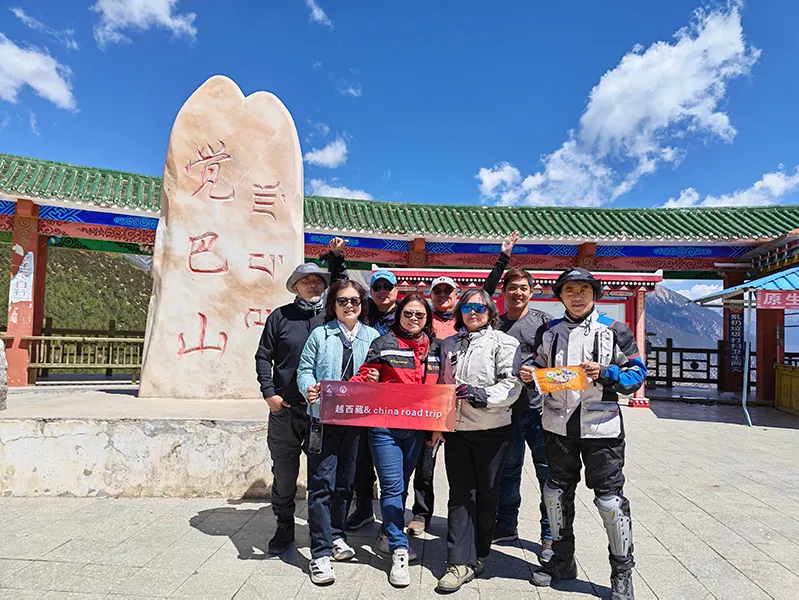
From Lhasa, the journey turns east—through Nyingchi, Ranwu, Mangkang and Deqin. The road keeps passing through mountains and gorges, and the days settle into a rhythm of their own.
 |
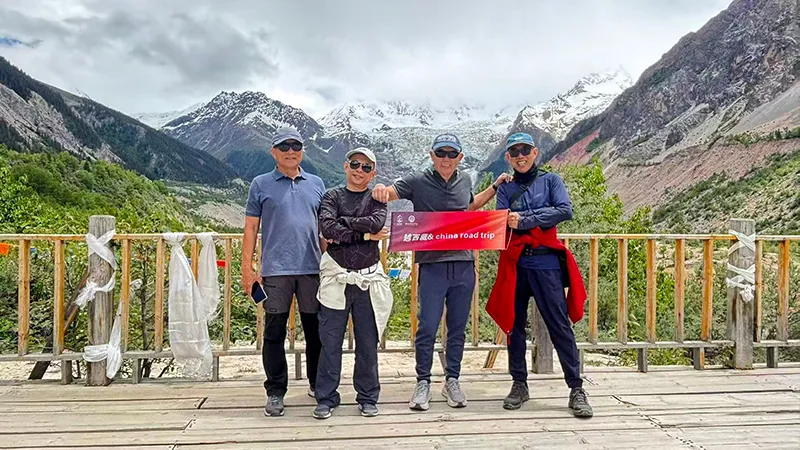
Near Deqin, you stop at Feilai Temple to look across at Meili Snow Mountain. You're not passing it by; you're standing still, watching the light change on the peaks.
Farther on, in Lijiang, you leave your vehicle in a designated parking area and explore the old town on foot. After so many days on the road, walking through the streets is its own kind of change—the pace slows, and the town unfolds at a different scale.
From there, the route continues through Dali and Kunming toward Pu'er and Mohan.
From Yunnan onward: crossing into Laos
Before reaching Mohan, you will also need to have the entry arrangements for Laos confirmed for both you and your vehicle.
 |
You clear China's exit formalities, pass through the last gate, and find yourself on the other side. The signs change again. The language changes again. But this time, you're not starting from scratch. You're continuing.
The vehicle that left your driveway weeks or months ago is still with you. It has carried you through Xinjiang, into western Tibet, east toward Yunnan, and now across another border. The China section is over. The journey itself isn't.
Next time you set off
After all of it, you'll return to your everyday roads—getting into the same car, or pulling on your helmet again. Maybe one day, waiting at a light or gearing up for a short ride, you'll think of that restaurant window in Kashgar: sitting inside, watching your own car or motorcycle parked outside, a dish on the table whose name you never learned.
The vehicle hasn't changed. But now it holds memories of a journey through China.
Planning to include China in your overland journey by car or motorcycle? We can help assess suitable border crossings, coordinate temporary vehicle entry, arrange the appropriate Chinese driving permit for your vehicle category, and plan a feasible route through China. Share your approximate dates, vehicle registration country, travelers' nationalities, number of drivers or riders, and the places you hope to visit. Together, we can work out how the China section fits into your wider journey.
Ask a Quick Question & Free Enquiry

If you have a WhatsApp, please feel free to scan our WhatsApp code.