 +86-13981905144
 inquiry@chinaroadtrip.org
Can your vehicle feel the altitude too?
Written by China Road Trip | Updated 2026-10-22

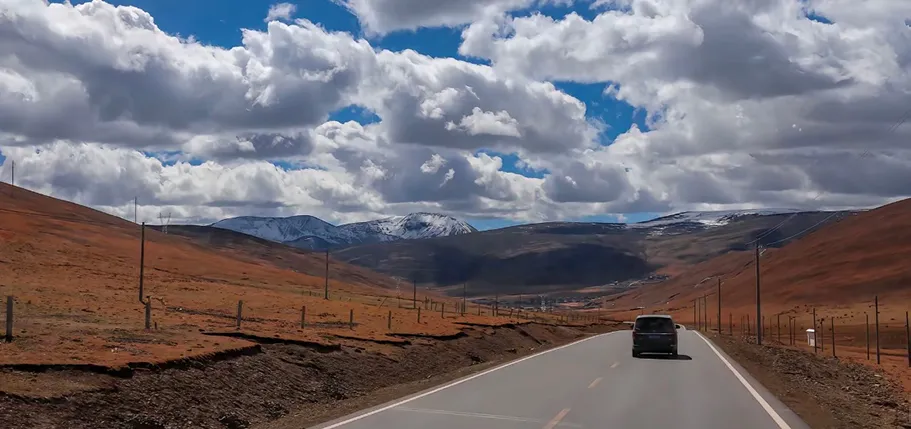
You're driving a car or riding a motorcycle, setting off from Chengdu toward Lhasa, looking forward to snow-capped mountains, lakes, and high-altitude scenery along the way. Before setting off, you worried about whether you'd get altitude sickness yourself, so you read up and prepared carefully—but you may have overlooked another companion on the trip: your vehicle.
As you climb higher, you might notice that your vehicle no longer accelerates quite as readily, and uphill stretches seem to demand more effort. You might find yourself wondering: "I haven't felt the altitude yet—has my vehicle felt it first?"
Why does the same vehicle feel lively at low altitude but seem to change personality up high? And here's the more interesting question: if engines really are affected by altitude, why do ordinary family sedans still show up on the roads to Tibet?
The answer lies in every breath of air an engine takes in. So what exactly does a vehicle's "altitude sickness" change—and is it really as serious as we imagine?
The Higher You Go, the Thinner the Air
As altitude rises, air pressure typically drops and the air becomes thinner. But this doesn't mean the proportion of oxygen in the air shrinks noticeably—oxygen still makes up about 21% of dry air. Think of it this way: the same volume of air at high altitude simply contains less oxygen. How thin the air gets also depends on factors like temperature.
 |
A combustion engine needs oxygen to burn fuel. When the air thins out, how much air the engine can take in affects how much power it can produce. But different vehicles handle this change in different ways.
One clarification: a vehicle's "altitude sickness" is just a figure of speech. It doesn't mean the car has come down with something like human altitude sickness, and it doesn't necessarily mean the engine has broken down. It's more of a normal response to changed conditions: the air is different, so the engine's working conditions change too.
Why Do Engines Lose Power at High Altitude?
The effects of high altitude tend to show up when the vehicle needs more power—climbing a slope, accelerating, or carrying a heavy load. With a naturally aspirated engine, thin air usually reduces the maximum power it can produce, so the driver may feel the vehicle isn't as sprightly as it is at lower elevations.
That said, a drop in power doesn't automatically mean "incomplete combustion," nor does it necessarily indicate an engine fault. How the vehicle adjusts fuel delivery and whether it has a turbocharger both affect how it performs at high altitude.
Turbo vs Naturally Aspirated Engines at High Altitude
At the same altitude, different vehicles may behave quite differently. One reason is that engines get their air in different ways.
Some engines don't use a turbocharger or another device to compress the incoming air to raise intake pressure—these are called "naturally aspirated." When the air thins, all else being equal, less oxygen enters the engine, and the maximum power it can produce usually drops.
 |
Other engines come with a "turbocharger," which compresses air before sending it into the engine, helping it take in more air. As a result, these engines can offset some of the power loss at high altitude—but the compensation has its limits.
Vehicles can also adjust fuel delivery to suit changes in the air. Many modern cars and motorcycles use electronic controls to adjust fuel injection based on sensor data. But adjusting "how much fuel goes in" is not the same as increasing "how much oxygen comes in." So even if fuel delivery adapts to the conditions, that doesn't mean power stays exactly the same.
This also explains why you can't judge by engine displacement alone, or simply assume cars handle altitude better than motorcycles. Actual performance still depends on the vehicle's design and driving conditions.
 |
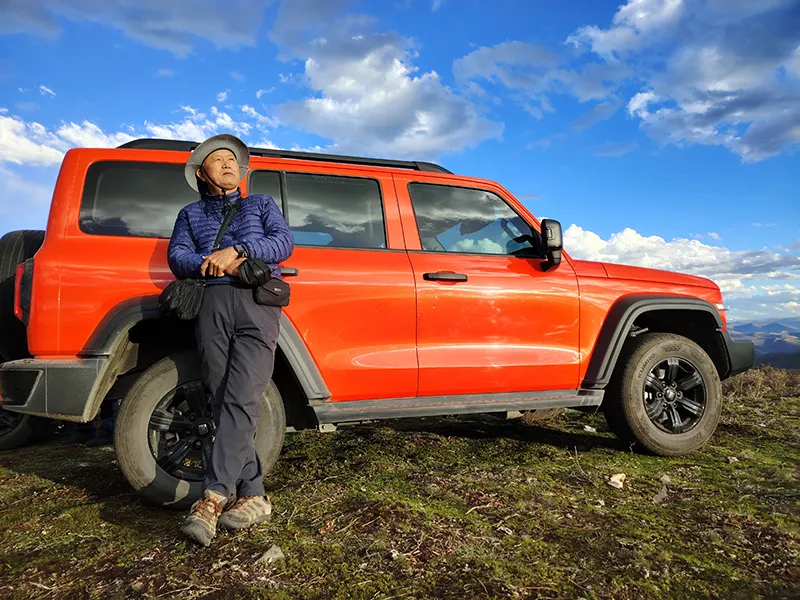
- —— A closer look at one of the motorcycles we offer for our tours.
Do Pure Electric Vehicles Get "Altitude Sickness" Too?
Pure electric vehicles run on electric motors and don't need to draw in oxygen to burn fuel the way combustion engines do, so they don't lose power for the same intake-related reason.
That said, it doesn't mean their performance stays completely unchanged on a high-altitude trip. Cold temperatures can affect battery performance, and heating the cabin and battery draws power; climbing uses more energy, while descents may recover some through regenerative braking. Real-world range therefore depends on many factors and can't be pinned simply on altitude.
Does Losing Some Power Mean a Vehicle Cannot Handle the Journey?
Less power doesn't mean the car can't go. In everyday driving, the engine isn't producing maximum power most of the time. Even if peak power drops, the vehicle can still meet driving needs in many situations—although the reduced power reserve may become more noticeable during acceleration or on climbs.
Whether the engine has enough power and whether the vehicle can handle potholes and bumps are two different questions. High altitude doesn't automatically mean the road requires an off-roader. Whether an ordinary sedan suits a particular trip depends on the specific vehicle, load, road, and weather conditions—not just on whether it's a sedan or an SUV, or on engine displacement.
 |
So there's no contradiction between an ordinary family car being able to complete a high-altitude road trip and the engine possibly being affected by altitude.
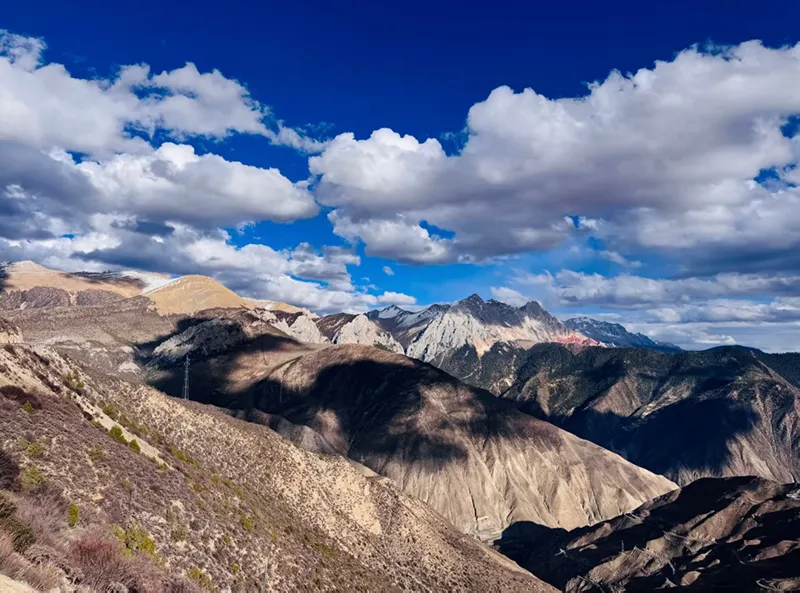
Think back to that Chengdu-to-Lhasa journey from the beginning: same car, different environment. As the road climbs from river valleys up to mountain passes, the conditions under which the engine gets its air keep changing. That slight "not as punchy as before" feeling may well come down to these factors.
And these changes aren't limited to the Sichuan–Tibet route. Whether you enter Tibet from Yunnan or set out from Lhasa to explore the plateau further, these journeys can take your vehicle through a range of elevations. Whether you're driving or motorcycle touring, understanding how vehicles adapt to thin air is one more part of understanding the journey itself.
 |
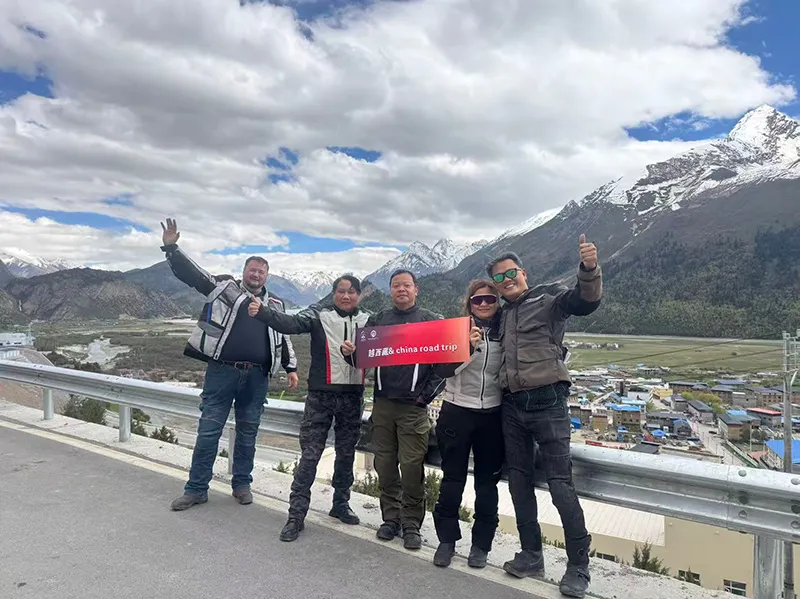
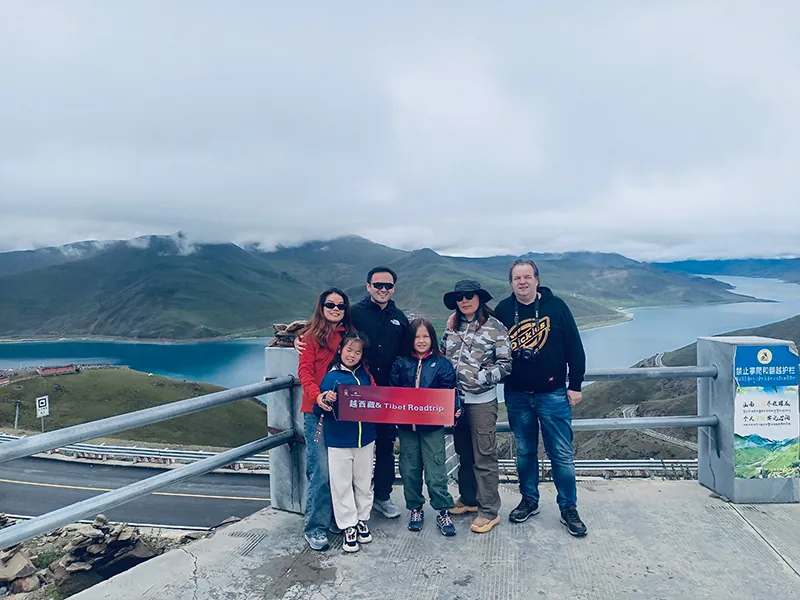
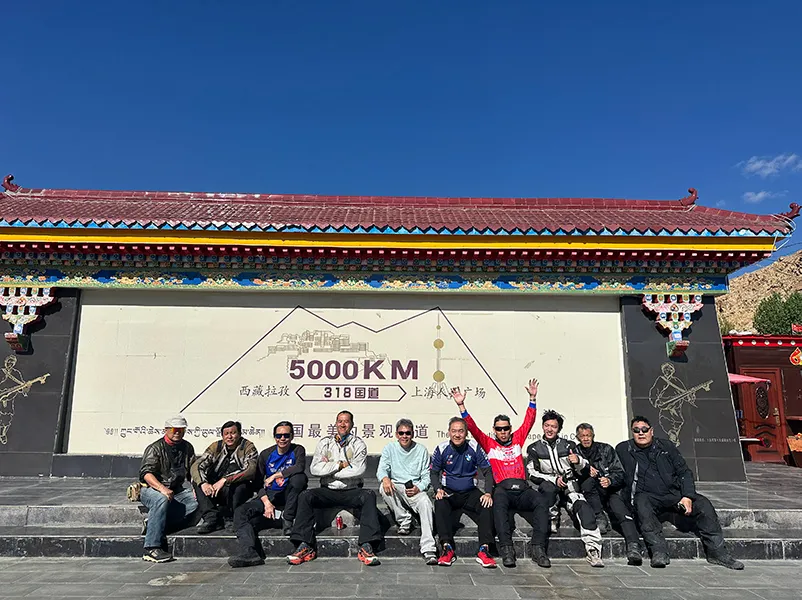
- —— Our guests sharing a moment together along the G318 on our Sichuan-Tibet self-drive tour.
So can cars and motorcycles get "altitude sickness"? Figuratively, yes. Thinner air can affect how a combustion engine performs, but that does not automatically mean a fault—or an unfinished journey. The vehicle is responding to a different environment, in ways its design helps explain.
Ask a Quick Question & Free Enquiry

If you have a WhatsApp, please feel free to scan our WhatsApp code.