 +86-13981905144
 inquiry@chinaroadtrip.org
A Practical Guide to Driving in China and Planning a Tibet Self-Drive Trip for British Travelers
Written by China Road Trip | Updated 2026-8-31

For many British travelers, exploring China means taking high-speed trains, domestic flights or joining organized tours. But for travelers who enjoy the freedom of the open road, driving offers a very different way to experience the country.
From the mountain roads of Sichuan and Yunnan to the vast landscapes of the Tibetan Plateau, a self-drive journey can take you beyond China’s major cities and into some of its most spectacular regions.
UK vs China: What British Drivers Need to Know
If you’re used to driving in the UK, getting behind the wheel in China can feel very different — and not just because of the scenery. Before thinking about permits, routes or paperwork, it helps to understand one important point: having a valid UK driving licence or an International Driving Permit (IDP) does not allow you to drive legally in China.
 |
Here are some of the biggest differences British drivers will notice:
- In the UK:
- * You drive on the left-hand side of the road
- * Most vehicles are right-hand drive
- * You drive using a valid UK driving licence
- * Road signs, traffic rules and driving habits are familiar to British motorists
- In China:
- * You drive on the right-hand side of the road
- * Most vehicles are left-hand drive
- * A UK driving licence alone does not allow you to drive legally in mainland China
- * Road rules, signage, expressway tolls and navigation systems work differently
So, can UK tourists drive in China? And can British travelers take a self-drive journey through Tibet?
Yes — but there are two different sets of requirements to understand: what you need to drive legally in China, and what you need to travel and self-drive in Tibet.
1. Can UK Tourists Drive in China?
Yes. UK tourists can drive in China, but a valid UK driving licence alone does not give you the legal right to drive in mainland China. Before getting behind the wheel, you’ll need to obtain the appropriate Chinese driving permission and make sure the vehicle you use meets local legal requirements.
Can You Drive in China with a UK Driving Licence?
A UK driving licence on its own is not valid for driving in mainland China. China also does not recognize the International Driving Permit (IDP) as a substitute for a Chinese driving licence or permit, so British travelers cannot simply carry an IDP alongside their UK licence and start driving.
For short-term visitors, one option is to apply for a Temporary Driving Permit. This allows eligible foreign visitors to drive approved vehicle categories in China for a limited period, subject to the applicable requirements.
 |
For many UK tourists planning a self-drive trip, this is the most practical way to become legally eligible to drive in China.
What Documents Do UK Travelers Need to Drive in China?
The exact requirements can vary depending on where the permit is issued and your circumstances, but UK travelers should generally be prepared to provide:
- √ A valid passport or other required entry and exit identity document
- √ Your original valid UK driving licence
- √ A Chinese translation of your UK driving licence that meets local requirements
- √ Passport-style photographs if required
- √ Any additional application or registration documents required by the local vehicle management authority
- √ The vehicle itself must also have the appropriate registration and insurance.
Requirements can vary between locations and according to the type of vehicle you intend to drive, so it is important to confirm the latest documentation requirements before traveling.
How Can UK Travelers Get a Temporary Chinese Driving Permit?
Temporary driving permits are issued in China by the relevant local traffic-management authorities. Depending on where you enter China and how your trip is arranged, the application process may be completed with assistance from a vehicle provider, rental company or travel operator.
 |
- Can I apply before arriving in China? The final permit is issued in China. However, documents can often be prepared and checked in advance, which can make the application process easier after arrival.
- Do I need to apply in person? You should expect to participate in the application process in person. Your passport, valid UK driving licence and required supporting documents will need to be presented according to local requirements.
- What vehicle can I drive? For travelers renting a vehicle in China, temporary driving permits are generally limited to small vehicles (C1) or small automatic vehicles (C2). The permitted vehicle category must also be compatible with the applicant’s foreign driving licence.
Can UK Tourists Rent a Car in China?
For most British visitors, using a vehicle already registered in China is much simpler than bringing a UK-registered vehicle into the country.
In practice, UK travelers generally have two options:
- 1.Rent a vehicle independently, provided they have obtained the required Chinese driving permission and meet the rental company’s requirements.
- 2.Use a vehicle arranged as part of a supported self-drive journey, with the vehicle, insurance, driving-permit assistance and itinerary coordinated in advance.
For a relatively straightforward road trip in many parts of China, independent rental may be an option once the necessary driving requirements have been met.
For Tibet, however, simply obtaining a temporary driving permit and renting a car is not enough. Foreign travelers are subject to additional travel and permit requirements, which makes advance arrangements especially important.
What British Drivers Should Know About Driving in China
Once the licence and vehicle requirements are sorted, British drivers still need to adjust to a very different driving environment.
- - Driving on the right: China drives on the right-hand side of the road, the opposite of the UK. Junctions, turns and roundabouts can therefore take some getting used to.
- - Road signs: Many major roads use standardized symbols, and English may appear on signs in some areas, but drivers should still expect Chinese-language signage.
- - Speed limits and cameras: Speed limits are enforced, and traffic-monitoring cameras are widespread, particularly in cities and on major roads.
- - Expressways and tolls: China has an extensive expressway network, and many expressways charge tolls.
- - Fuel stations: Fuel is readily available along major routes and around populated areas, but stations can be farther apart in remote regions.
- - Parking: Large cities generally have regulated parking systems, and finding suitable parking can be more difficult in busy urban areas.
- - Navigation: International navigation services may not work in China in the same way they do in the UK. Chinese navigation apps such as Amap (Gaode Maps) are widely used for driving and provide more locally relevant road information.
For most parts of China, once the necessary driving permission and vehicle arrangements are in place, planning a road trip is relatively straightforward.
Tibet, however, is different.
2. Can UK Tourists Self-Drive in Tibet?
Yes. UK tourists can experience a self-drive journey in Tibet, including classic routes to Lhasa and Everest Base Camp. However, foreign travelers cannot simply arrive in Tibet, rent a car and travel independently in the same way they might in many other parts of China.
A Tibet self-drive trip requires advance arrangements, including the appropriate travel permits, a confirmed itinerary and required local travel services.
 |
If you plan to drive yourself, you will also need to meet the Chinese driving requirements explained earlier in this guide. Once those requirements are understood, the next step is to arrange the Tibet-specific part of your journey.
In short, a Tibet self-drive trip is absolutely possible for British travelers — but it needs to be planned and arranged in advance.
How to Plan a Tibet Self-Drive Trip from the UK
Planning a Tibet self-drive journey involves more than choosing a car and setting off. Your route, travel permits, itinerary and vehicle arrangements need to be coordinated before the trip begins.
Here is how the Tibet-specific planning process generally works.
- Step 1 — Choose Your Tibet Self-Drive Route
Before thinking about permits and paperwork, decide what kind of road trip you actually want.
Some of the most popular options include:
G318: Chengdu → Lhasa — The classic Sichuan–Tibet Highway, covering roughly 2,100 km through western Sichuan and eastern Tibet. Allow around 10–14 days depending on your itinerary, stops and acclimatization.
 |
G214: Kunming → Lhasa — A scenic alternative through Yunnan, passing Dali, Lijiang, Shangri-La and Deqin before joining the G318 toward Lhasa. A well-paced journey usually requires around 10–14 days or more.
 |
Lhasa → Shigatse → Everest Base Camp — A more focused Tibet road trip for travelers who want to combine Tibetan culture with Himalayan scenery and views of Mount Everest.
 |
Your route affects your travel permits, itinerary, vehicle arrangements and overall trip duration, so choosing the route is the natural starting point.
- Step 2 — Confirm Your Itinerary with a Licensed Tibet Travel Agency
This is where planning a Tibet road trip differs significantly from planning a normal self-drive journey elsewhere in China.
Foreign tourists cannot travel independently through the Tibet Autonomous Region. Travel must be arranged in advance through a specialist travel agency, which coordinates the required permits and organized itinerary.
Your itinerary determines which travel permits and documents are required, how you enter Tibet, whether your journey includes Everest Base Camp or other restricted areas, your vehicle arrangements and your confirmed travel dates.
For this reason, it is best to finalize your route and travel dates before beginning the permit process.
- Step 3 — Arrange the Required Tibet Travel Permits
Foreign tourists traveling to the Tibet Autonomous Region generally need a Tibet Travel Permit, which must be arranged in advance through an authorized travel agency.
 |
Depending on your itinerary and the areas you plan to visit, additional travel documentation or permits may also be required. This is particularly relevant if your journey includes places such as Everest Base Camp or border areas.
Because the exact requirements depend on your route and current regulations, your travel operator should confirm the documents required for your specific itinerary before departure.
- Step 4 — Arrange Your Self-Drive Vehicle
For most UK travelers, using a vehicle arranged in China is considerably simpler than bringing a UK-registered vehicle into the country. A locally arranged vehicle is also generally more practical for British drivers adapting to right-hand traffic in China.
Your vehicle should have the appropriate registration and insurance and be suitable for the altitude, distances and road conditions of your chosen Tibet route.
If you are working with a travel operator, the vehicle arrangements can be coordinated alongside your itinerary and travel permits.
 |
- Step 5 — Acclimatize and Begin Your Tibet Self-Drive Journey
Once your itinerary, travel permits, vehicle arrangements and Chinese driving permission are in place, your Tibet road trip can begin.
If your journey starts in Lhasa, avoid planning an intensive driving day immediately after arrival. Lhasa sits at approximately 3,650 metres above sea level, and allowing time to acclimatize before a demanding high-altitude road trip is sensible.
This is also a good opportunity to check the vehicle, review the route and prepare for the road and weather conditions ahead.
How Many Days Do UK Travelers Need for a Tibet Self-Drive Trip?
The ideal trip length depends heavily on the route and how much time you allow for sightseeing and acclimatization.
As a general guide:
- G318: Chengdu–Lhasa — around 10–14 days
- G214: Kunming–Lhasa — around 10–14 days or more
- Lhasa–Shigatse–Everest Base Camp — around 5–8 days, depending on whether you return to Lhasa and the exact itinerary
Avoid building a high-altitude road trip around the shortest possible driving time. Extra time for acclimatization, weather changes and sightseeing usually makes for a much better journey.
When Is the Best Time to Self-Drive in Tibet?
For most self-drive travelers, May to June and September to October are among the best periods for a Tibet road trip, offering a good balance of road conditions, visibility and seasonal weather.
 |
- May–June: Generally pleasant temperatures and good mountain visibility before the main summer rains.
- July–August: Warmer and greener, but summer rainfall can make mountain weather and road conditions less predictable.
- September–October: Often one of the most attractive periods for a Tibet road trip, with generally clearer skies and excellent visibility across the plateau.
Conditions vary by altitude and route, so weather and road conditions should always be checked close to departure.
Can UK Travelers Drive to Everest Base Camp?
Yes. British travelers can include Everest Base Camp in an arranged Tibet self-drive itinerary.
 |
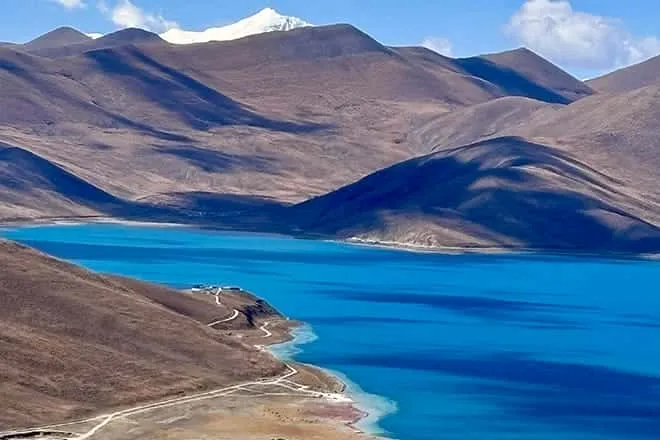
A typical route runs from Lhasa through Yamdrok Lake and Shigatse toward the Everest region. Because Everest lies in a sensitive border area, trips there may involve additional travel documentation or permits beyond the standard Tibet Travel Permit, depending on the itinerary and current regulations.
These arrangements should be confirmed and completed before departure as part of your Tibet itinerary.
Is Tibet Self-Driving Safe for British Travelers?
A well-planned Tibet self-drive trip can be a safe and rewarding experience, but the environment is considerably more demanding than an ordinary city or low-altitude road trip.
The main factors to prepare for include:
- Altitude: Lhasa is already around 3,650 metres, while some mountain passes exceed 5,000 metres.
- Weather: Conditions can change quickly at high altitude, even during the main travel season.
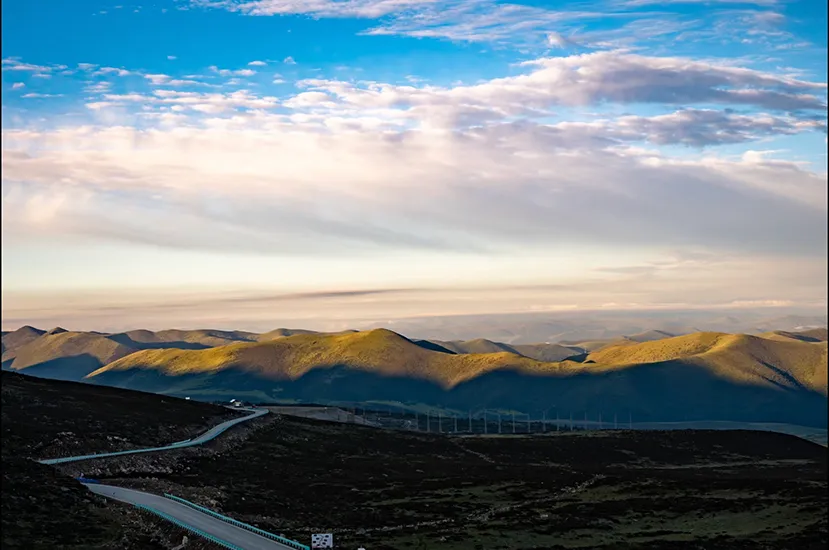
- Mountain roads: Expect winding roads, steep elevation changes and long driving days.
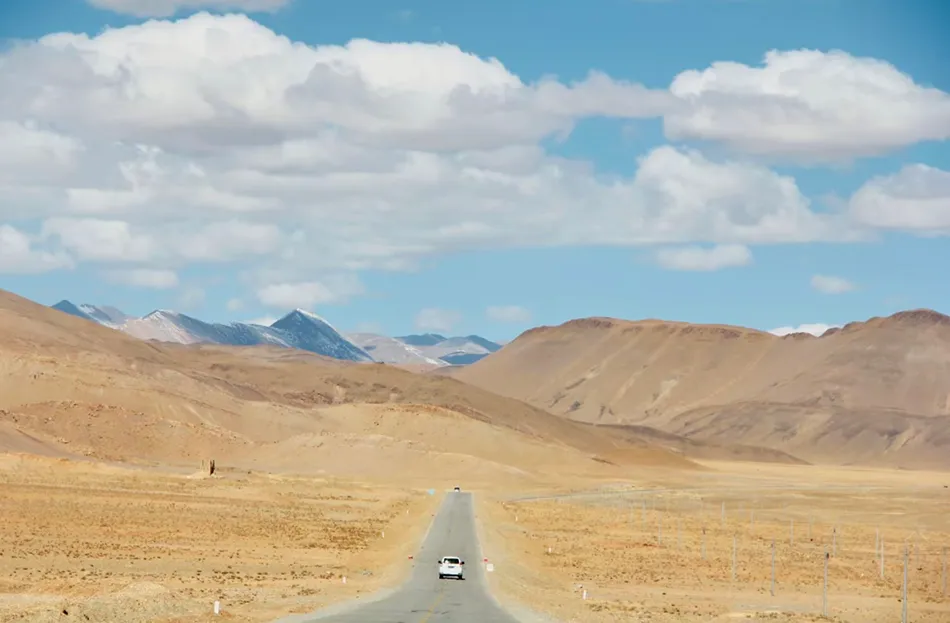
- Long distances: Some sections pass through sparsely populated areas where services are farther apart.
- Acclimatization: Building enough time into your itinerary is particularly important before traveling to higher elevations.
- Local support: Route coordination and on-road assistance can be especially valuable for travelers visiting Tibet for the first time.
Can You Bring Your Own UK Vehicle to Tibet?
Yes, experienced overland travelers may be able to enter China with their own UK-registered car or motorcycle, but this involves a separate and considerably more complicated process.
Temporary vehicle entry, customs procedures, Chinese registration or temporary plates, insurance and other vehicle requirements need to be arranged before the journey. Entering Tibet adds the Tibet-specific travel requirements described above.
For most British travelers planning a Tibet self-drive holiday, using a vehicle arranged in China is therefore the simpler option.
For the complete vehicle-entry process, see our guide: Can Foreigners Bring Their Own Vehicle into China?
Planning a Tibet Self-Drive Trip from the UK?
A Tibet self-drive journey takes more preparation than an ordinary road trip, but you don’t have to manage every detail on your own.
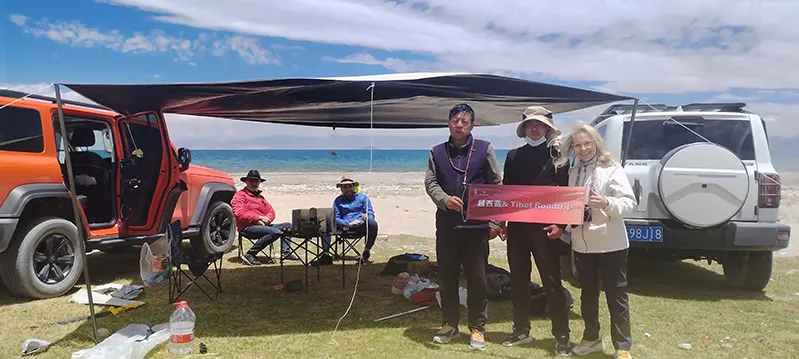
Our team can help coordinate your Tibet itinerary, travel permits, self-drive vehicle and essential driving arrangements, bringing the key parts of your journey together before departure.
Whether you’re planning to follow the G318 to Lhasa, drive the Yunnan–Tibet route, or continue from Lhasa to Everest Base Camp, we can help you build a self-drive journey around your travel dates, preferred route and driving experience.
Ready to start planning your Tibet self-drive trip from the UK? Contact us to discuss your route and travel dates.
Ask a Quick Question & Free Enquiry

If you have a WhatsApp, please feel free to scan our WhatsApp code.