 +86-13981905144
 inquiry@chinaroadtrip.org
A Practical Guide to Driving in Tibet, from Australian Road Conditions to Routes, Permits and Trip Planning
Written by China Road Trip | Updated 2026-8-28

A road trip in Tibet is very different from driving in Australia.
Australian travelers may already be familiar with long-distance road trips, remote highways and vast open landscapes. But a Tibet self-drive tour introduces a very different driving environment. In Australia, most vehicles are right-hand drive (RHD) and traffic keeps to the left. In mainland China, including Tibet, standard vehicles are left-hand drive (LHD) and traffic keeps to the right. Tibet also adds another challenge rarely encountered on Australian road trips: sustained high altitude, with many routes climbing above 4,000 meters.
The legal and travel arrangements are different too. An Australian driving licence or International Driving Permit alone is not enough to drive legally in mainland China, and foreign travelers cannot plan an independent Tibet road trip in the same way they would in Australia. Chinese driving permission, Tibet travel permits and the required local travel arrangements need to be organized in advance.
So, how can Australian travelers plan a self-drive tour in Tibet?
This guide compares driving in Australia and Tibet and explains what Australian drivers need to know about Chinese driving requirements, Tibet permits, road conditions, high altitude, the best self-drive routes and the option of bringing an Australian-registered 4WD into China.
Driving in Australia vs Tibet: What Is Different?
Australian travelers are often no strangers to road trips. Long highways, remote landscapes and long distances between destinations are part of the driving experience in many parts of Australia. Some of that experience is useful in Tibet, but the actual driving environment is very different.
| Driving in Australia | Driving in Tibet |
| Right-hand-drive (RHD) vehicles | Left-hand-drive (LHD) vehicle |
| Drive sits on the right side of the vehicle | Driver sits on the left side of the vehicle |
| Traffic keeps to the left | Traffic keeps to the right |
| Most road trips are at relatively low elevation | Many routes climb to 4,000-5,000m |
| Heat and dry conditions are common in many regions | Cold,strong UV and large temperature changes are common at altitude |
| Independent road trips are easy to organize | Foreign travelers need advance permits and local travel arrangements |
| Australian licence is used domestically | Australian licence alone does not authorize driving in China |
| Long distances and remote areas are common | Long distances are combined with mountain passes and sustained altitude |
 |
For Australian drivers, distance and remoteness may not be the biggest surprise. If you have driven through the Outback or taken long interstate road trips, you may already be comfortable planning fuel stops, spending hours on the road and traveling through sparsely populated areas.
For Australian drivers, the bigger adjustment is driving a left-hand-drive vehicle on the right side of the road while also adapting to high altitude and mountain conditions. Lhasa itself sits at around 3,650 meters, while routes toward Everest and other parts of the plateau climb much higher. A driving day that looks manageable by distance alone can therefore feel very different from covering the same number of kilometers in Australia.
There is also a major practical difference: a Tibet road trip for foreign travelers needs to be planned in advance. The vehicle, Chinese driving permission, Tibet itinerary and required travel arrangements all need to fit together before the journey begins.
Can Australians Drive in China with an Australian Licence?
An Australian driving licence is not automatically valid for driving in mainland China. Australian travelers who want to drive during a China road trip need the appropriate Chinese driving permission.
An International Driving Permit (IDP) is not a substitute for Chinese driving permission, so carrying an Australian licence and an IDP alone does not authorize you to drive in mainland China.
What Do Australian Drivers Need?
For most Australian tourists planning a short self-drive journey in China, the relevant option is a Temporary Chinese Driving Permit. Typical application documents include:
- A valid passport and entry document
- A valid Australian driving licence
- A Chinese translation of the Australian licence if required
- Passport-style photographs and other locally required application materials
 |
The application is handled through the local vehicle management authority, and applicants need to complete the required road-traffic-law education before the temporary permit is issued. Exact procedures can vary by location, so the application arrangements should be confirmed before the self-drive journey begins.
For short-term visitors, a temporary driving permit can generally be issued with a validity of up to three months. For travelers whose permitted stay or residence exceeds three months, its validity may extend up to one year, depending on the approved stay period.
Do Australians Need a Chinese Visa?
Not necessarily. Australian ordinary passport holders can currently enter China visa-free for up to 30 days for eligible purposes including tourism. The current visa-free policy for Australia is scheduled to remain in effect until December 31, 2026. Travelers who do not meet the visa-free conditions need the appropriate Chinese visa.
Visa-free entry and driving permission are separate matters. Even when you enter China without a visa under the applicable policy, you still need the appropriate Chinese driving permission before driving.
What If You Bring Your Own Australian Vehicle?
If you bring an Australian-registered vehicle into China, additional vehicle-entry procedures apply, and your Chinese driving permission must cover the type of vehicle you actually drive. The own-vehicle option is discussed in more detail later in this guide.
Planning to drive in China with an Australian licence?
If your Tibet self-drive journey is arranged with us, the Chinese driving-permission requirements can be coordinated with your vehicle and itinerary before the trip begins.
Driving in Australia vs China: Right-Hand Drive, Left-Hand Drive and Road Sides
For Australian drivers, one of the most immediate changes in China is not only the side of the road, but also the position of the steering wheel. Most vehicles in Australia are right-hand drive (RHD) and traffic keeps to the left. In mainland China, including Tibet, standard vehicles are left-hand drive (LHD) and traffic keeps to the right.
 |
If you use a vehicle arranged in China for your Tibet self-drive tour, you therefore need to adapt to both sitting on the opposite side of the vehicle and driving on the opposite side of the road. This can feel unfamiliar at first, especially at intersections, roundabouts, when overtaking and when entering a road after a stop.
- Intersections and turns — Pay particular attention to the lane you enter after turning
- Roundabouts — Traffic generally circulates counterclockwise in China, the opposite of Australia.
- Overtaking — On two-way roads, overtaking is generally carried out on the left side of the vehicle ahead.
- Mountain roads — Maintain the correct lane carefully on curves and high passes, particularly while you are still adapting to right-hand traffic.
Traffic in towns and cities can also include a different mix of electric scooters, motorcycles, bicycles and pedestrians. Give yourself time to adapt during the first days of the journey rather than planning an exceptionally long first driving day.
Australian Outback vs Tibetan Plateau: What Is the Driving Really Like?
Australian drivers who are comfortable with long Outback journeys may already understand the importance of distance, fuel planning and preparation for remote conditions. Those skills are useful in Tibet too, but the challenge is different.
In the Australian Outback, drivers may face extreme heat, long distances and limited services. On the Tibetan Plateau, long-distance driving is combined with sustained high altitude, mountain passes, large temperature changes and rapidly changing weather.
| Location | Approx. Elevation |
| Lhasa | 3,650m |
| Shigatse | 3,836m |
| Tingri / Dingri | ~4,300m |
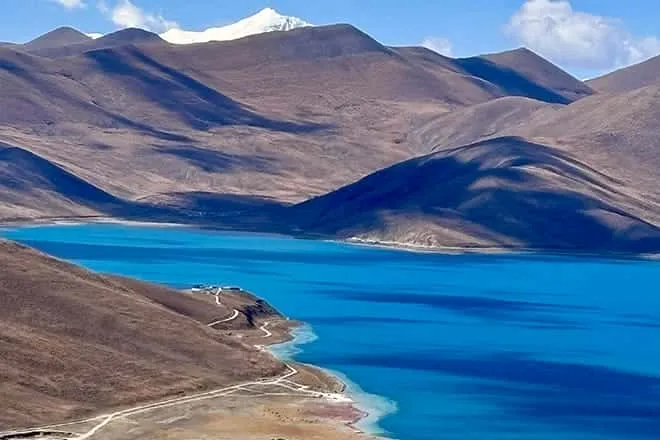
| Yamdrok Lake | 4,441m |
| Gampa La Pass | ~4,790m |
| Everest Base Camp area | ~5,200m |
For an Australian driver, the distance on the map may look familiar, but the same number of kilometers can feel very different at 4,000–5,000 meters. Even experienced and physically fit travelers can be affected by altitude, so driving schedules need to allow time for acclimatization and slower travel when necessary.
Temperature is another major difference. Strong sunshine during the day can be followed by much colder conditions after sunset or at exposed mountain passes. Warm layers, wind protection, sunscreen and sunglasses are useful even during the main road-trip season.
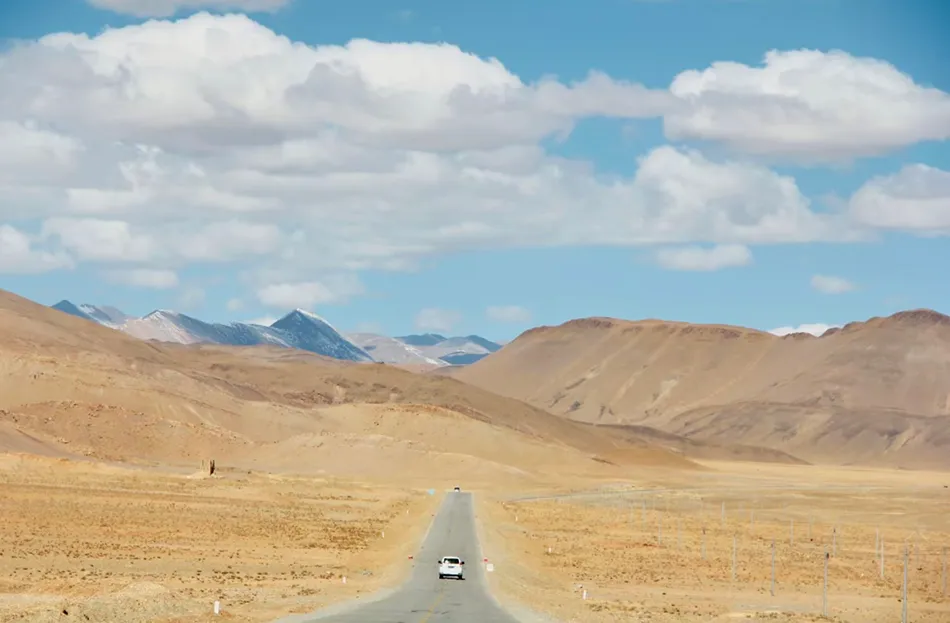
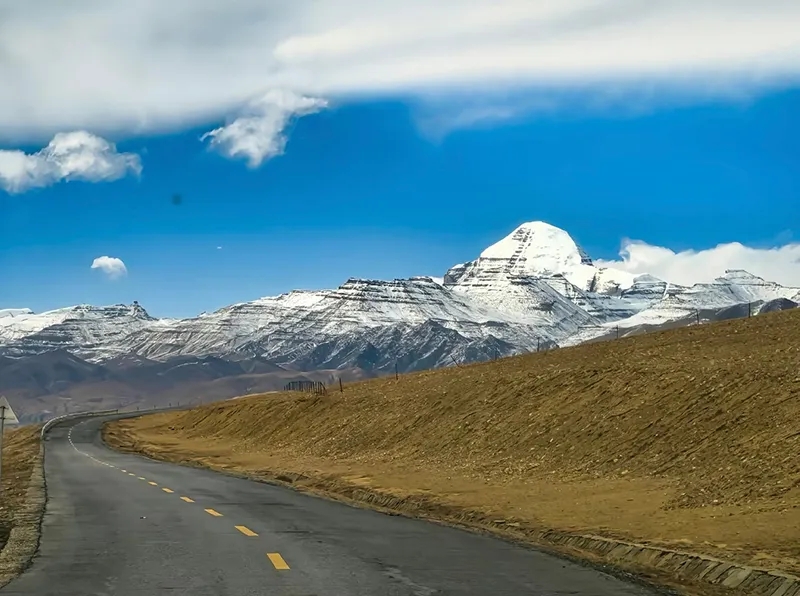
Major Tibet highways and principal routes between destinations such as Lhasa, Shigatse and the Everest region are largely paved, but mountain passes, winding roads, road maintenance and changing weather can still affect driving time.
The G318 Sichuan–Tibet Highway illustrates the difference well. Australian drivers may be comfortable spending hours behind the wheel, but the G318 combines long distances with repeated elevation changes, high passes and mountain driving. It should be planned as a high-altitude road journey, not simply as a long highway drive.
Can Australian Travelers Take a Self-Drive Tour in Tibet?
Yes — Australian travelers can take a self-drive tour in Tibet, but it is very different from planning an independent road trip in Australia.
In Australia, you can rent a vehicle, choose your route and change plans as you go. Tibet works differently for foreign travelers. You cannot simply arrive in Lhasa, rent a car and begin driving independently across the Tibet Autonomous Region.
A Tibet self-drive journey needs to be arranged in advance through an authorized travel agency, with the required permits, itinerary and local travel arrangements confirmed before the trip.
What Do Australian Travelers Need?
- Valid passport and China entry permission — Australian ordinary passport holders can currently use the applicable visa-free policy for eligible stays of up to 30 days; others need the appropriate visa.
- Chinese driving permission — An Australian driving licence or IDP alone does not authorize driving in mainland China.
- Tibet Travel Permit — Foreign travelers need the required Tibet travel authorization before entering the Tibet Autonomous Region.
 |
- Additional permits or approvals — Requirements depend on the final itinerary, particularly for some remote or border-area destinations.
- Pre-arranged Tibet itinerary and local support — The route, dates and required local arrangements need to be organized before the journey.
Do You Need to Arrange Every Tibet Permit Yourself?
No. Once your route and travel dates are confirmed, your travel agency can identify and coordinate the permits and local arrangements required for that itinerary.
This is particularly important for routes involving Everest, western Tibet or certain border areas, where additional approvals may apply. Because requirements can change, current arrangements should be confirmed according to your final route and travel dates rather than relying on a fixed permit checklist months in advance.
How Far in Advance Should Australians Plan?
Do not wait until you arrive in China to organize a Tibet self-drive tour. Because the itinerary, driving arrangements and Tibet travel documents need to be coordinated, it is better to begin planning several weeks before your intended Tibet entry date. More complicated itineraries, particularly western Tibet or cross-border journeys, should be discussed even earlier.
In simple terms: you still drive the vehicle yourself, but the Tibet side of the journey — permits, itinerary and required local arrangements — is organized in advance.
Need help with the Tibet permits?
You do not need to work out every permit on your own. Send us your planned travel dates and route, and we can identify the Tibet travel documents and local arrangements required for that itinerary.
Where Should Australians Start a Tibet Self-Drive Tour?
For Australian travelers, three practical starting points are Lhasa, Chengdu and Kunming. The best choice depends on how much driving you want to do and whether your priority is Everest, the G318 or a broader southwest China road trip.
Option 1 — Start in Lhasa: The Classic Everest Road Trip
Route: Lhasa → Yamdrok Lake → Gyantse → Shigatse → Tingri → Everest Base Camp → return
Starting in Lhasa is the most focused option for Australian travelers whose main goal is to experience Tibet and reach Mount Everest without spending much of the holiday driving across western China first. The journey begins at around 3,650 meters in Lhasa before crossing the plateau toward Yamdrok Lake, Gyantse and Shigatse. From there, the route continues toward Tingri and the Everest region, where elevations rise above 5,000 meters. The attraction of this route is variety within a relatively focused Tibet itinerary: cultural sightseeing in Lhasa and Shigatse, high mountain scenery around Yamdrok Lake and Gampa La, and the Himalayan landscape around Everest Base Camp.
 |
- Potala Palace
 |
- Yamdrok Lake
 |
- Mount Everest
- Best for: First-time Tibet visitors, Australian travelers with limited time and anyone whose main goal is Everest.
Option 2 — Start in Chengdu: Drive the G318 Sichuan–Tibet Highway
For Australians who love the road trip itself as much as the destination, starting in Chengdu creates a very different journey. The G318 Sichuan–Tibet Highway gradually climbs from Sichuan through mountain valleys, grasslands and high passes before crossing eastern Tibet toward Lhasa. The route is attractive because the landscape changes continuously. Rather than arriving directly on the Tibetan Plateau, you experience the transition from lower Sichuan to increasingly high and remote mountain environments. Major sections are paved, but road maintenance, weather and temporary controls can still affect daily driving times. For drivers accustomed to long Australian interstate or Outback journeys, the distance may feel familiar. What is unfamiliar is the repeated climbing and descending at altitude, combined with winding mountain roads.
 |
- Xinduqiao
 |
- Ranwu Lake
- Best for: Australian travelers who want a longer driving adventure and consider the road journey itself a major part of the trip.
Option 3 — Start in Kunming: Combine Yunnan and Tibet
Route: Kunming → Dali → Lijiang → Shangri-La → Deqin → Markam → Nyingchi → Lhasa
Starting in Kunming combines a Yunnan road trip with a journey onto the Tibetan Plateau. It begins at much lower elevation than Lhasa and passes through several of southwest China’s best-known destinations before continuing toward eastern Tibet. This option suits travelers who want more than Tibet alone. Dali and Lijiang add historic towns and cultural stops, while Shangri-La and Deqin introduce increasingly mountainous scenery before the route reaches Markam and continues toward Lhasa. The important planning point is that the travel requirements change when the itinerary enters the Tibet Autonomous Region. Chinese driving arrangements and Tibet travel documents therefore need to be coordinated according to the complete route.
 |
- Dali-Erhai
 |
- Shangri-La-Meili Snow Mountain
 |
- Nyingchi
- Best for: Australian travelers who want to combine Yunnan and Tibet and prefer a longer southwest China road trip.
Which Route Is Best for You?
- Choose Lhasa if Everest is your main priority.
- Choose Chengdu if the G318 and the driving journey itself are the main experience.
- Choose Kunming if you want to combine Yunnan and Tibet.
Not sure which route fits your trip? Tell us how many days you have, when you plan to travel and whether your priority is Everest, the G318 or Yunnan–Tibet. We can recommend a suitable starting point and build the self-drive itinerary around your available time.
How Many Days Should Australians Plan for a Tibet Road Trip?
Australian travelers may be used to covering long distances on road trips, but planning a Tibet self-drive tour by kilometers alone can be misleading. Mountain passes, altitude changes, sightseeing stops, checkpoints and changing road or weather conditions can all affect the pace.
| Trip Type | Recommended Duration |
| Lhasa + Everest Base Camp | Around 8-10 days |
| G318 Chengdu-Lhasa | Around 12-15 days |
| Yunnan-Tibet | Around 12-15+ days |
| Longer China overland | Depends on the complete route |
Don’t Plan Tibet Like an Australian Highway Road Trip
One of the biggest mistakes Australian travelers can make is looking at the distance on a map and assuming they can cover it at the same pace as a long-distance drive at home. Lhasa already sits at around 3,650 meters, while routes toward Everest climb considerably higher.
For travelers arriving directly in Lhasa, many Tibet itineraries allow around 2–3 days at the beginning for acclimatization and light sightseeing before continuing to higher elevations. If altitude symptoms develop, the itinerary should have enough flexibility to slow down rather than continuing upward simply to keep to a schedule.
A good Tibet self-drive itinerary balances driving distance, altitude gain, sightseeing and acclimatization rather than simply maximizing the number of kilometers covered each day.
When Is the Best Time for Australians to Drive in Tibet?
One useful way for Australian travelers to plan a Tibet self-drive tour is to remember that Australia and Tibet are in opposite hemispheres. When Australia is in winter, Tibet is in summer; when Australians are enjoying summer at home, Tibet is experiencing its coldest months.
| Australian Season | Tibet Season | What to Expect |
| Spring (Sep-Nov) | Autumn | Generally drier; September and early October are especially attractive. |
| Summer (Dec-Feb) | Winter | Cold high-altitude conditions; less suitable for a classic long-distance self-drive trip. |
| Autumn (Mar-May) | Spring | Conditions warm gradually; May is a strong road-trip month. |
| Winter (Jun-Aug) | Summer | Warmest period; July-August bring more rain and possible road disruption. |
May–June: A Strong Early-Season Window
May is particularly attractive for road travel as temperatures rise while the main summer rainy season has not yet arrived. June can also work well for longer self-drive routes, with relatively warm conditions across much of the plateau. Cold mornings and high passes are still possible, so mountain-weather preparation remains important.
For Australians, this period falls across late autumn and early winter at home, making it a practical time to exchange cooler Australian weather for the beginning of Tibet’s main road-trip season.
July–August: Warmer but Wetter
July and August are popular because Tibet is at its warmest, but these months also fall within the main rainy season. Rainfall can affect mountain roads, particularly in eastern Tibet and along parts of the G318, so longer routes should allow more flexibility for weather and temporary road disruption.
This does not mean a summer self-drive trip is impossible; it means the itinerary should not be planned too tightly.
September–Early October: One of the Best Road-Trip Periods
After the main summer rains, September and early October are often attractive for long-distance driving. Conditions generally become drier while daytime temperatures remain suitable for road travel. This period can work particularly well for Everest, the G318 and longer journeys across the plateau.
Travel demand can be high around China’s National Day holiday in early October, so accommodation and transport arrangements should be considered earlier.
What About Winter?
Australian summer corresponds to winter on the Tibetan Plateau. High-altitude temperatures can become extremely cold, and snow or ice may affect exposed mountain sections. Winter travel is possible in some areas, but it is generally not the first choice for Australians planning a first long-distance Tibet self-drive journey.
For most Australian travelers, May–June and September–early October are the strongest periods to consider. The best month still depends on whether you choose Lhasa–Everest, the G318 or Yunnan–Tibet.
Tell us your Australian travel dates and preferred route, and we can help match the itinerary to the season rather than choosing a route that does not suit your available holiday period.
 |
Should You Use a Vehicle in China or Bring Your Own Australian 4WD?
For most Australian travelers planning a Tibet self-drive tour, the simplest option is to travel to China first and use a vehicle arranged for the journey. Experienced overlanders may instead consider bringing an Australian-registered 4WD or camper as part of a much longer international trip.
There is also a vehicle-layout difference to consider. Australian vehicles are typically right-hand drive, while standard vehicles used in mainland China are left-hand drive. For most visitors using a vehicle arranged in China, this means adapting to a different steering-wheel position as well as right-side traffic.
Option 1 — Use a Vehicle Arranged in China
This is the practical choice for most Australian holidaymakers and first-time visitors. It avoids the additional customs, registration and insurance procedures involved in bringing a foreign-registered vehicle into China. The vehicle can then be coordinated with the Chinese driving permission, Tibet itinerary and required travel arrangements.
This option works well for Lhasa–Everest, G318 and Yunnan–Tibet journeys, especially when the trip is part of a normal annual holiday rather than a multi-country overland expedition.
Option 2 — Bring Your Own Australian 4WD or Camper
For experienced overland travelers, bringing an Australian-registered vehicle into China is possible as part of a longer international journey, but the planning process is much more complex.
Depending on the vehicle and entry arrangements, the process may involve temporary vehicle import and customs procedures, temporary Chinese vehicle registration or licence plates, Chinese motor vehicle insurance, appropriate Chinese driving permission, vehicle ownership documents and Chinese translations of required foreign documents.
Bringing your own vehicle into China does not automatically give you permission to drive into Tibet. Vehicle-entry procedures and Tibet travel requirements are separate and need to be coordinated around the complete China itinerary.
Bringing your own Australian 4WD?
If China and Tibet are part of a longer Australia–Asia overland journey, we can help coordinate the vehicle-entry requirements with your China route and Tibet travel arrangements.
How to Plan a Tibet Self-Drive Tour from Australia: Step by Step
Once you understand the main differences between driving in Australia and Tibet, the planning process can be reduced to eight practical steps.
Step 1 — Choose Your Travel Season
Start with your Australian holiday dates. For most travelers, May–June and September–early October are strong periods to consider, then match the month to the route.
Step 2 — Choose Your Starting Point
Choose Lhasa for an Everest-focused journey, Chengdu for the G318, or Kunming for a Yunnan–Tibet road trip.
Step 3 — Decide Your Trip Length
Allow around 8–10 days for Lhasa–Everest and longer for G318 or Yunnan–Tibet routes. Include time for sightseeing and acclimatization rather than planning by distance alone.
Step 4 — Choose Your Vehicle
For the simplest trip, use a vehicle arranged in China. If you want to bring your own Australian 4WD or camper, begin the vehicle-entry planning much earlier.
Step 5 — Prepare Your Australian Driving Documents
Prepare your passport, valid Australian driving licence, required Chinese translation and the documents needed for your China entry and driving-permission arrangements.
Step 6 — Confirm Your Tibet Route
Finalize your dates, starting city, major destinations, vehicle and accommodation plan before the Tibet travel arrangements are completed.
Step 7 — Arrange Driving Permission and Tibet Permits
Complete the required Chinese driving permission and Tibet travel documentation according to your entry status, licence, vehicle and final itinerary.
Step 8 — Make Your Final Checks
Before driving, confirm the vehicle, insurance, required permits, accommodation and itinerary, and make sure the schedule allows enough time to adjust to altitude.
Conclusion
A Tibet self-drive tour from Australia requires more preparation than an independent road trip at home. Australian drivers need to adapt to right-hand traffic, Chinese driving requirements, high-altitude roads and Tibet’s travel regulations.
But the planning process becomes much clearer once you decide three things: when you want to travel, how many days you have and what kind of road trip you want — Everest, the G318, Yunnan–Tibet or a longer overland journey.
Planning a Tibet road trip from Australia? Send us your travel month, available days, preferred route and whether you want to use a vehicle in China or bring your own Australian 4WD. We can help match the route to your available time and coordinate the vehicle, Chinese driving arrangements, Tibet permits and local travel support required for the journey.
Ask a Quick Question & Free Enquiry

If you have a WhatsApp, please feel free to scan our WhatsApp code.